Archive
A Likely story….
We discovered a terrific RV and Golf park, right in the middle of nowhere, California. This is the midst of agriculture and ranching in NE California, the closest town is Likely, CA. The only real civilization here is that California Highway 395 – a 2 lane North South route – runs through it.
It appears the owner, some 20 years ago, decided that RVers and others would like to have a nice place to stop over, so he built an 18 hole golf course, and added an RV park. We don’t golf, but from the people we met it is a challenging course. And for the non-golfer, he added geogolfing, where you find the 18 “holes” by GPS coordinates. He also added two hiking trails, one 1.4 miles long, the other 4.8 miles. We enjoyed both the geogolfing and the hikes during our 2 day stay.
About the town… it was founded in the mid 1800’s with the name South Fork, mainly because it is on the south fork of the Pit river. In 1861, the US added a Post Office. But PO rules did not allow for cities with two word names, so the local residents had to come up with a new name. They couldn’t agree on one, everyone had a different suggestion. So finally one said “We’re never likely to find a name”. This had a ring they liked, they proposed it, and hence the name of Likely, CA.
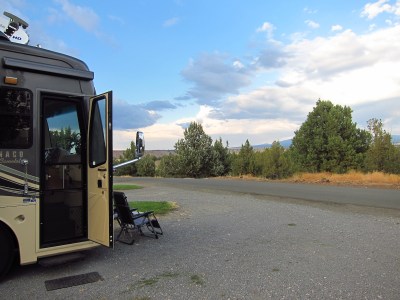
Our coach parked for the night
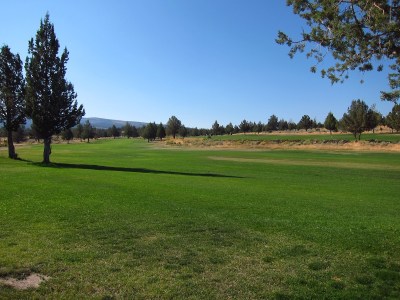
A view over one of the fairways
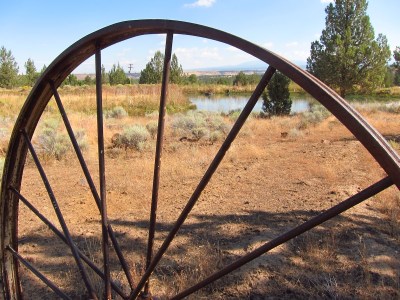
Through the wagon wheel
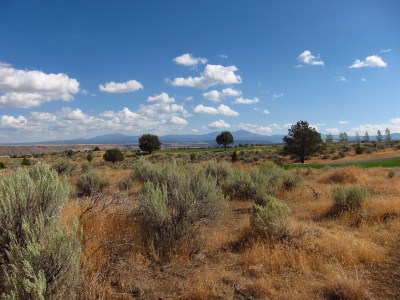
This is a desert, after all
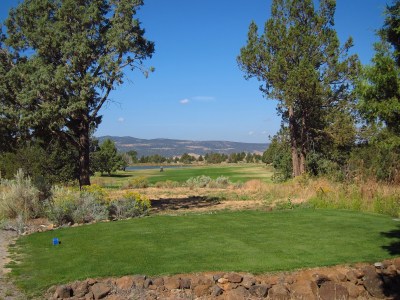
The 3d tee, if memory serves
Pacific City, Tillamook OR
Our next stop was near Pacific City, OR. This area is known for its surf, and its cheese. While we were there there was a surf wave runner competition, an these guys make those machines fly! Definitely not for the weak of heart.
On our last day we toured the famous Tillamook Cheese factory. Interesting tour, and had some great ice cream (the other thing they’re famous for). It’s quite an operation, and uses some 1.1 million pounds of milk a day.
Finally, on the way back we noticed a huge building marked “AIR MUSEUM”. This was one of the 17 dirigible hangers built in WW2 to protect our coast. The remaining building (one burned 20 years ago) nowhouse an interesting assortment of static and flyable historical aircraft.
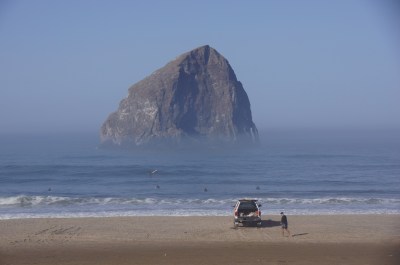
One of the four Haystack Rocks, this one in Pacific City
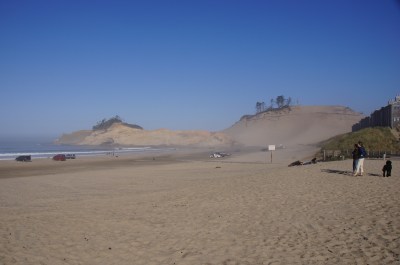
Pacific City beach, looking north
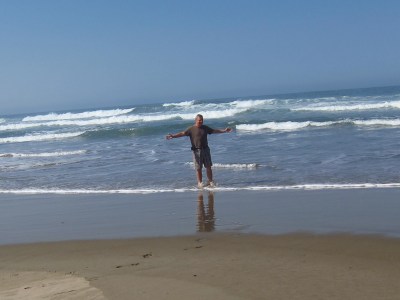
Man, that water is cold!
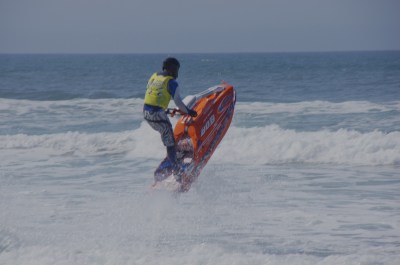
Here is a competitor jumping a wake....
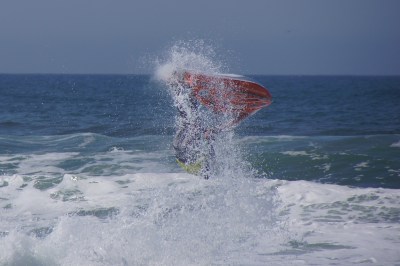
..... and here he is, going just a bit too far!
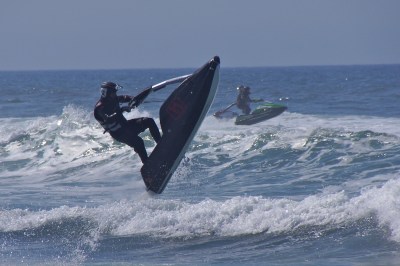
That looks a little better!
Tillamook Dairy
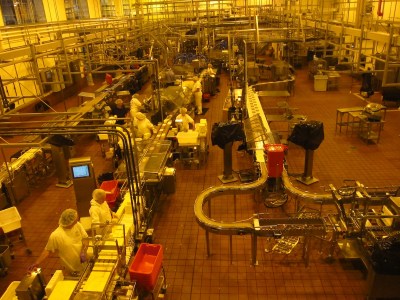
On the cheese production line
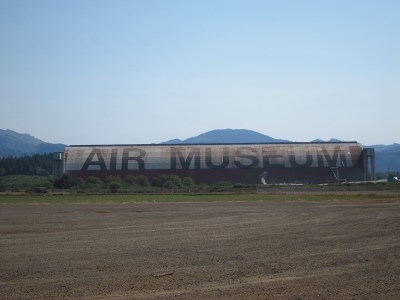
A long distance view of the Air Museum
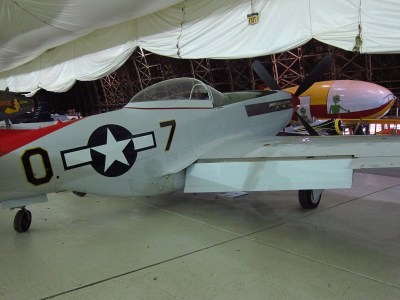
A P-51 Mustang (WW2)
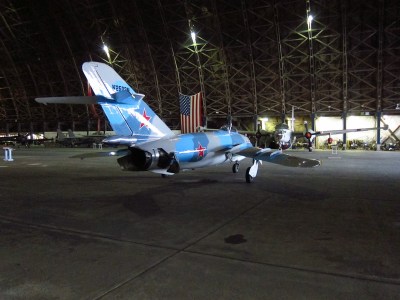
A Russian MIG-17 (Korean war)
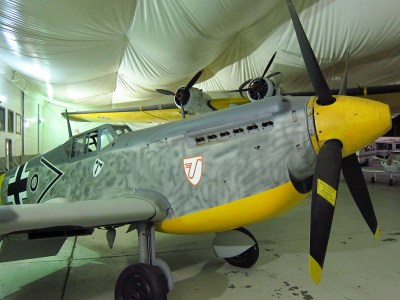
A Messerschmidt war plane (German WW2)
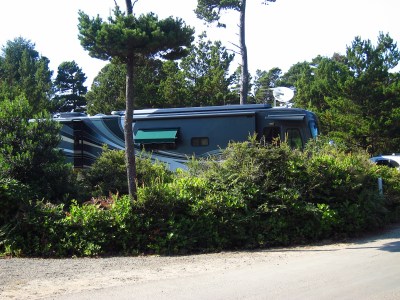
Our cozy parking spot
Seaside, OR area
We spent a few days in Seaside, OR. Seaside is both a tourist area (huge beaches) and a historical area (Lewis and Clark ended their expedition here). So we visited some of the sites and explored the area.
Lewis and Clark did a monumental 2 year exploration trip from Missouri to what now is Seaside. Along the way, they charted new territory for the United States. Their contribution is remarkable. Once they got here, they established Fort Clatsop, where they endured a miserable and cold winter. They ran out of salt, necessary for meat curing (each expedition member ate 10 pounds of meat a day!). They boiled down seawater to reclaim salt and eventually had enough to support their trip back east. The fort was abandoned, later to be restored and is now a National Monument.
Shortly thereafter, John Astor established the first fur trading outpost on the west coast here. This eventually grew into Astoria, today a thriving city. Huge ships are in the deep water harbor to transport lumber around the world. It is also a cruise ship stop. The now famous Astoria Coluimn depicts the rich history of this area, as well as providing sweeping views of the area.
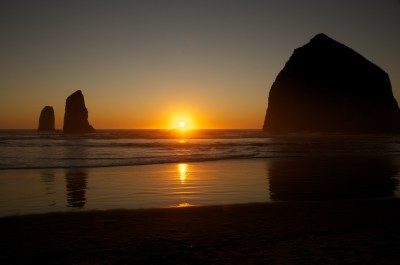
A stunning sunset just south of Seaside
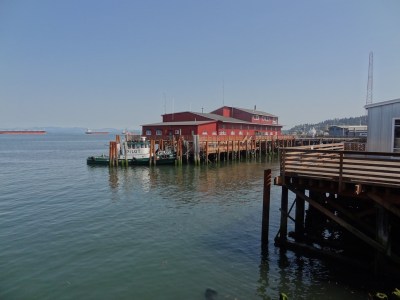
Astoria waterfront with historic cannery
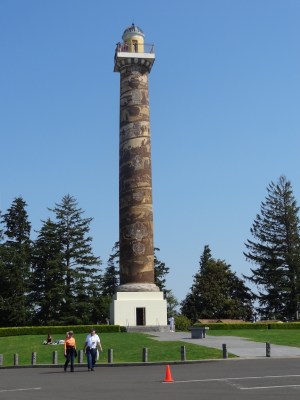
The Astoria Column. 164 steps to the top (we counted).
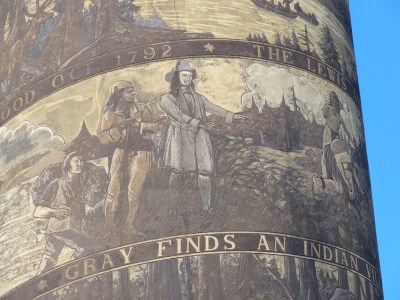
Detail of the "sgrafitto" depicting the area history
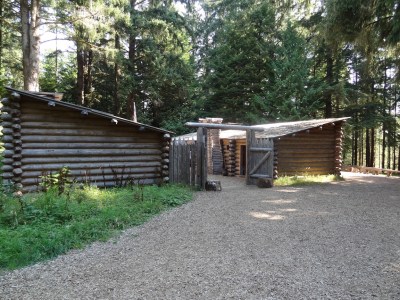
Fort Clatsop reconstruction. In 1806, Lewis, Clark, and 24 men endured a very wet and cold winter here.
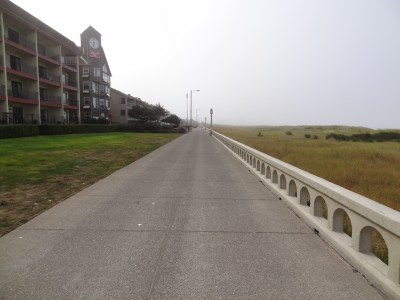
The 2.5 mile long Promenade along the ocean shore in Seaside. Today was foggy.
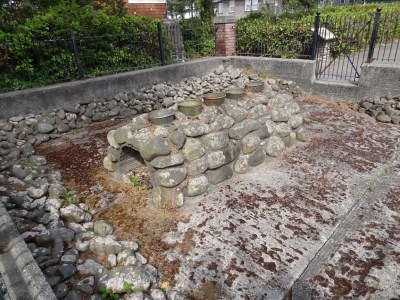
The salt works, where they extracted 300 pounds of salt from sea water
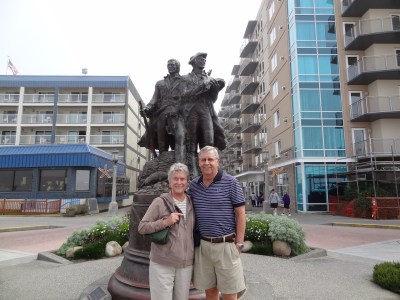
John and Romola, along with Lewis and Clark, at the spot where their journey ended.
Padilla Bay Estuary
Padilla Bay is an estuary at the saltwater edge of the large delta of the Skagit River in the Salish Sea. It is about eight miles long (north to south) and three miles across. In 1980, this bay was selected to be included in the National Estuarine Research Reserve System.
Because the bay is filled with sediment from the Skagit River, the bottom is very shallow, flat, and muddy. It is so shallow that almost the whole bay is intertidal. This means that it is flooded at high tide. When the tide goes out the whole bay empties out, exposing miles and miles of mud flats. This condition allows unusually large eelgrass meadows to grow. There are nearly 8,000 acres of eelgrass in Padilla Bay.
Eelgrass is valuable because it is habitat for wildlife and commercially harvested animals. Eelgrass is used as a nursery by salmon, crab, perch, and herring. Eelgrass is also home for millions of worms, shrimp, clams, and other invertebrates that are food for great blue herons, eagles, otters, seals, as well as humans. This is why Padilla Bay was selected to be a National Estuarine Research Reserve.
There is a pathway about 2 1/8 mile long that allows for a closer look at this strangely beautiful environment. Romola and I enjoyed our walk although we didn’t get to see as much wildlife as hoped.
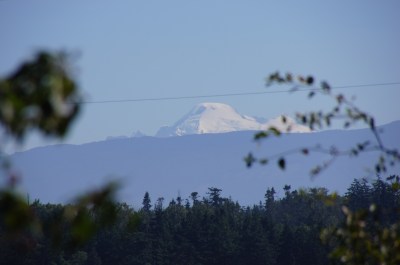
A view of Mt. Baker from the trail
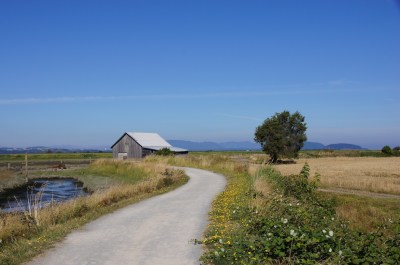
An old barn on the trail is one of the most photographed in the area.
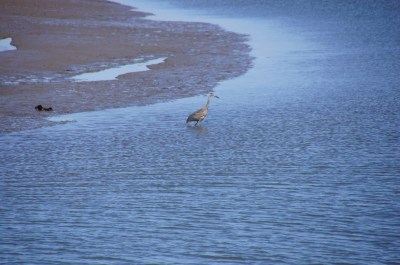
A heron looking for a morning snack
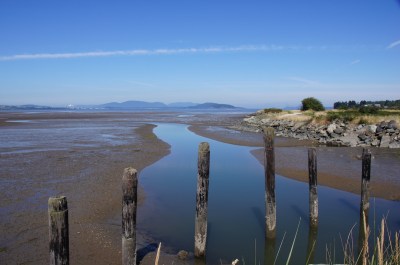
A view of the mud flats
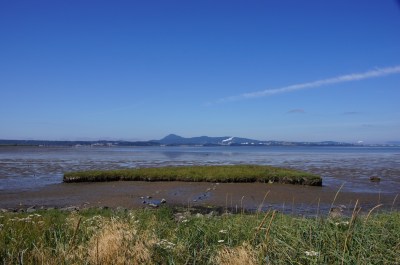
Another view
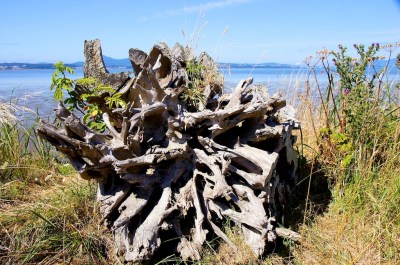
There must have been trees here sometime...
Orcas, Ospreys, and Eagles; Pig war
Took the ferry to San Juan Island yesterday, we wanted to see the American and English Camps, site of the famed “Pig Wars” (more below). It was a great day, with a nice hike up Young Hill for some panoramic views. We also lucked out and saw several juvenile bald eagles, some ospreys in a nest (through a telescope), and a pod of Orcas heading for deeper water. Too bad I didn’t take my telephoto lens…..
In 1818, the 49th parallel was established as the boundary between Canada and the USA. Unfortunately, the border was ambiguous as to where it went through the San Juan Islands, and both English and US residents claimed ownership. Finally, one of the US residents got tired of the pig owned by an Englishman rooting up his garden, and shot the pig. This escalated into a full scale argument, and England sending troops. The troops landed on the north of the Island, and established a camp there. So, the US sent a garrison of Marines, who established an American Camp on the south of the island.
Over a period of 12 years, the almost-war between England and the US continued, until by mutual agreement Kaiser Wilhem of Germany was asked to arbitrate. He ruled the Islands were US property, and the English moved out peacefully. So for once we had a war with only one casualty: the pig.
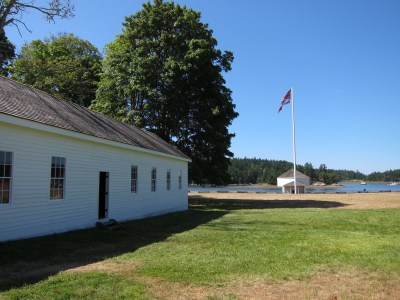
English camp headquarters
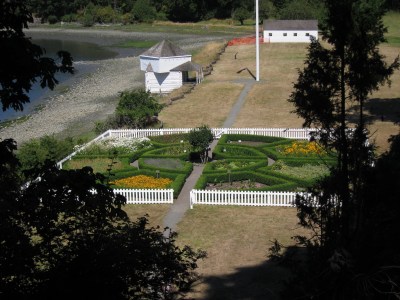
English Camp, formal gardens
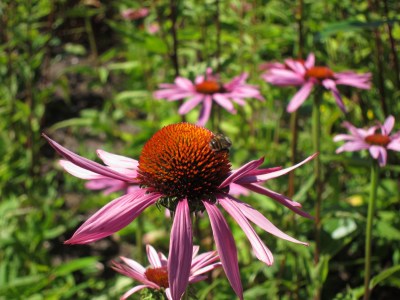
Cone flower in English Garden, with a bee
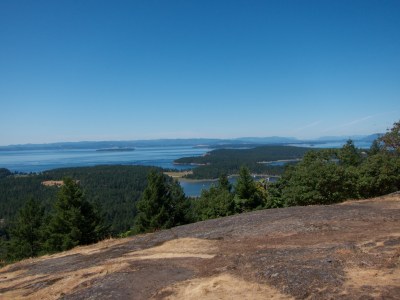
A view from Young Hill
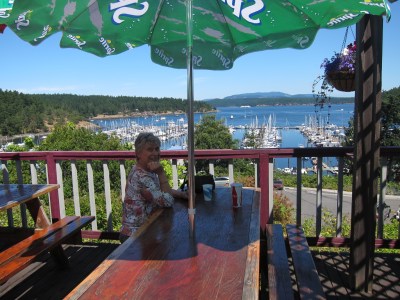
Great sandwich, great location
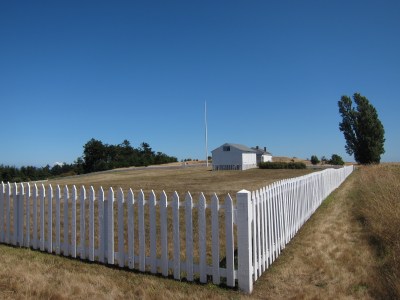
American Camp headquarters
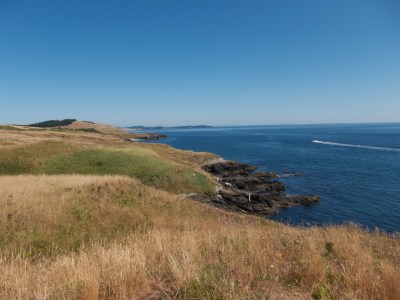
Looking over Grandma's cove, American Camp
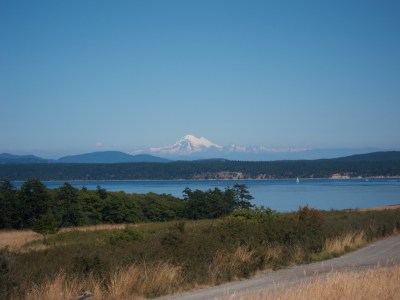
Mt. Baker, from American Camp
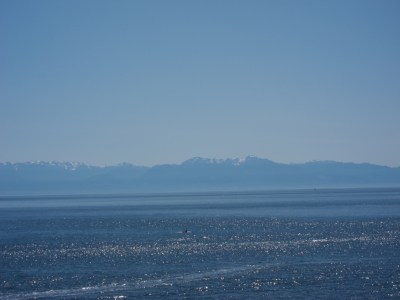
Look close, middle of screen, down low.....
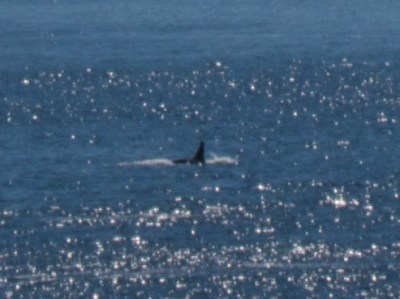
... cropped and enlarged view of surfacing Orca

Juvenile Bald Eagle
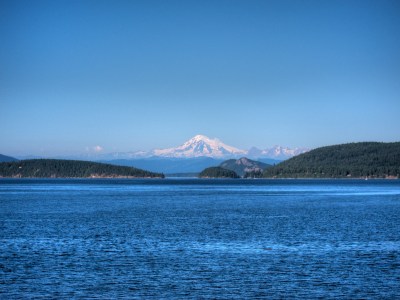
Mt. Baker, from the ferry back to Anacortes
Paddle to Swinomish, 2011
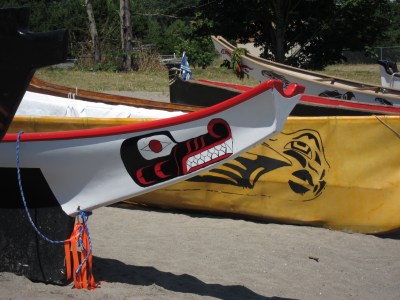
Every year, there is a large gathering of Native Americans in the Pacific Northwest. Many arrive by traditional canoe, and have tribal meetings, dances, and traditional social activities. This year, it is being held just down the road from where we are staying. So, we went to take a look.
The canoes, and costumes, were quite colorful. The dances were interesting, depicting historical events. I have included some pictures of the canoes, but not the dances — photography was not allowed.
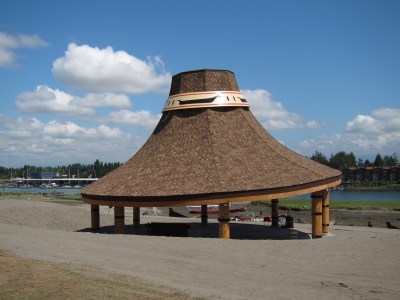
A waterfront gathering spot, following traditional designs
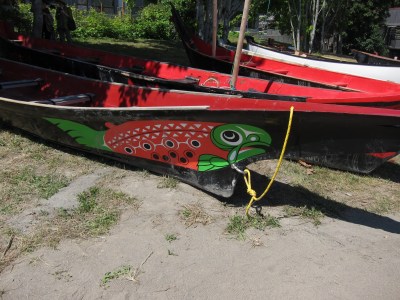
Some canoes bowsprits

More traditional designs
A spectacular drive
Washington Highway 542 runs 57 miles from Bellingham to the ski areas on Mt. Baker. Along the way, there are spectacular views of the mountain as well as forests, rivers, and waterfalls.
Yesterday, we decided that this would be a good time to make this drive. So did many others, as this was the first sunny weekend in a LONG time! On the way down we had a nice lunch at a local bar/food place, and shared it with Harley riders, cyclists, as well as car driven tourists.
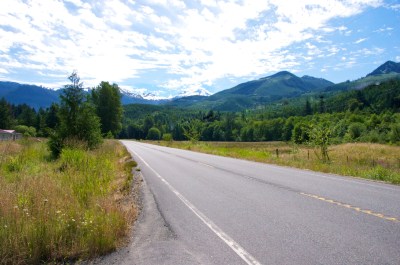
On the road, Mt. Baker looms in the distance
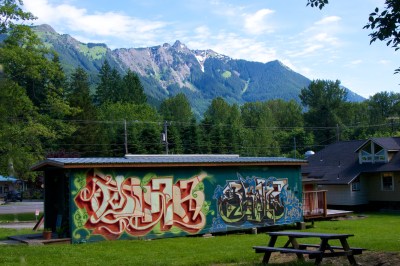
Art on display: man-made vs. nature-made
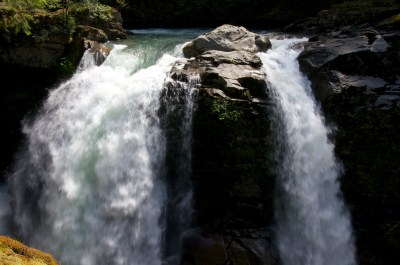
Nooksack falls, a pleasant diversion on the way up
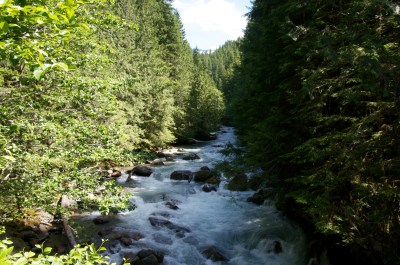
A view upstream from the falls
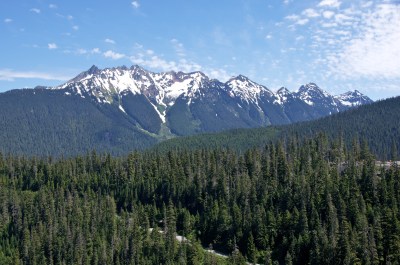
Roadside view
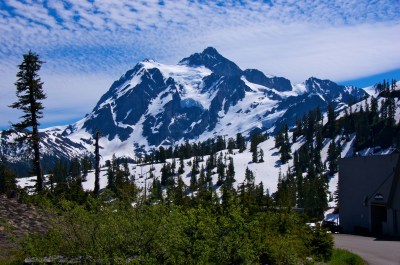
Peak of Mt. Baker, from the ski area
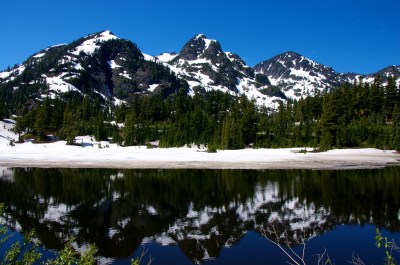
The lake at the end of Highway 542
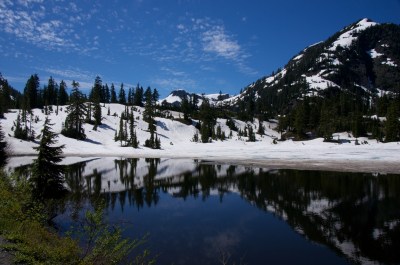
... and looking a bit more to the east.
Where are we — Holland?
The town of Lynden, WA has a very large Dutch population. In fact, this area produces more tulip bulbs than the country of Holland, and 2/3ds of all US raspberries. So when Lynden has a Raspberry Festival, we had to go.
Even though the Raspberry Festival attracts 20,000 people, it still is a very local event. But it was fun, and we enjoyed some raspberry sundaes and — poffertjes! Good stuff.
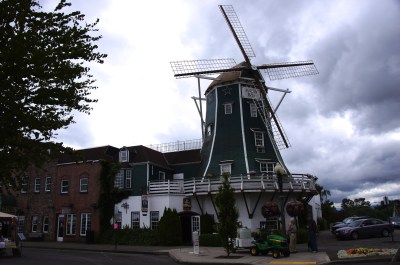
Yes, Lynden has a windmill!
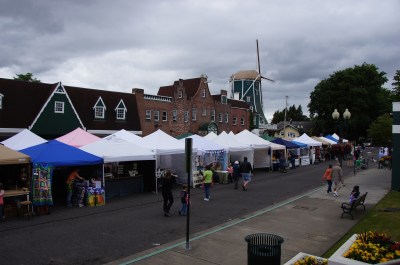
"Dutch" street
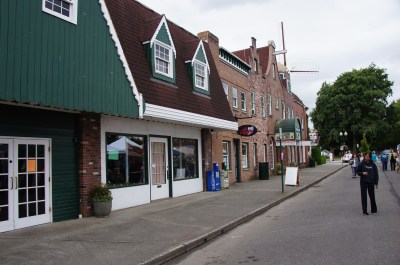
More "Dutch" street
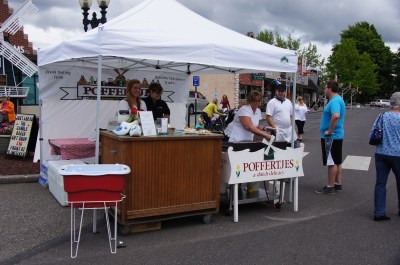
Yummm!
Lost in Discovery Park
Discovery Park in Seattle is one of the largest city owned parks in the country. It’s Loop Trail is almost 3 miles long, with lots of side trails. We know, we found a lot of them! The park itself is in far west Seattle, on a peninsula jutting out into the Strait of Juan de Fuca. The scenery was great, with excellent views of both Mt. Rainier (to the South) and Baker (to the North).
We didn’t have a trail map, and after we got past the lighthouse the trail was obvious, but little used. We finally asked a runner where the Visitor Center was, who pointed vaguely and said “way over there”. We finally found a map and our way out, but our 1 1/2 hour walk turned into a near 3 hour hike. But it was pleasant out, and very scenic, so we enjoyed it anyway.
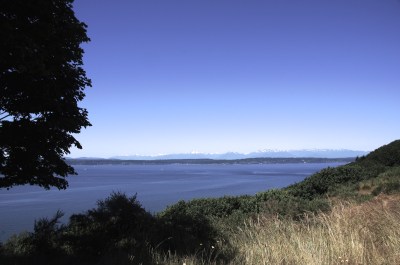
Looking west, to the Olympics
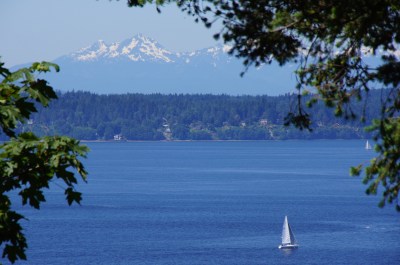
Am idyllic scene, looking east to the Cascades
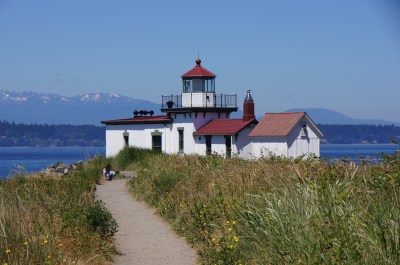
The lighthouse at the tip of Discovery Park

Mt. Rainier to the south
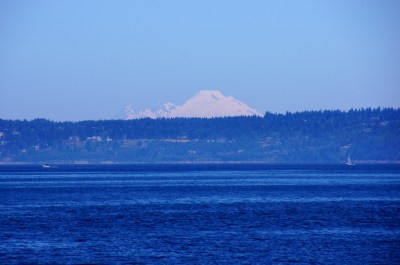
Mt. Baker to the north
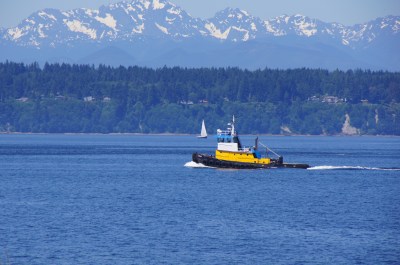
A color contrast
Fourth on the water
When our friend Steve invited us to watch Seattle’s spectacular fireworks from his boat, we jumped at the chance. Little did we realize we would be on a 62 foot superyacht! Seems like some of Stave and Kathy’s friends are yacht brokers and they took one of their yachts to Seattle, and we watched the fireworks from the front lounge on the ship. Must make a plug here… it was a fabulous yacht, and it’s for sale, so if you have a spare $1.7 million laying around….
So we took Steve’s boat to their friends dock on Lake Union, where the fireworks were to take place. It was quite crowded with all size boats. As dusk approached, so did a flotilla of boats, from kayaks to yachts, really filling up the bay. A little after 10:00, the fireworks started. The Seattle show is one of the top rated in the nation, and it was fantastic, with some fireworks effects we’ve never seen before. Fantastic!
The fun wan’t over, though. After the display, some 5,000 boats of all sizes streamed through the ship canal, resulting in a massive bottleneck of boats. Some boat operators had obviously tilted the bubbly a bit…
Anyway, it was a great day and a most impressive way to watch fireworks.

Steve getting his 26ft Cobalt ready to launch
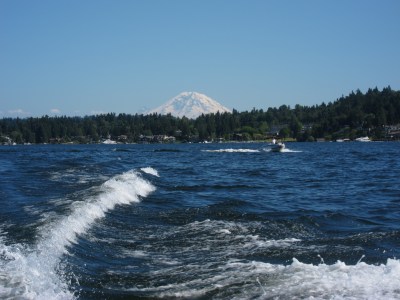
A view back to Mt. Rainier as we head to meet our friends
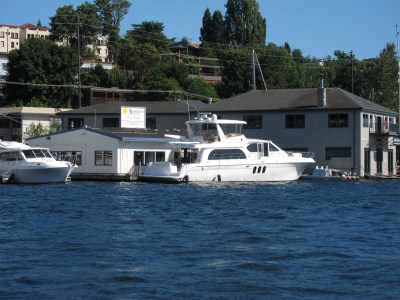
There's our ship, docked on Lake Union
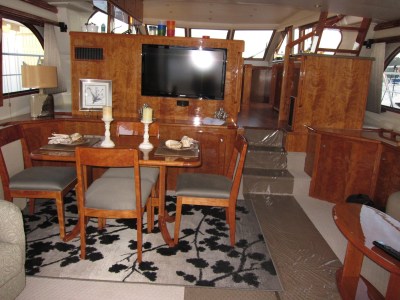
Inside the salon

Inside captain's station

Galley images

Master bedroom (total of 3 BR on board)

Engine room - twin 730HP Yanmar diesels
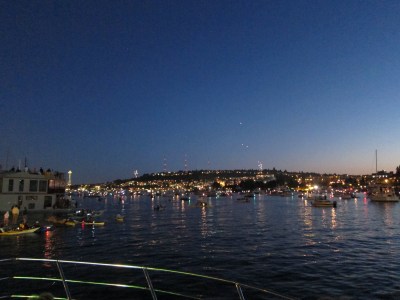
At last, dusk settles late here, it's 9:30PM

A small image, hard to take pictures with my little camera

Time to say goodbye to the Navigator....
 Laninga's Travel Blog