Archive
Will Rogers, Cherokee Nation
Our next stop with the Traveling Supremes was Wagoner, OK. From here, we visited the Will Rogers Museum and the Cherokee Nations Heritage site.
William Penn Adair “Will” Rogers (1879 – 1935) was an American cowboy, vaudeville performer, humorist, newspaper columnist, social commentator and stage and motion picture actor. He became one of the most famous American media stars during the 1920s and 1930s.
Known as “Oklahoma’s Favorite Son”,[1] Rogers was born to a prominent Cherokee Nation in Indian Territory (now part of Oklahoma). He traveled around the world three times, made over 70 movies, wrote more than 4,000 newspaper columns, and became a world-famous figure. By the mid-1930s, he was the leading political wit of his time, and was the top-paid Hollywood star. Rogers died in 1935 with aviator Wiley Post when their small airplane crashed in northern Alaska.
The Cherokee Heritage Center is a non-profit society and museum that preserves the historical and cultural artifacts, language, and traditional crafts of the Cherokee Indian. It consists of a museum that show the remarkable arts and crafts of Cherokee Nation, and gives a moving account of the “Trail of Tears”.
The Cherokee Nation removal in 1838 (the last forced removal east of the Mississippi) was brought on by the discovery of gold in Georgia, in 1829. The Cherokee were divided into thirteen groups, who were forcibly marched to the Indian Territory (now Oklahoma). Approximately 5,000 of the 16,500 relocated Cherokee perished along the way.
One of the more famous Cherokees was Andy Hartley Payne, the winner of the Trans American Footrace staged in 1928. He ran the 3,423.5 mile from New York to Los Angeles in 23 days averaging 6 miles per hour over an 84 day staged run.
We were also given an excellent tour of the restored village, and the way of Cherokee life. A very educational and interesting display.
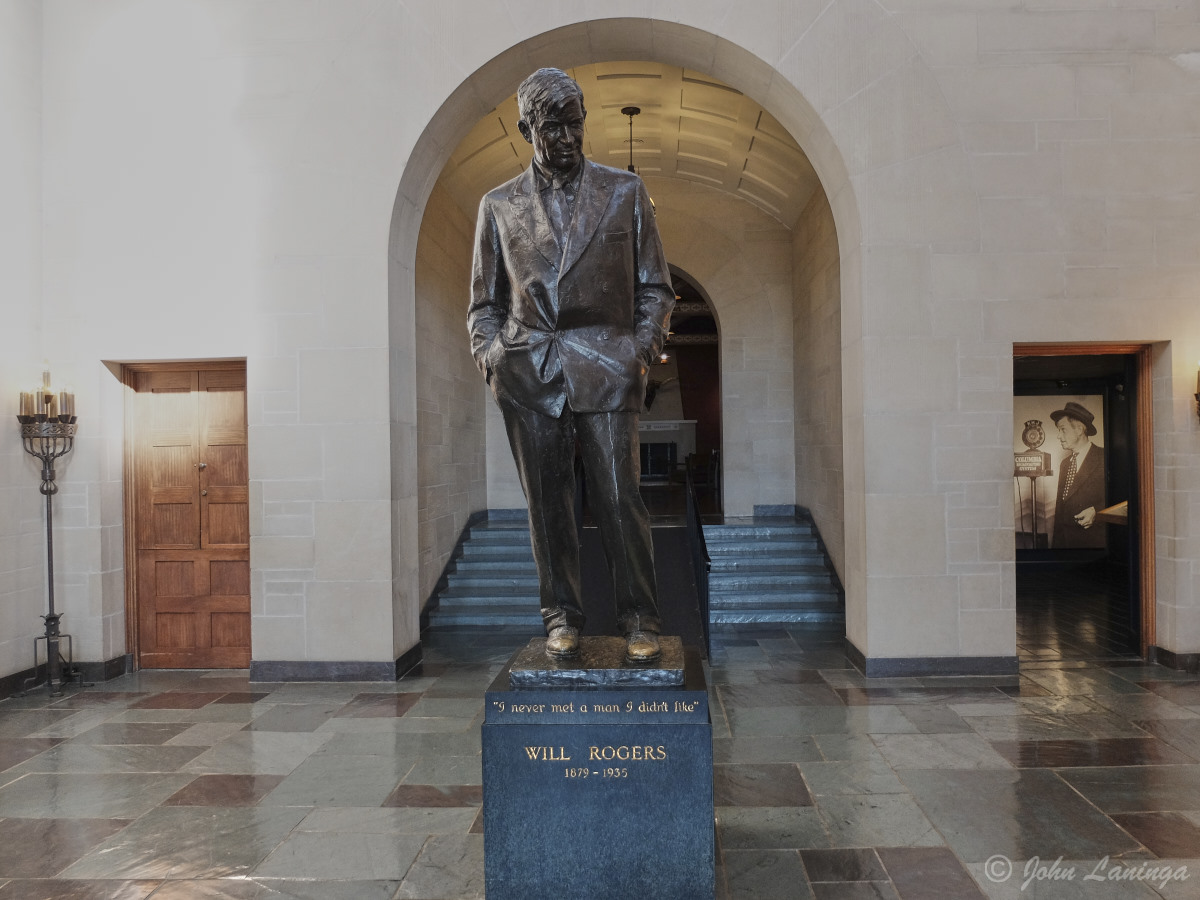
Statue of Will Rogers
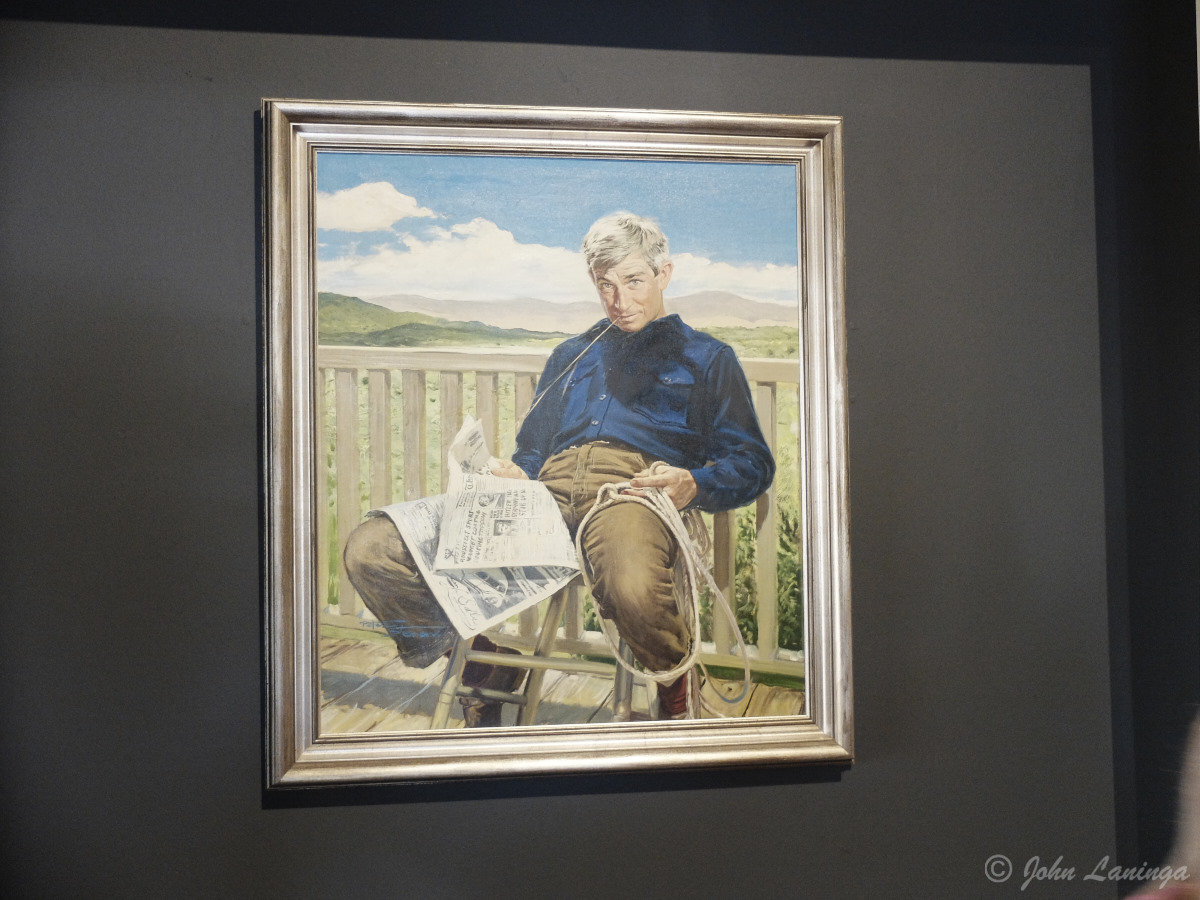
One of the many paintings of Will. He was a laid back type of guy.
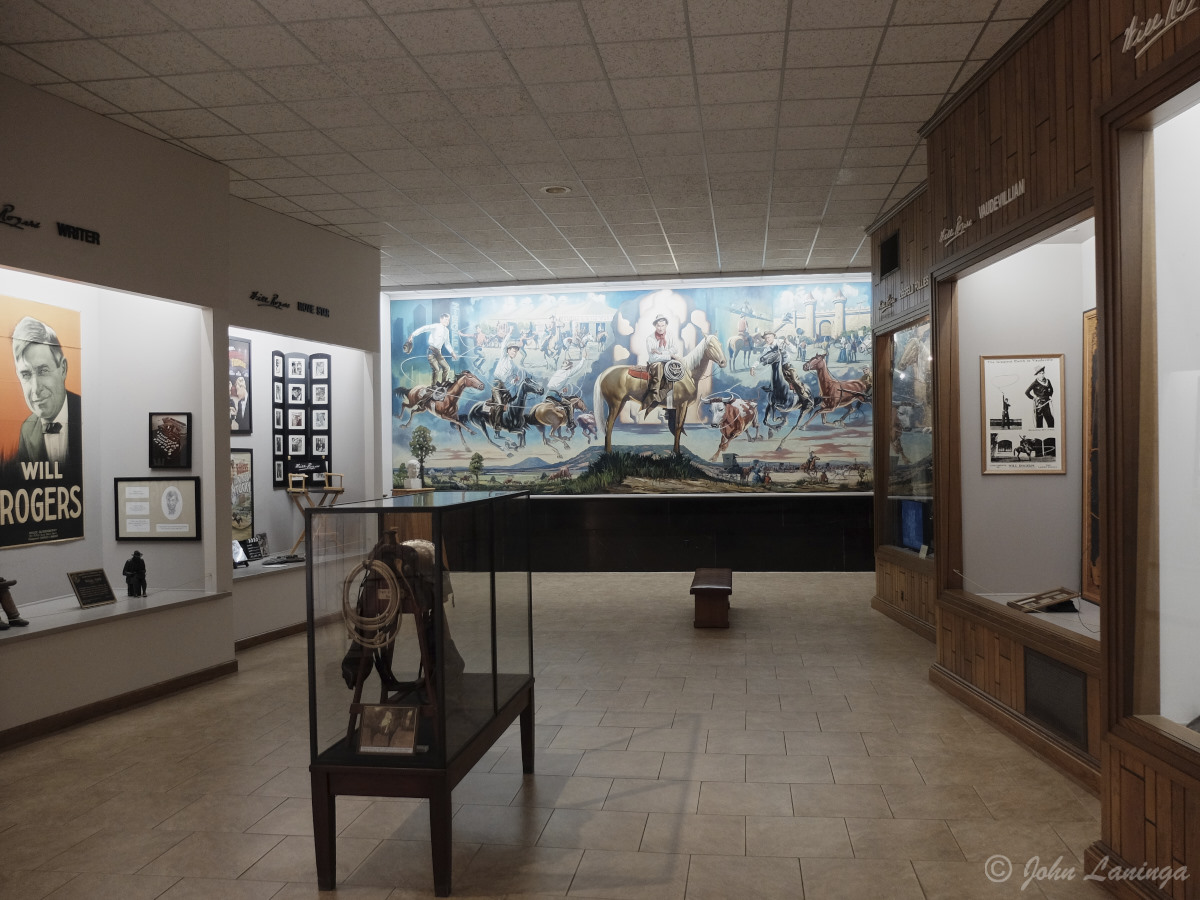
One of the wings of the Museum
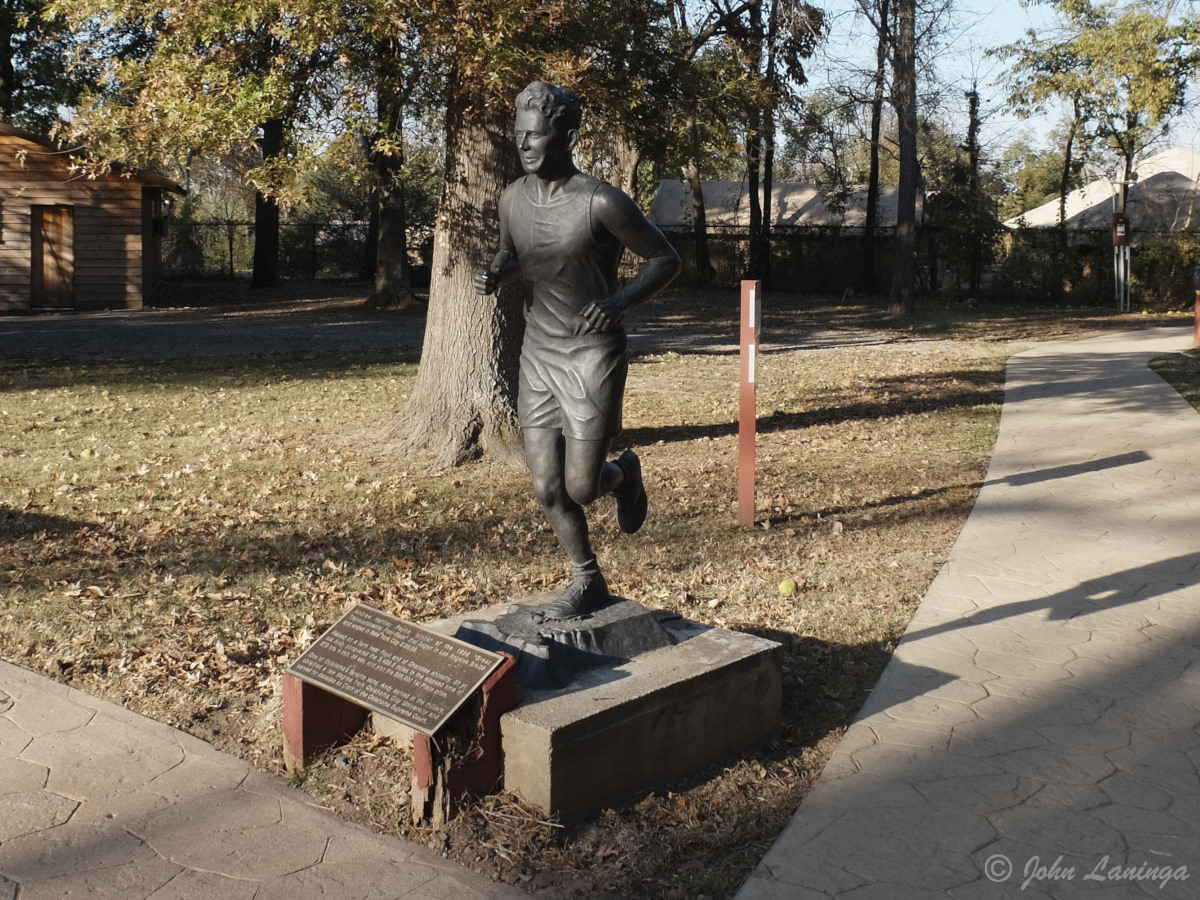
A statue of Andrew Payne, a participant in the great Transcontinental Footrace (1928)
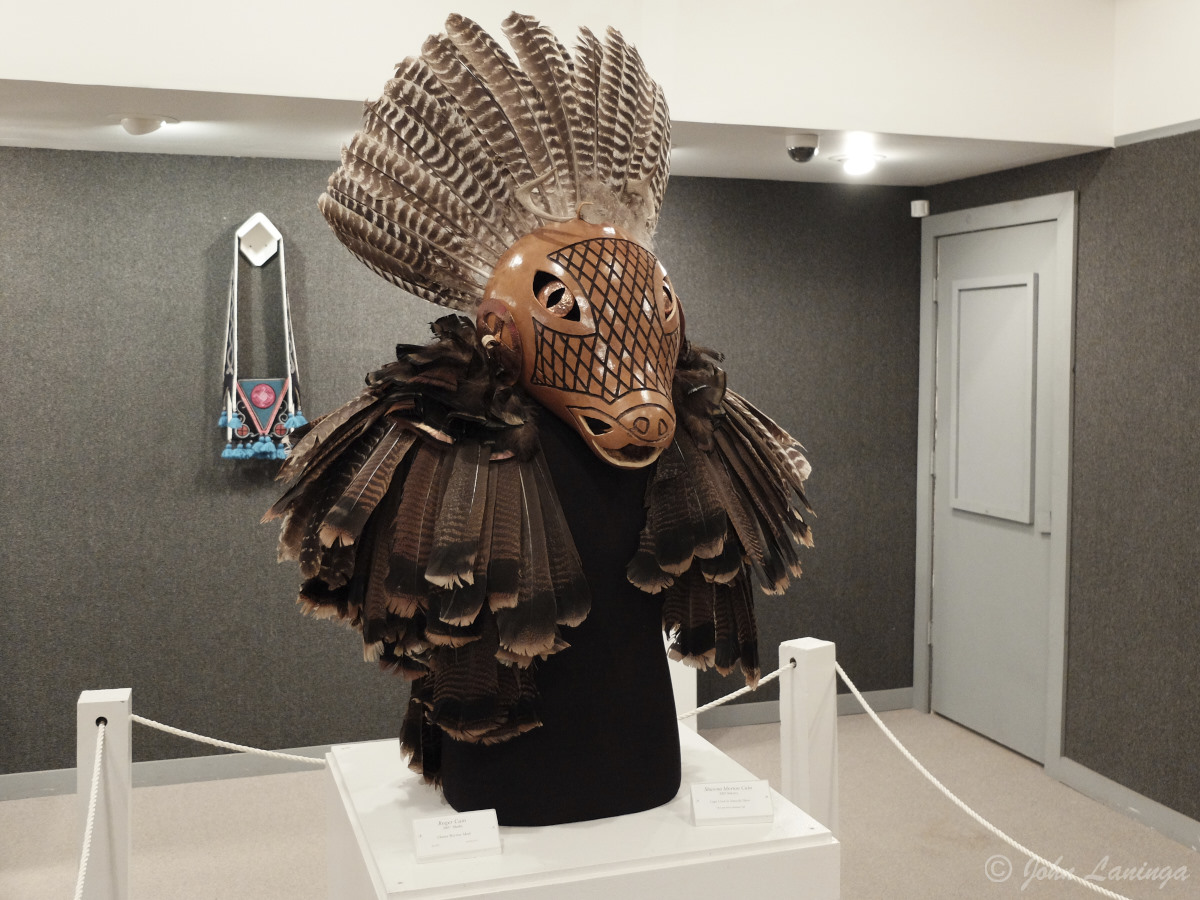
Ceremonial head dress

Our guide, explaining life in an Cherokee house
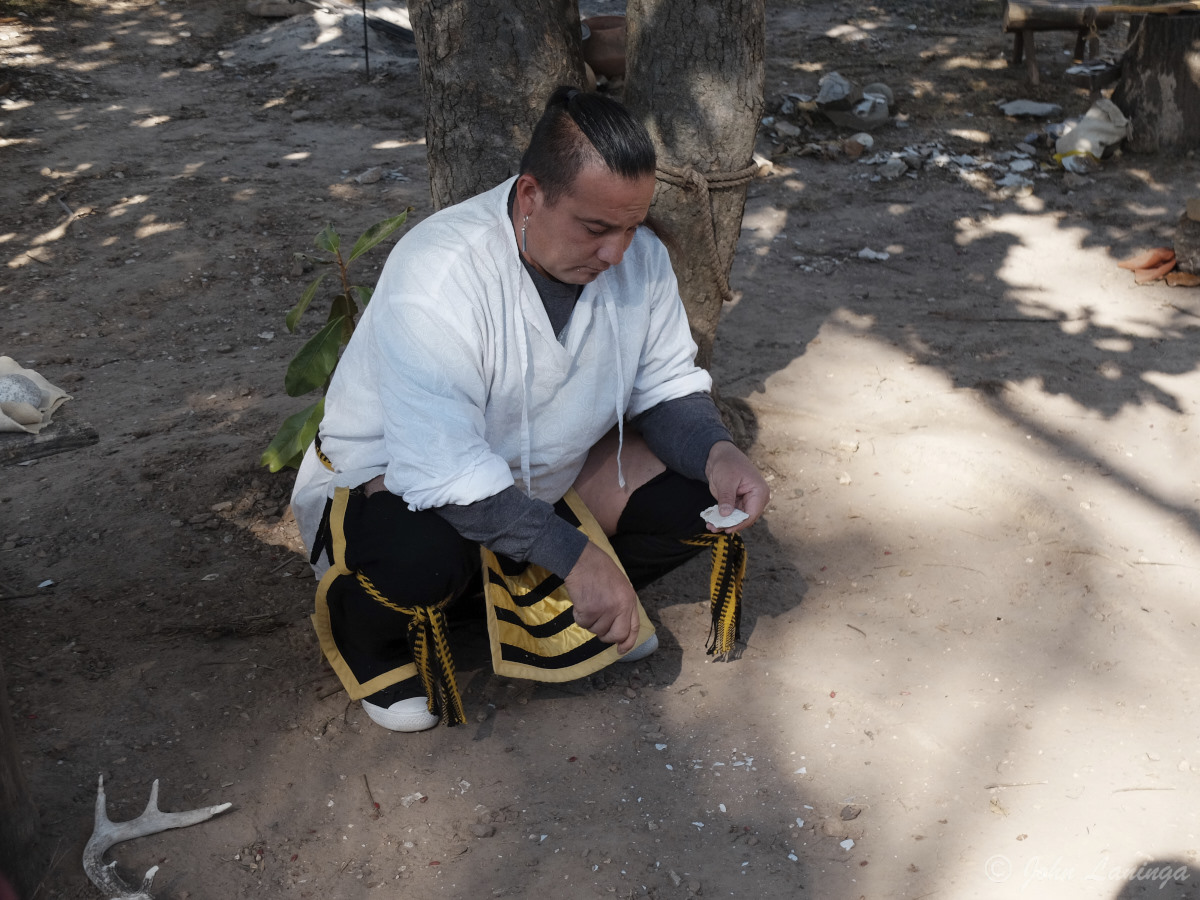
Our guide making flint arrow heads
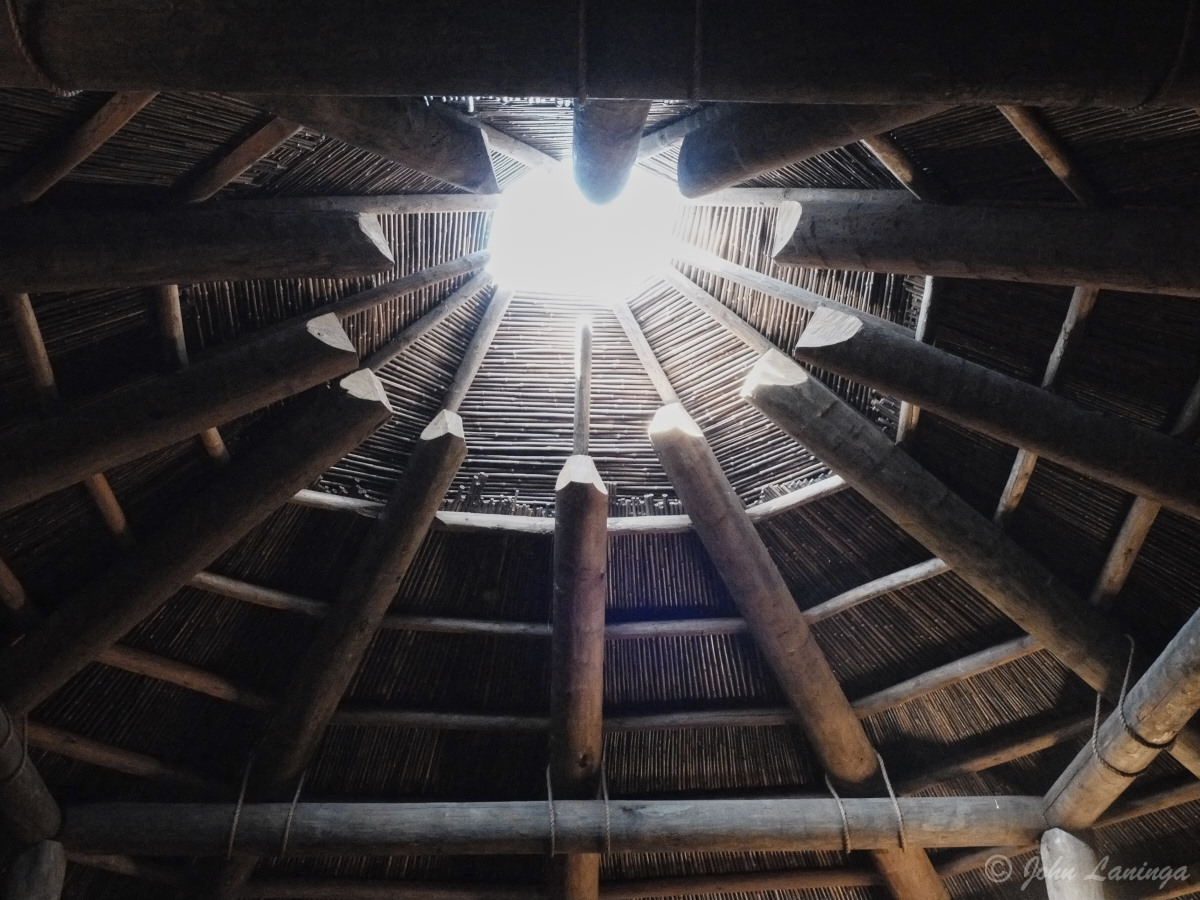
Inside the Council House, looking up to gods in the sky
Texas Oil Museum, Tyler Rose Parade
If you don’t like museums, you definitely should visit the East Texas Oil Museum in Kilgore, TX. There isn’t much to read, instead you walk into history with some excellent exhibits and animated displays… including an elevator “ride” some 5,000 feet into the ground to view oil deposits on site.
The discovery of oil in the 1930’s had a major impact on this area in particular, and on the country in general. Our Traveling Supremes RV group had a rally in the area, and this certainly was a highlight. Very much recommended.
The next day we viewed the Tyler Rose Festival Parade. Tyler distributes about 75% of the roses in the United States, and has a major economic impact on the area. There were many marching bands, beautiful girls, automobiles, beautiful girls, colorful roses, beautiful girls… well, you get the idea. After the parade we visited the Tyler Rose Gardens and viewed the very elaborate center piece exhibits for the festivities.
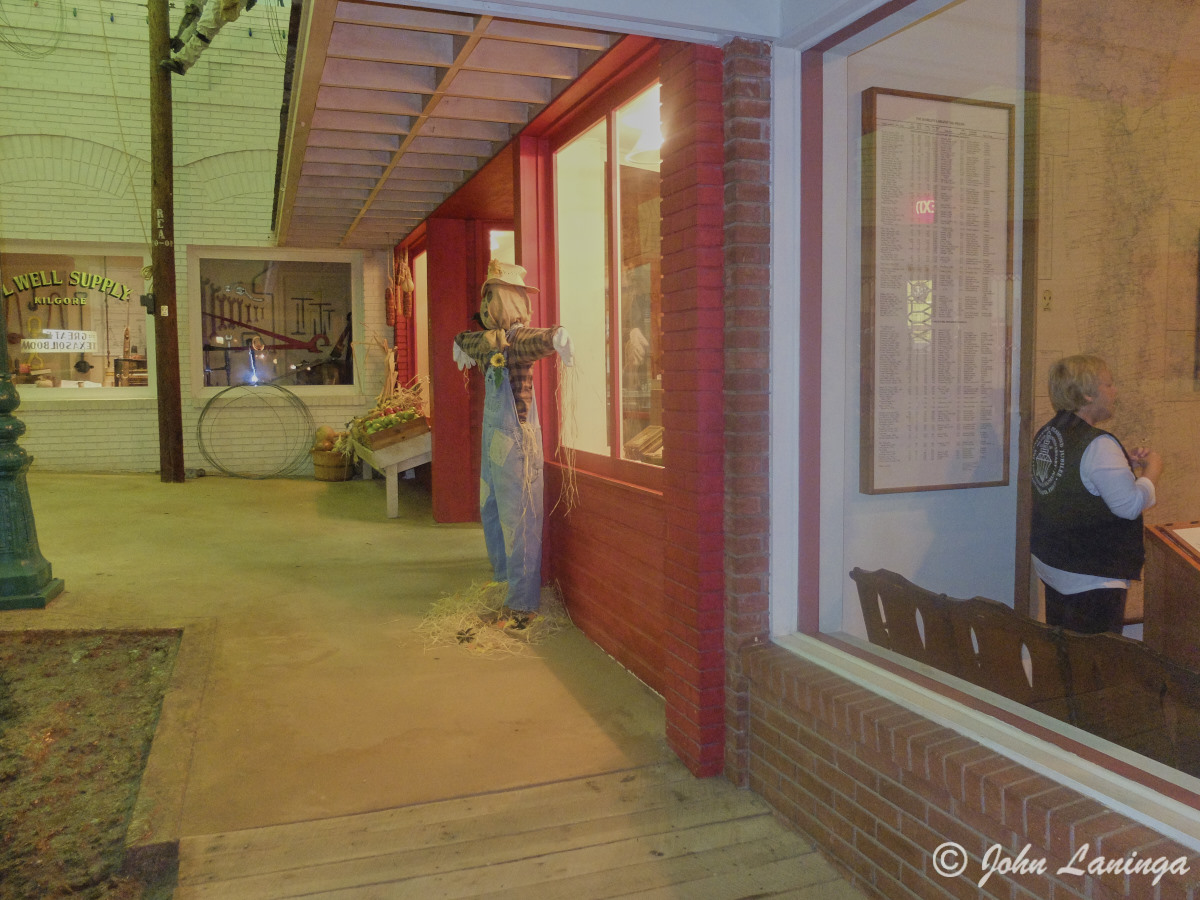
Lik walking in the 1930’s Kilgore
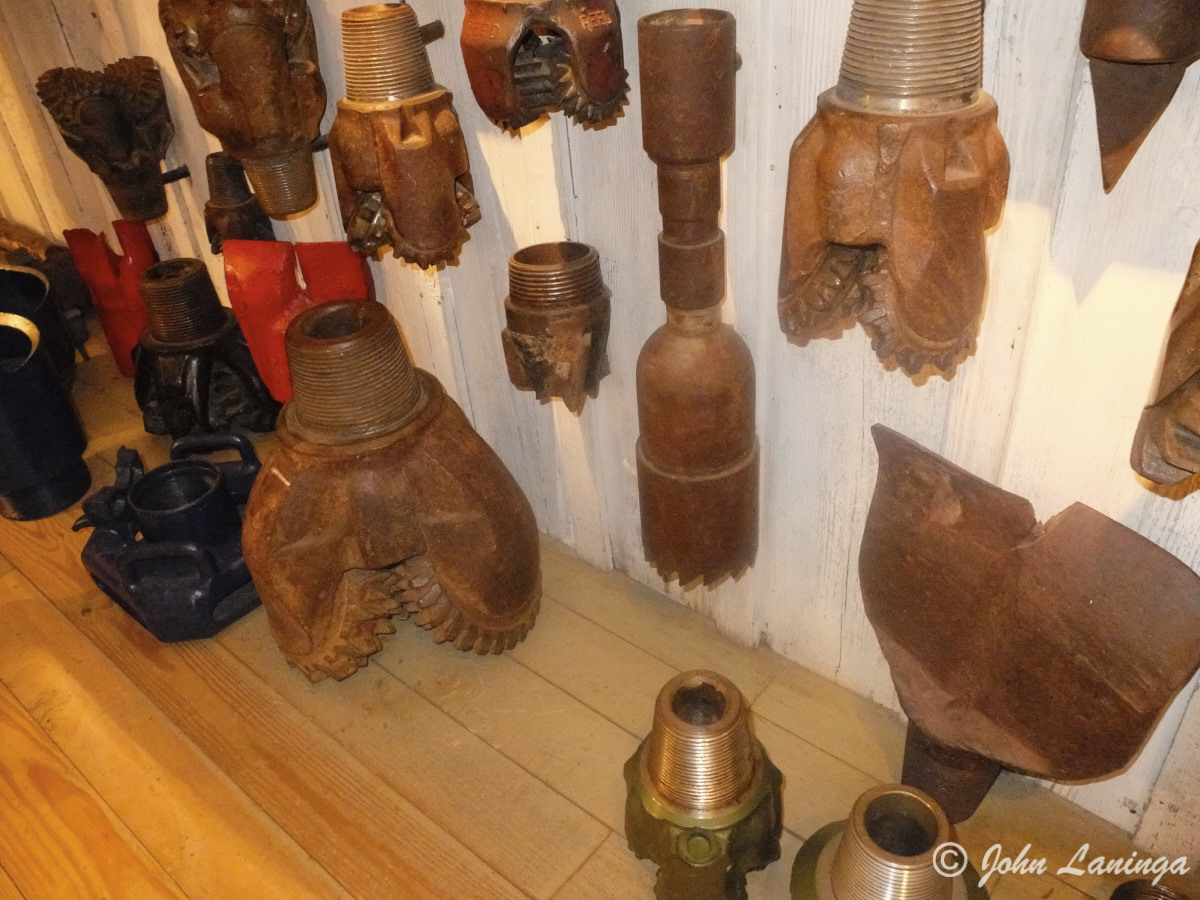
Various drill bits on display
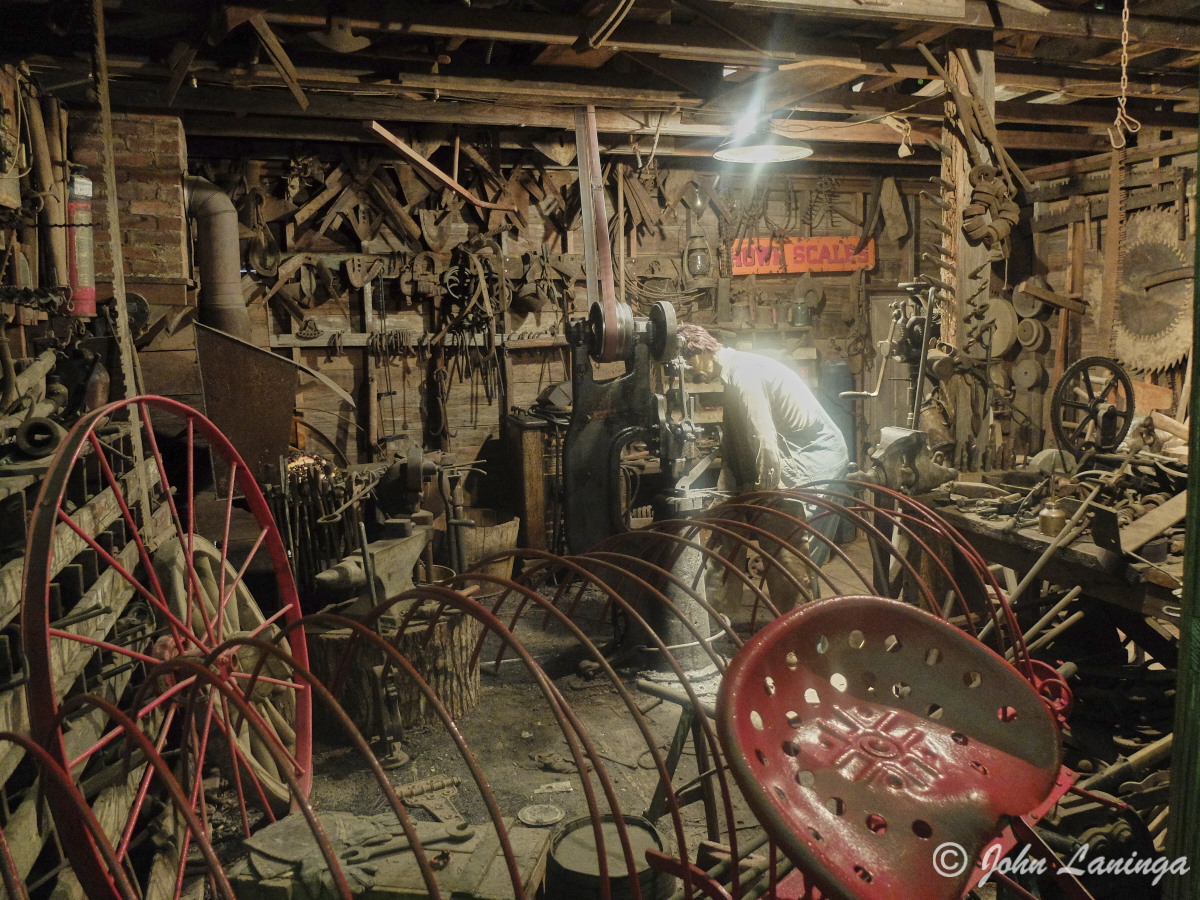
Inside a work shop with animated “worker”
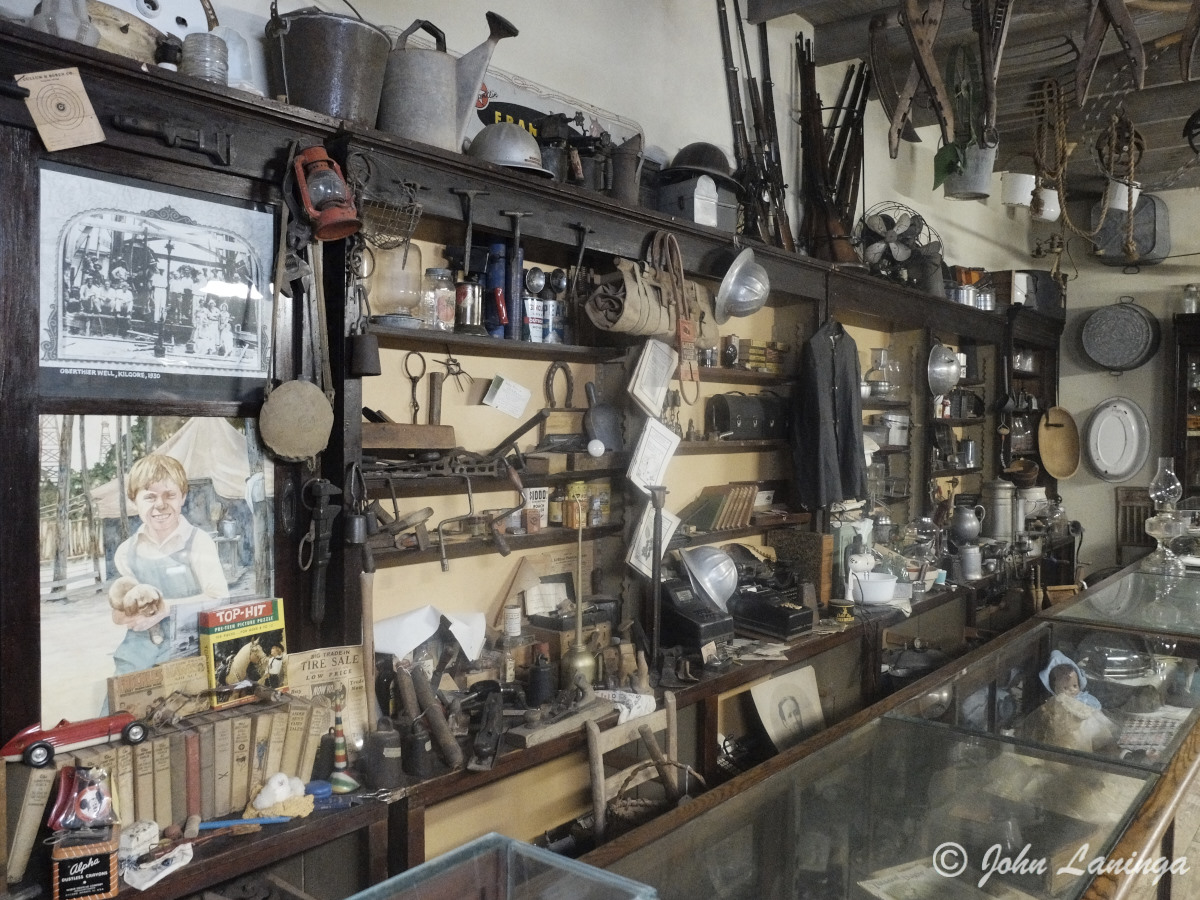
Inside a General Store
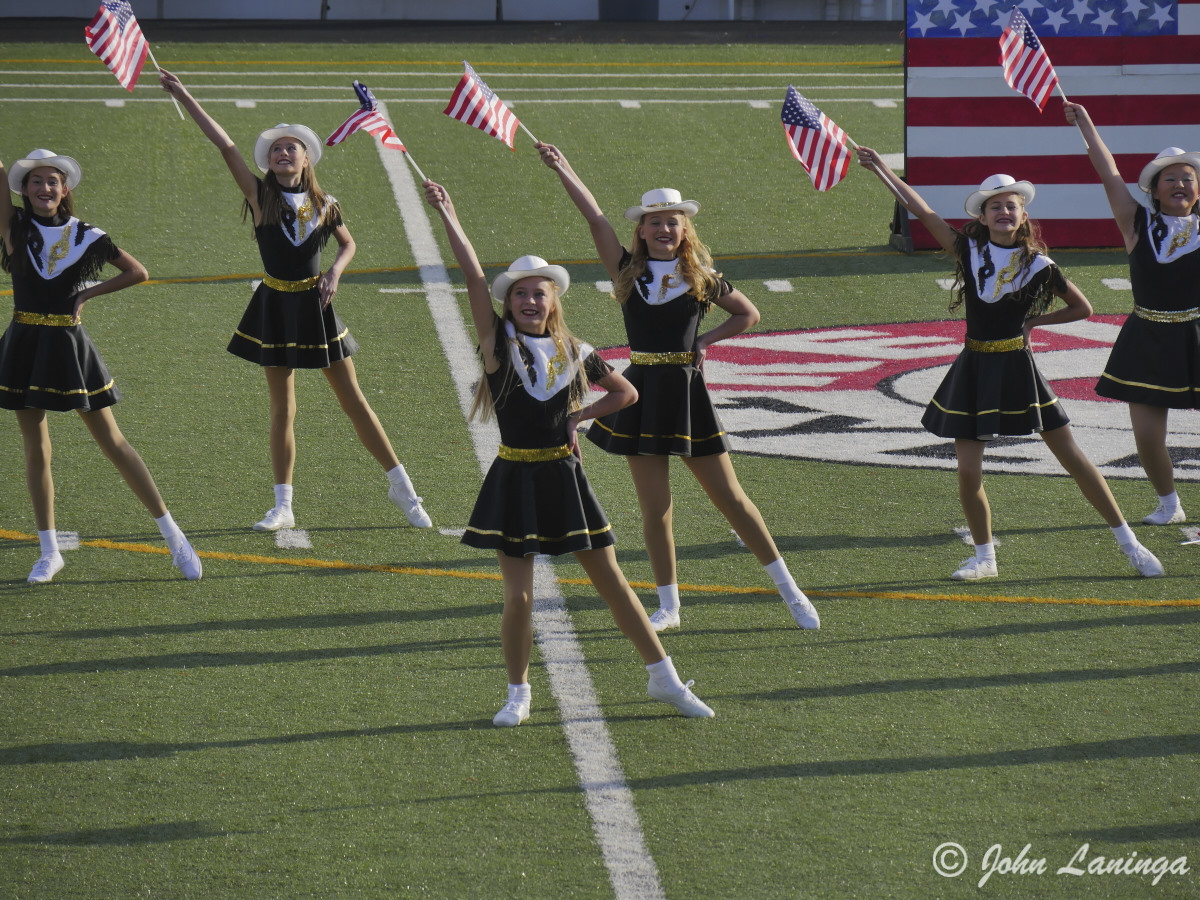
The local Rangerettes had a huge influence on cheerleaders everywhere
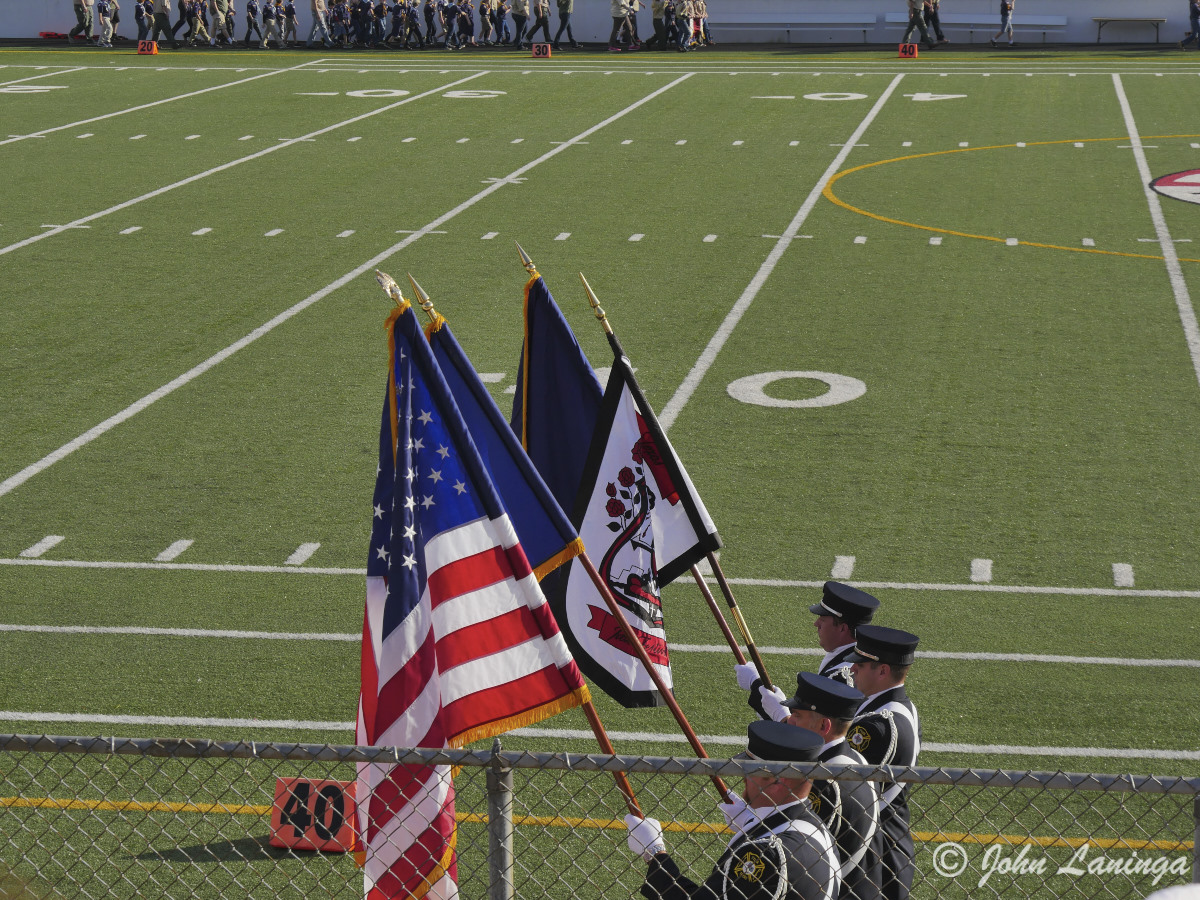
Prominent display of the Flag
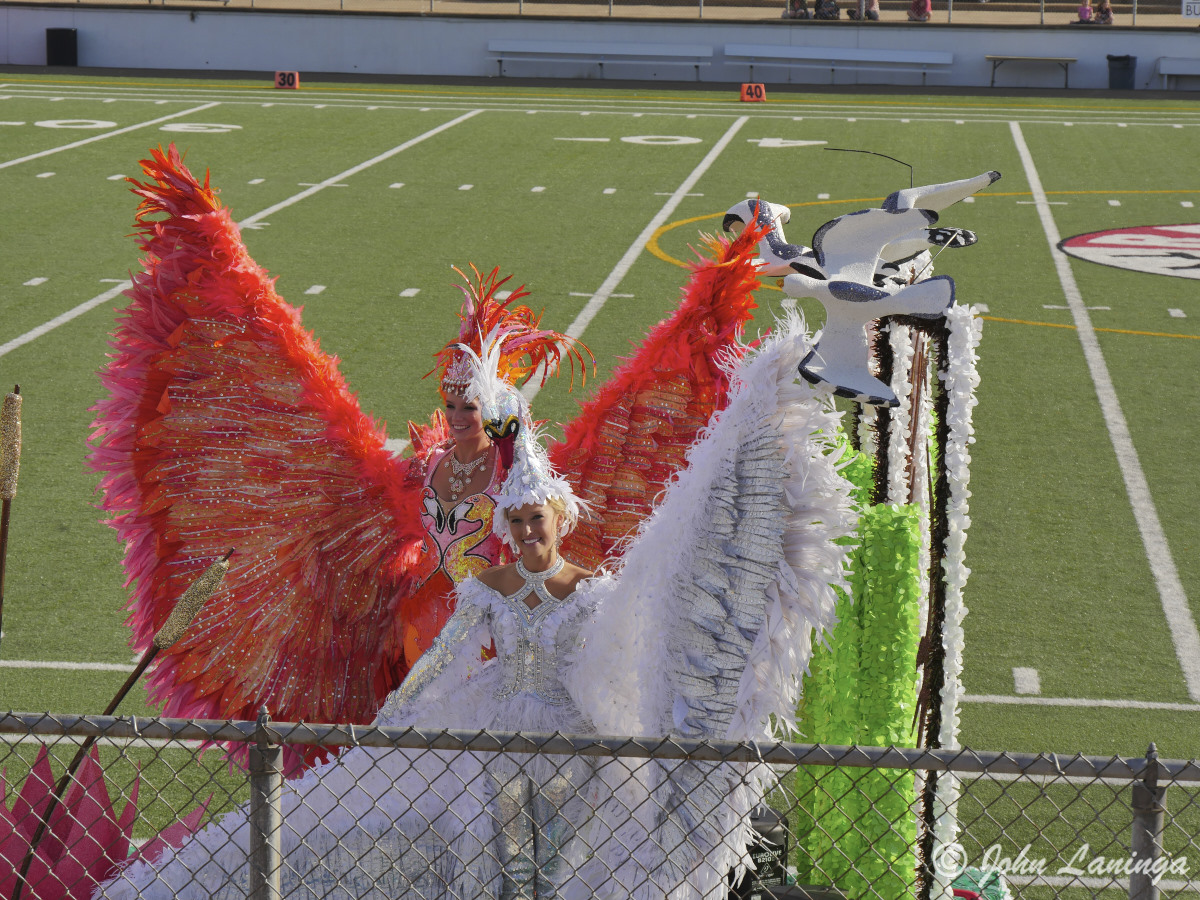
Very colorful dresses

More royalty on display
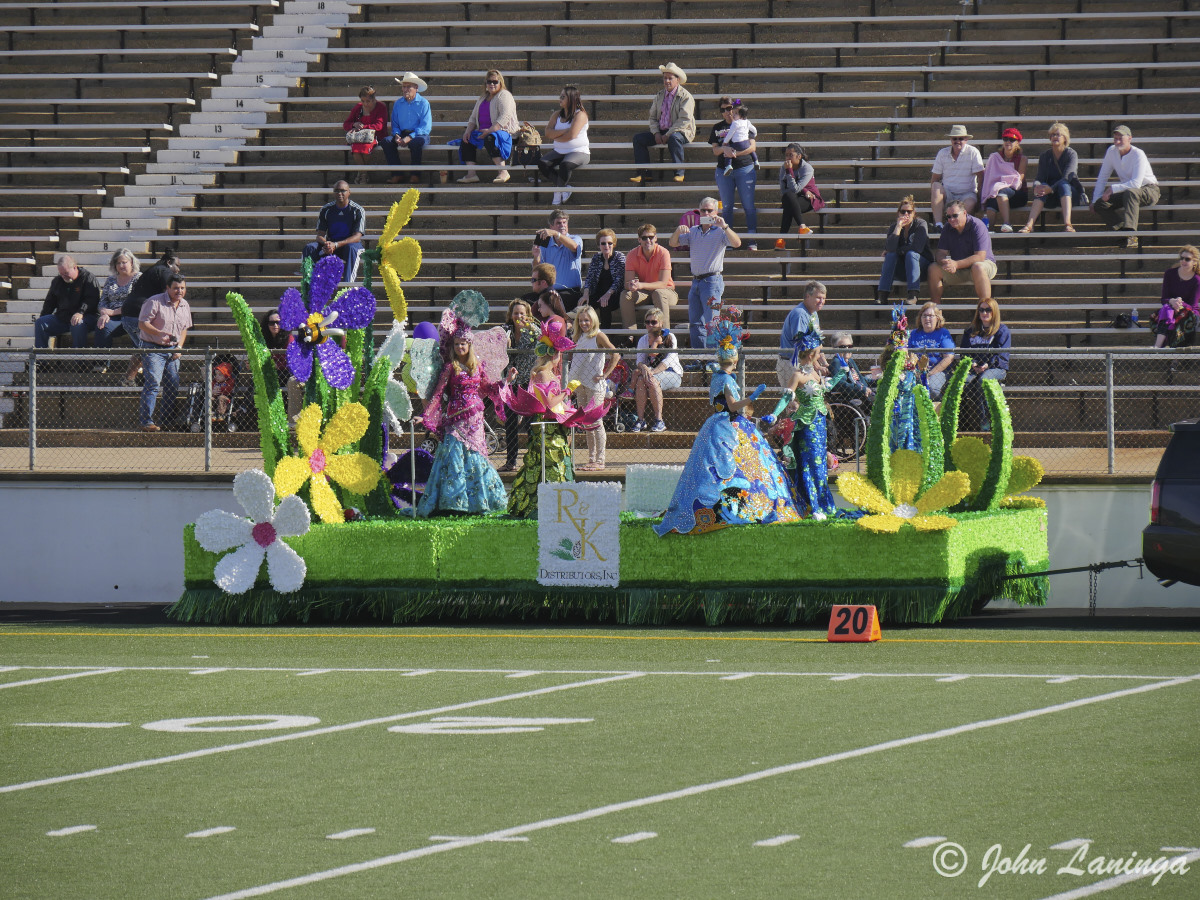
Colorful floats, too

Hail he Queen!
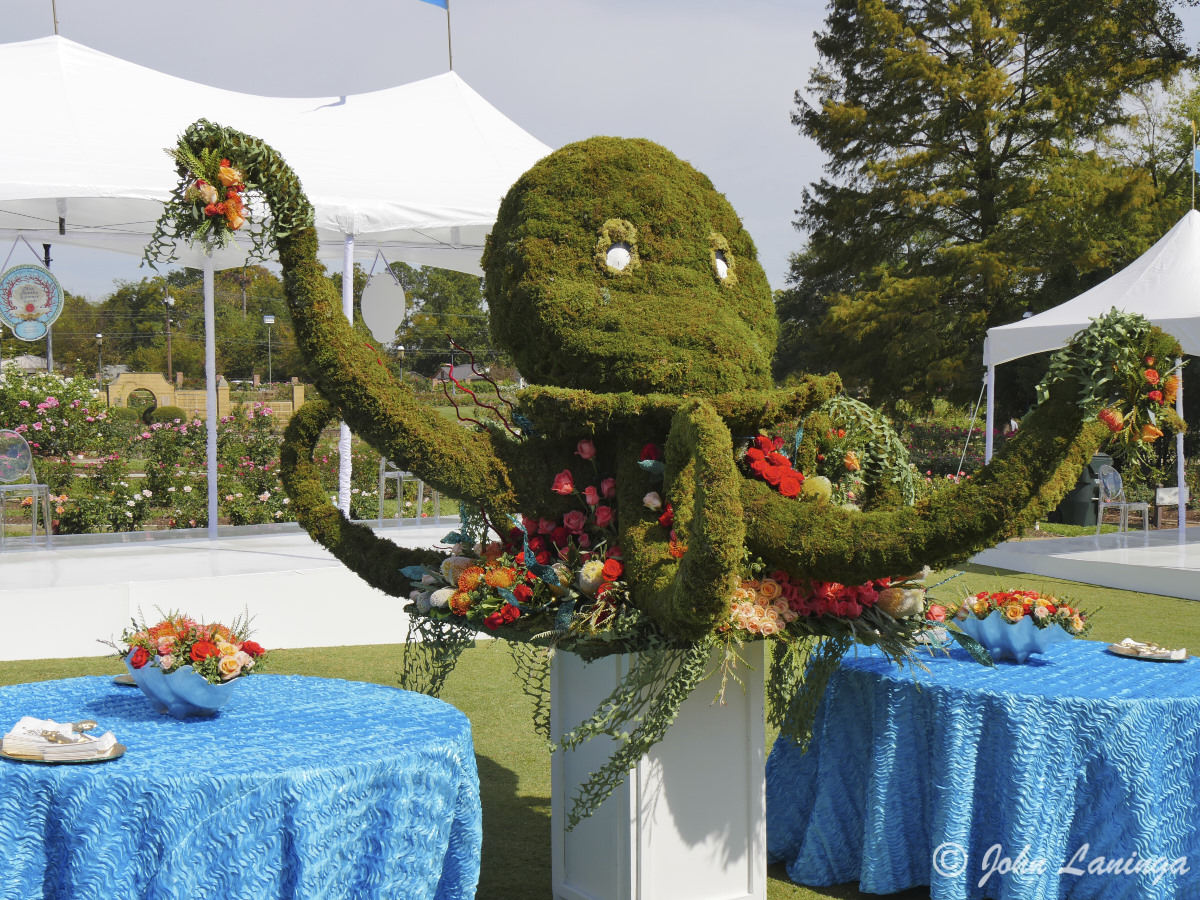
A very elaborate centerpiece for the festivities
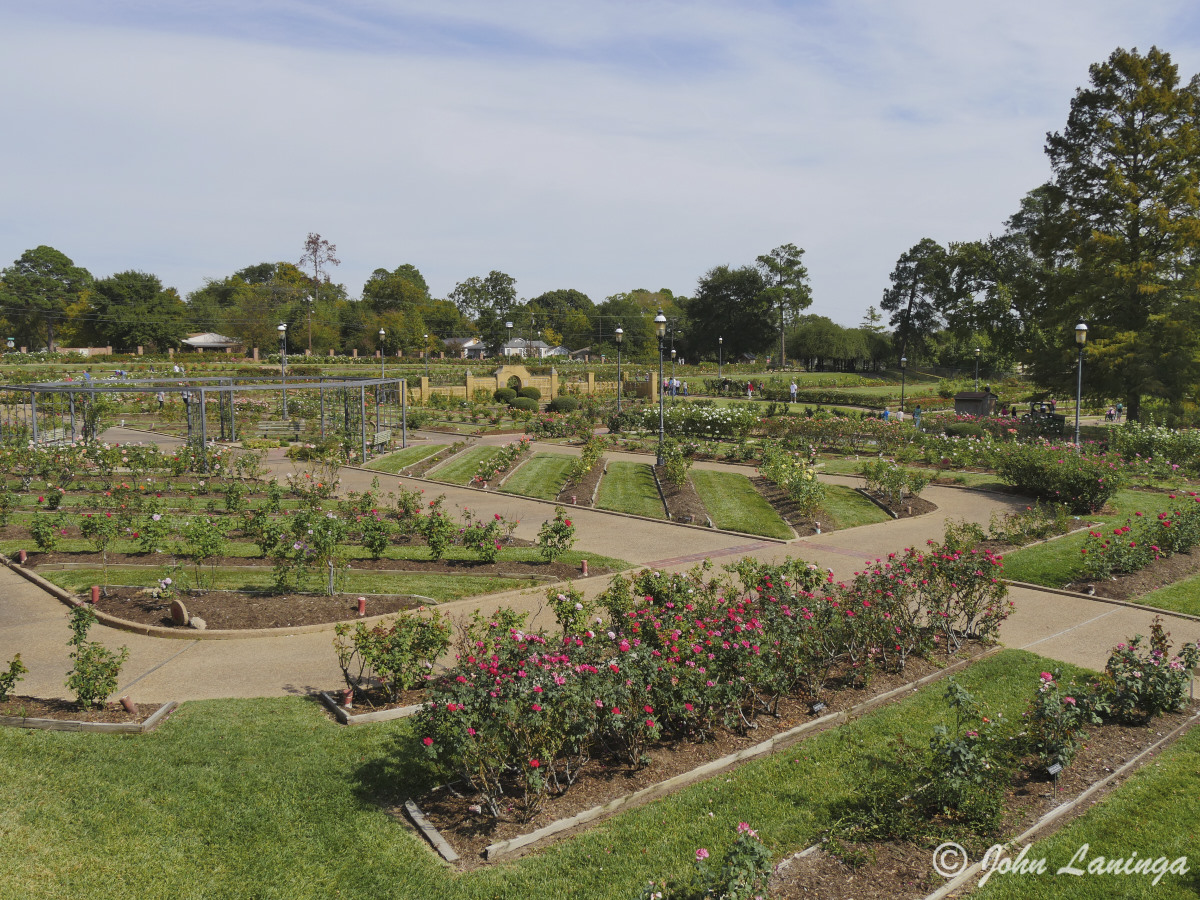
An overview of the Tyler Rose Garden
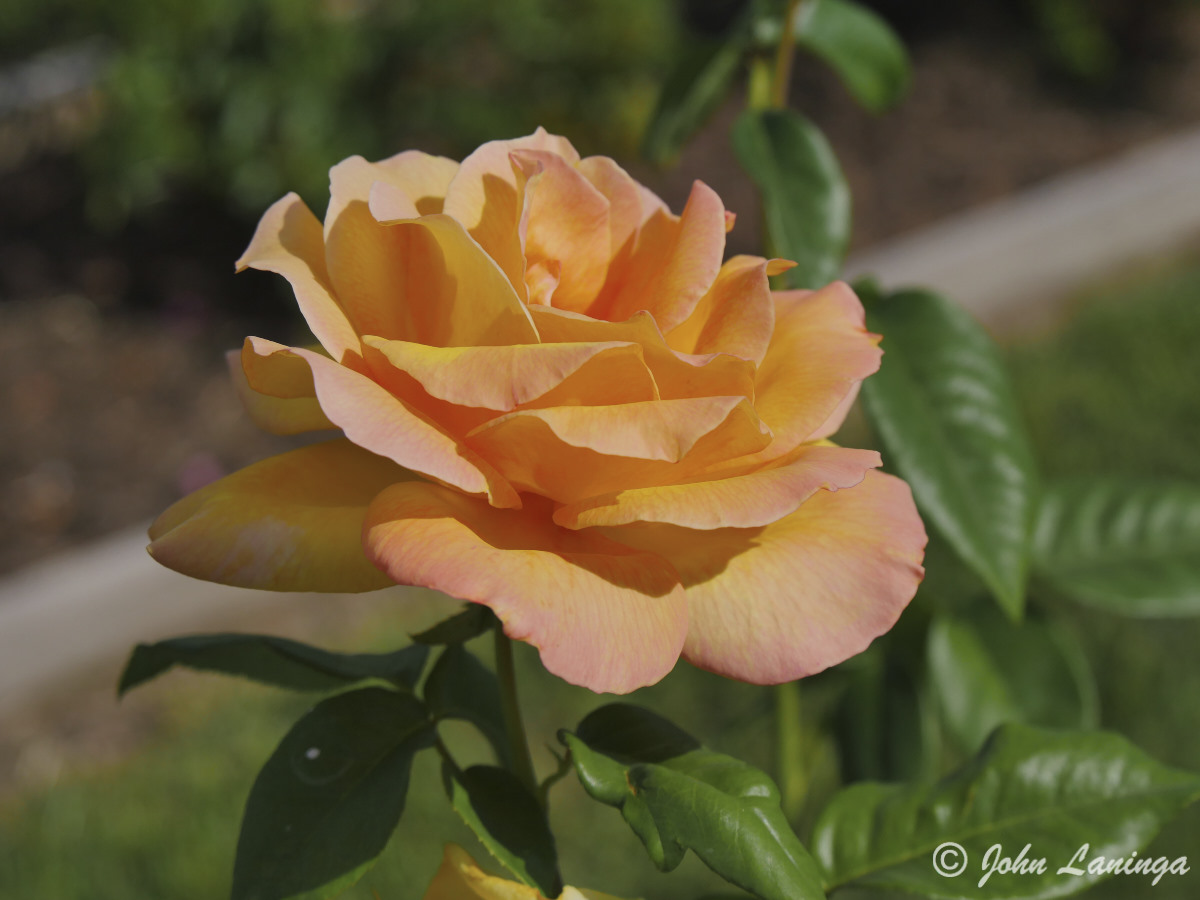
A Tyler rose
Back in Texas
The vacation is over, and we’re back in our motor home. In fact we are back in Lewisville for a few days. When we left, most of the park was flooded due to heavy rains. Now it is back to normal. But…… what’s with the weather? It’s been the mid 90’s all week….
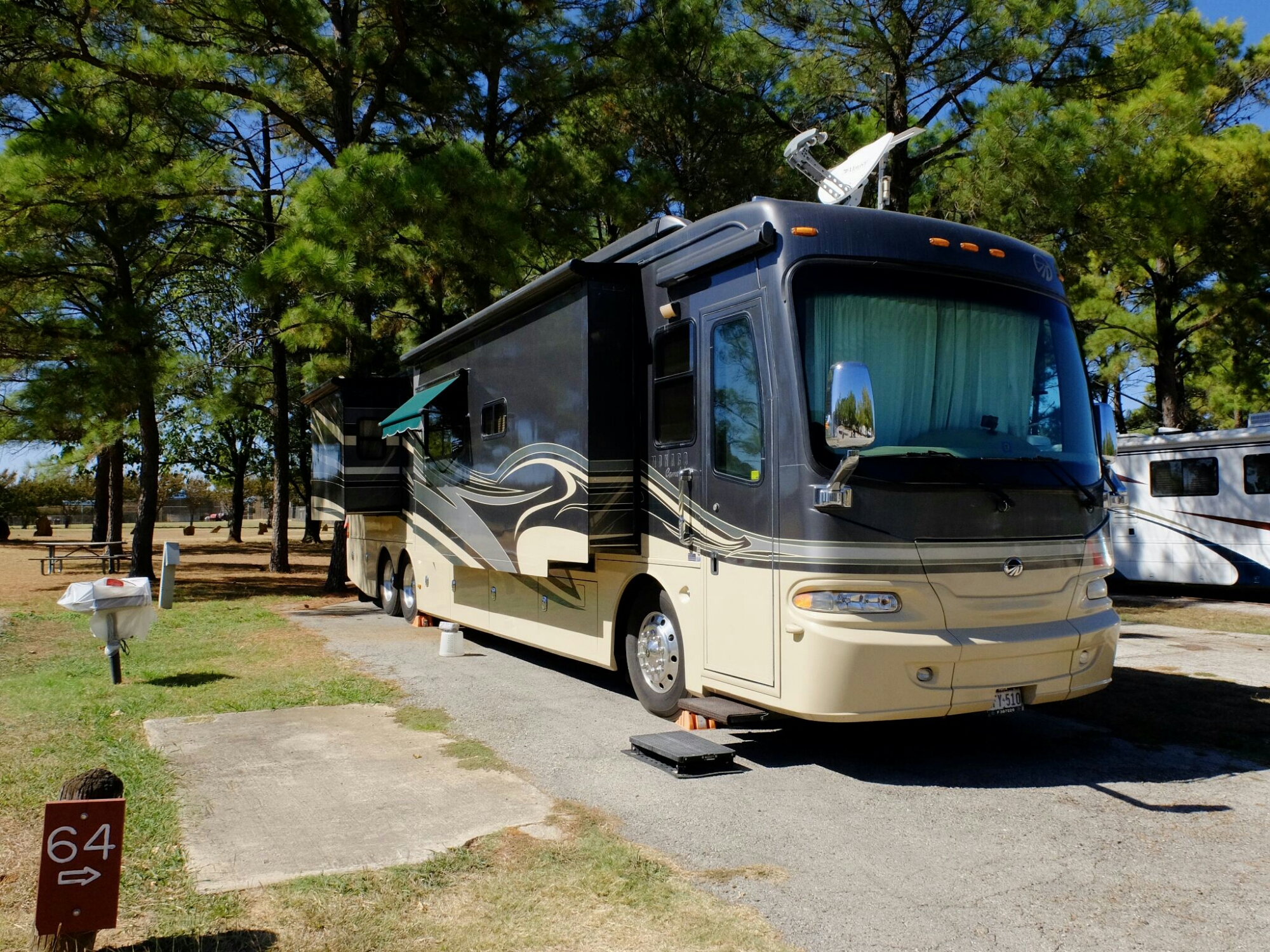
Home sweet home
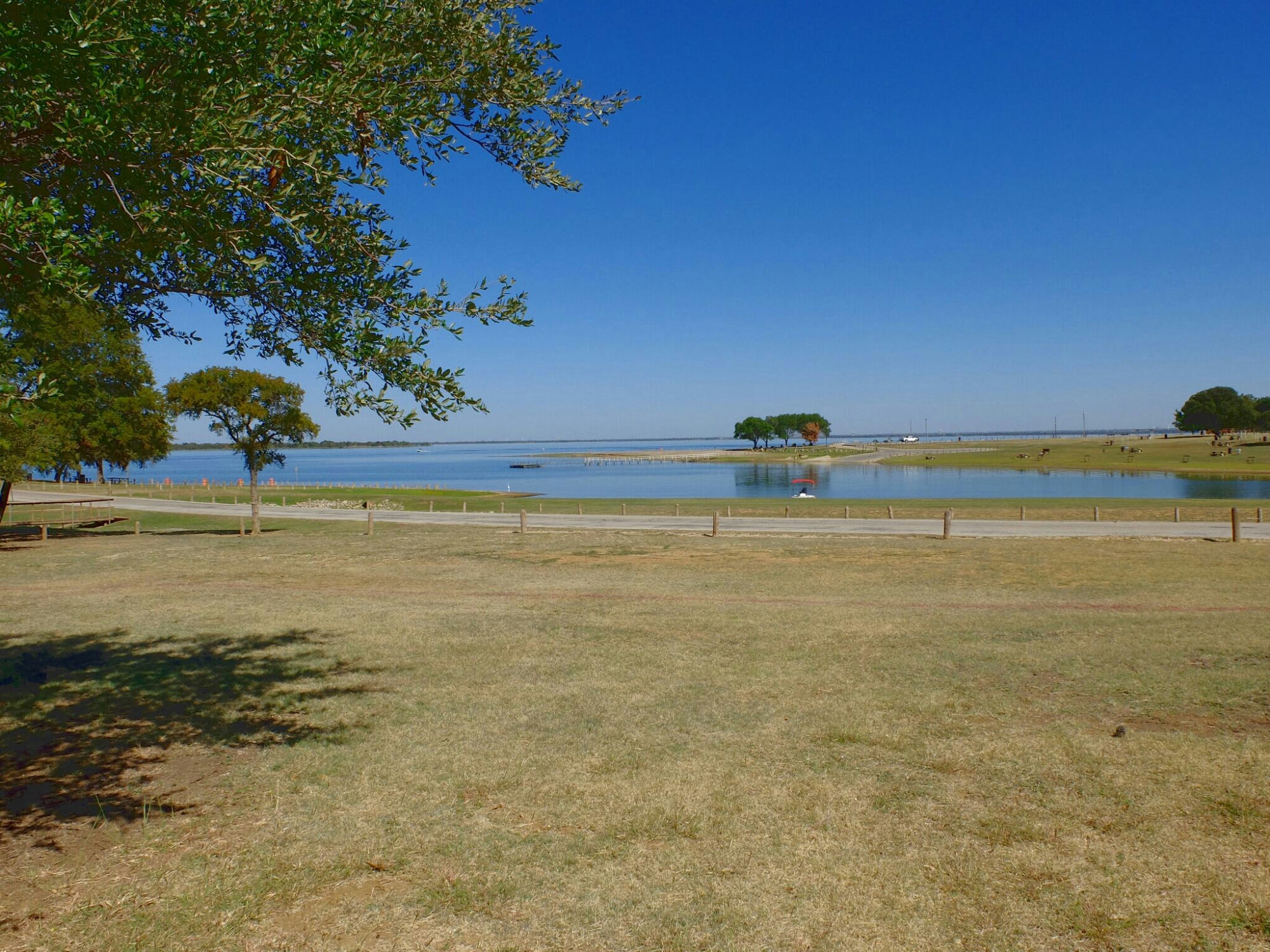
The water is way down
Athens – the last day
All good things must come to an end, even a terrific trip like the one we have been on. So on our last day we managed to get in some final sights.
We walked to Athens First Cemetery, the most important cemetery in Athens. It is not the largest, but most prestigious. The cemetery is organized by family, with all family members buried in one area or crypt. Some of these were exceptionally elaborate. If you can’t take it with you, make a monument…
Our friend George and his lovely wife Angela made our last day most pleasant. First, he drove us near the top of Mount Lycabettus, the highest point in Athens at 300 meters (908 feet) above sea level. A great view from way up there made the last climb up worthwhile!
For a send of, George treated us to a fantastic lunch at a very local sea food restaurant near the seaside city of Pireas. The fish was fresh caught and superbly cooked. Great sendoff, George!
Now only have the trip back to contend with and then see if we can get life back to normal.
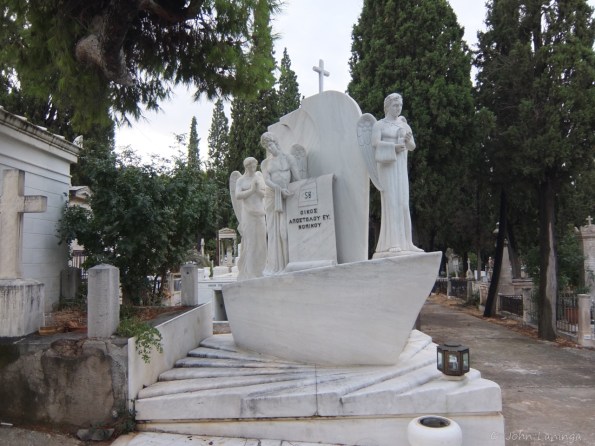
Wonder if this was a sailor making his last voyage
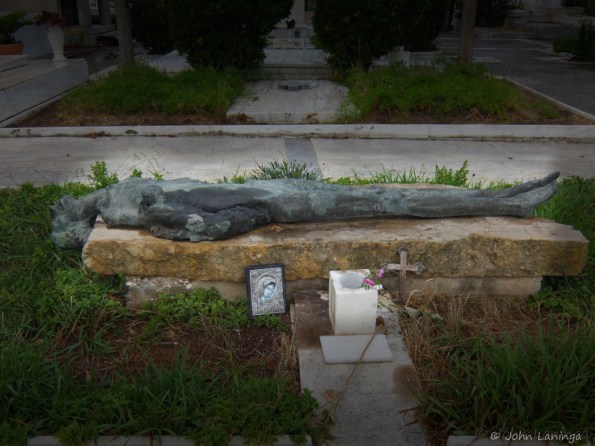
A memorial to all the mothers killed during World War 2
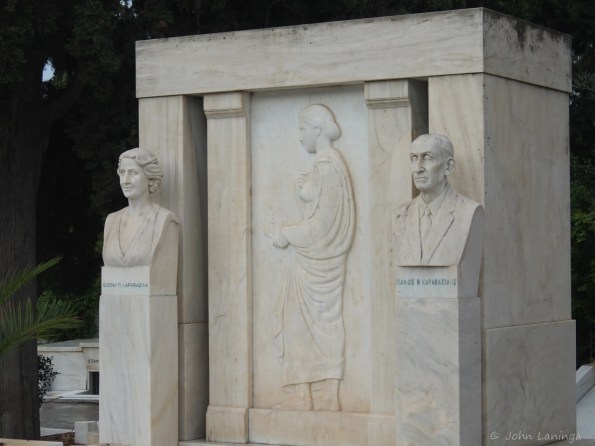
Elaborate carvings
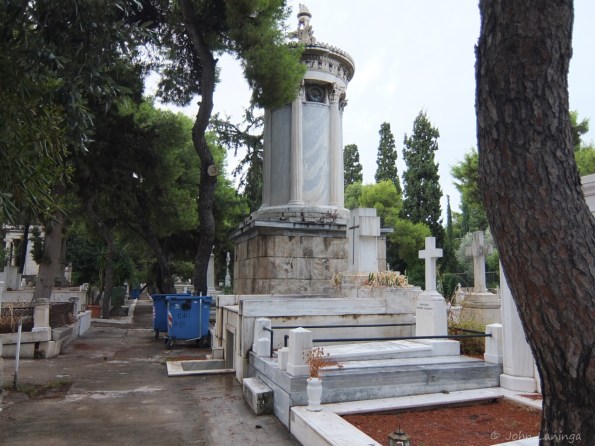
Some self importance at work here?
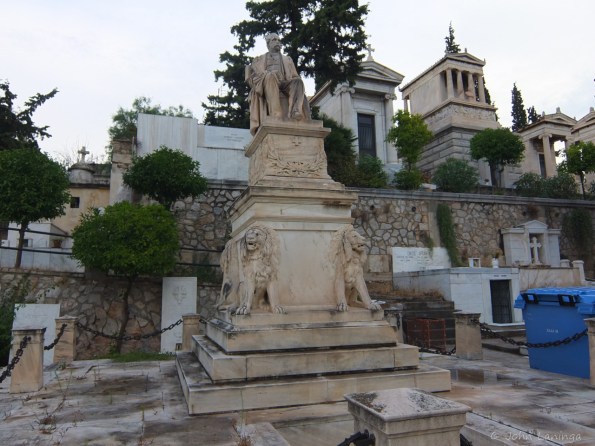
Some reminded me of the Parthenon
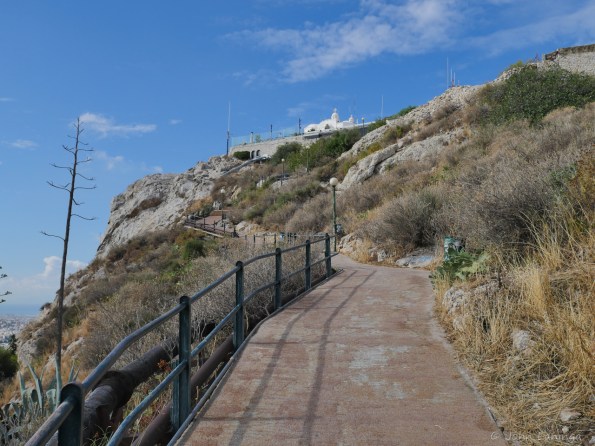
The last walk was well uphill
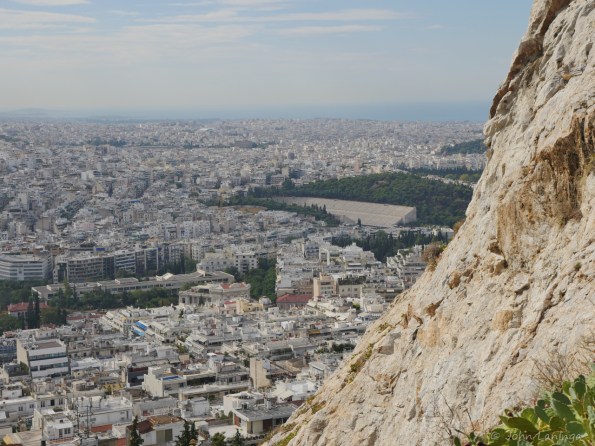
The view made the climb worth it
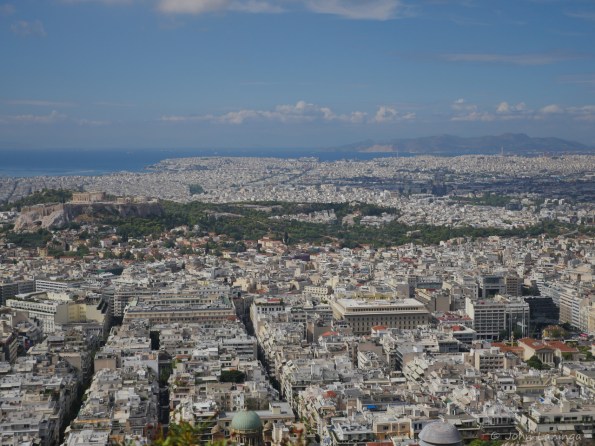
If you look real close you can find the Acropolis
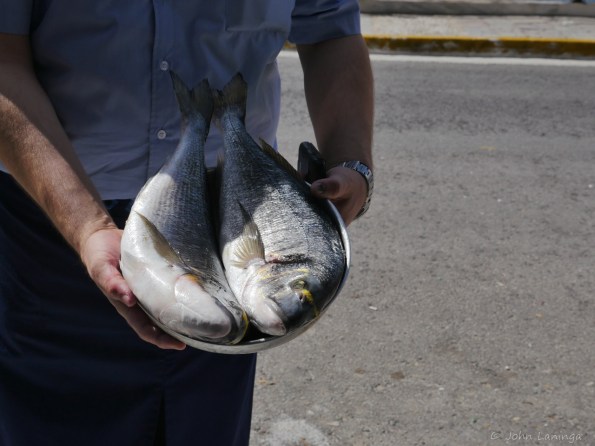
Yes, the fish is fresh!
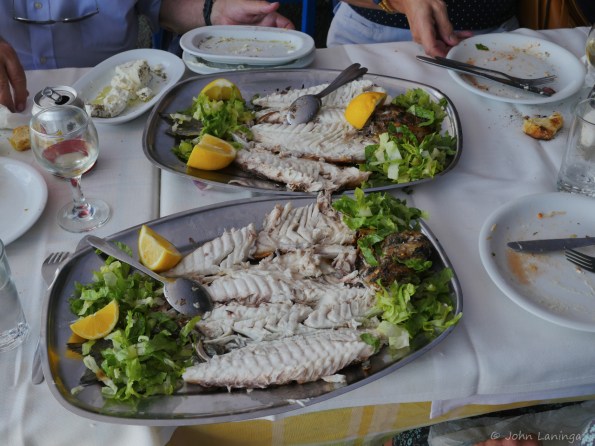
This is how we like to see the fish!
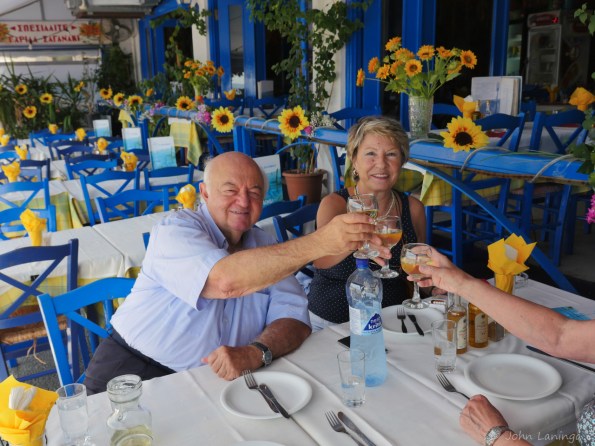
And a toast to you and Angela, George
Athens – the Agora Forums
The Agora of Athens (also known as “Forums”) was the center of the ancient city: a large, open square where the citizens could assemble for a wide variety of purposes. On any given day the space might be used as a market, or for an election, a dramatic performance, a religious procession, military drill, or athletic competition. Here administrative, political, judicial, commercial, social, cultural, and religious activities all found a place together in the heart of Athens, and the square was surrounded by the public buildings (“Stoas”) necessary to run the Athenian government.
Later the Agora defined the open-air, often tented, marketplace of a city where merchants had their shops and where craftsmen made and sold their wares. Today, open-air markets are still held in that same location. There were confectioners who made pastries and sweets, slave-traders, fishmongers, vintners, cloth merchants, shoe-makers, dress makers, and jewelry purveyors. One of the Stoas (Stoa of Attalos) has been rebuilt just to show the size and complexity of the building. It now houses the Museum shops.
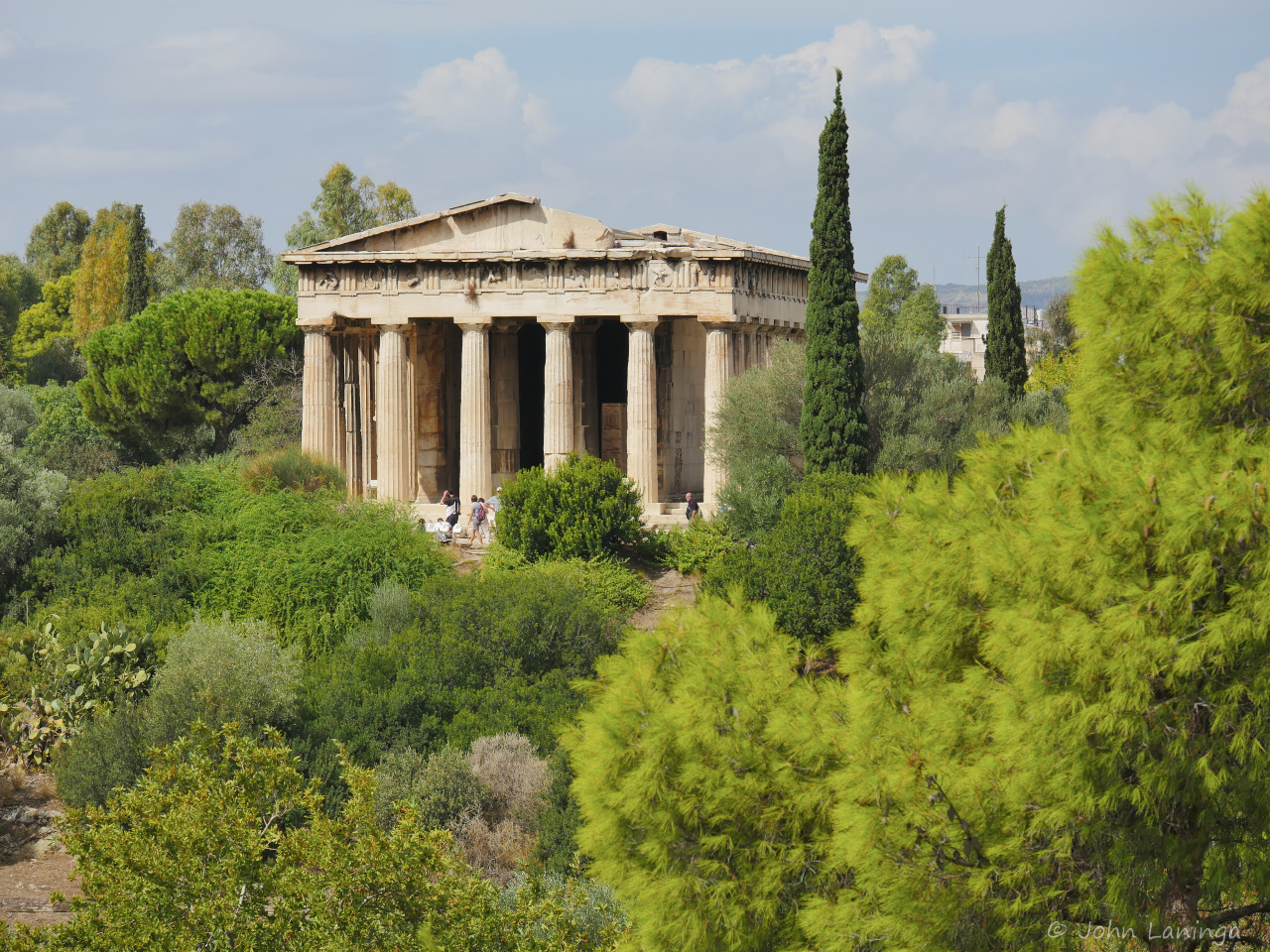
View looking west toward the Hephaisteion
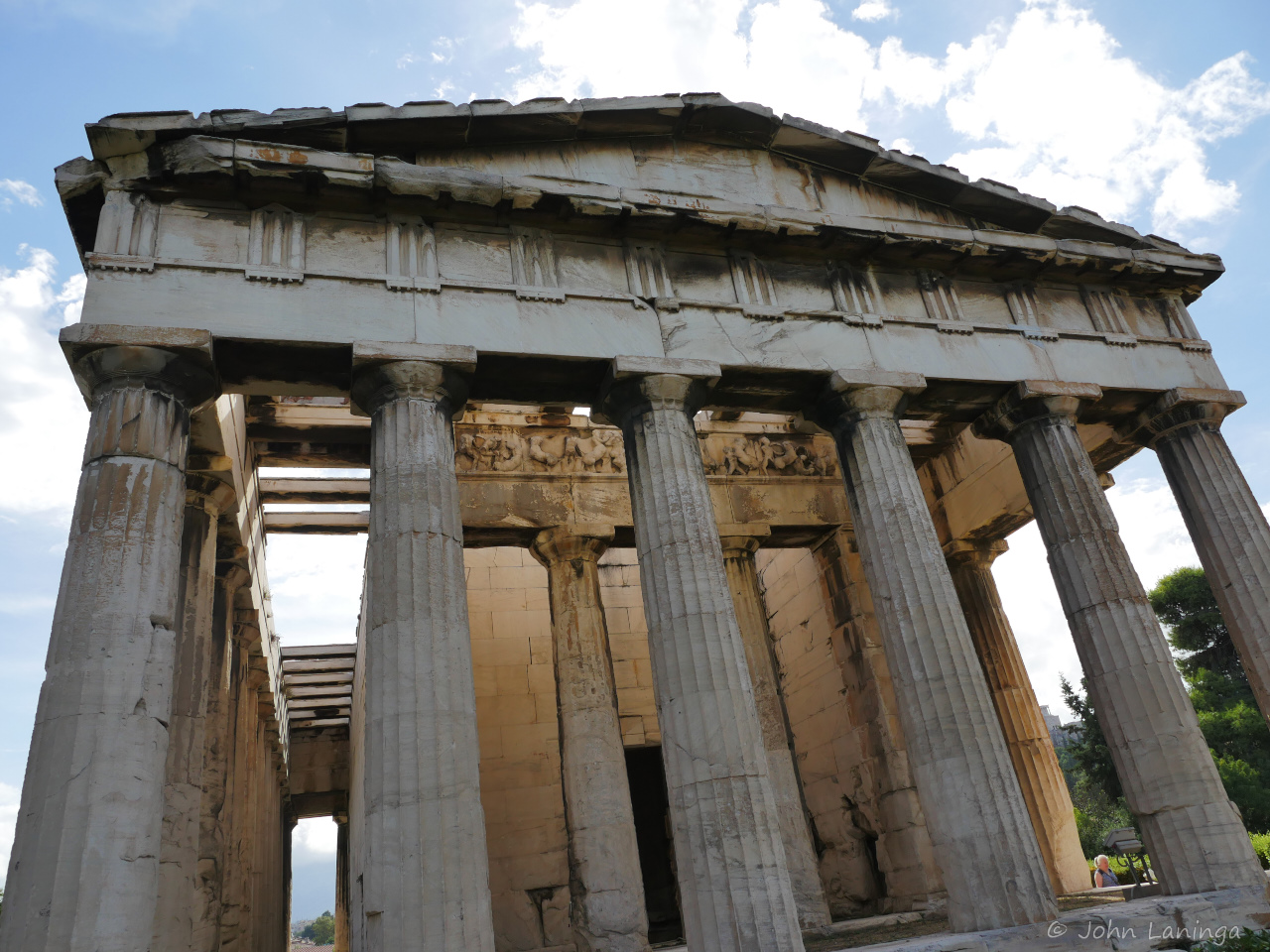
Detail of the Hephaisteion
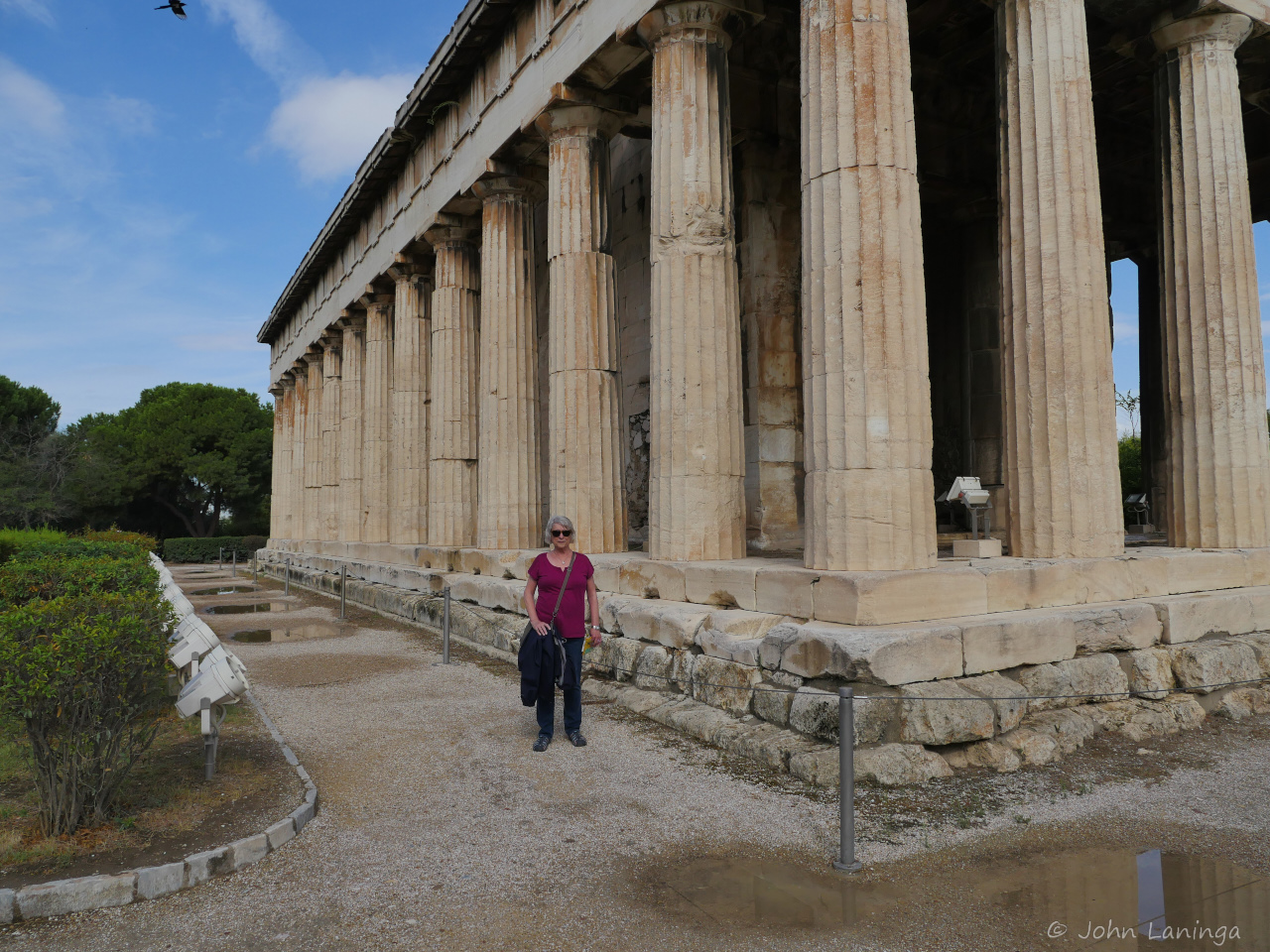
Romola is dwarfed by the Hephaisteion
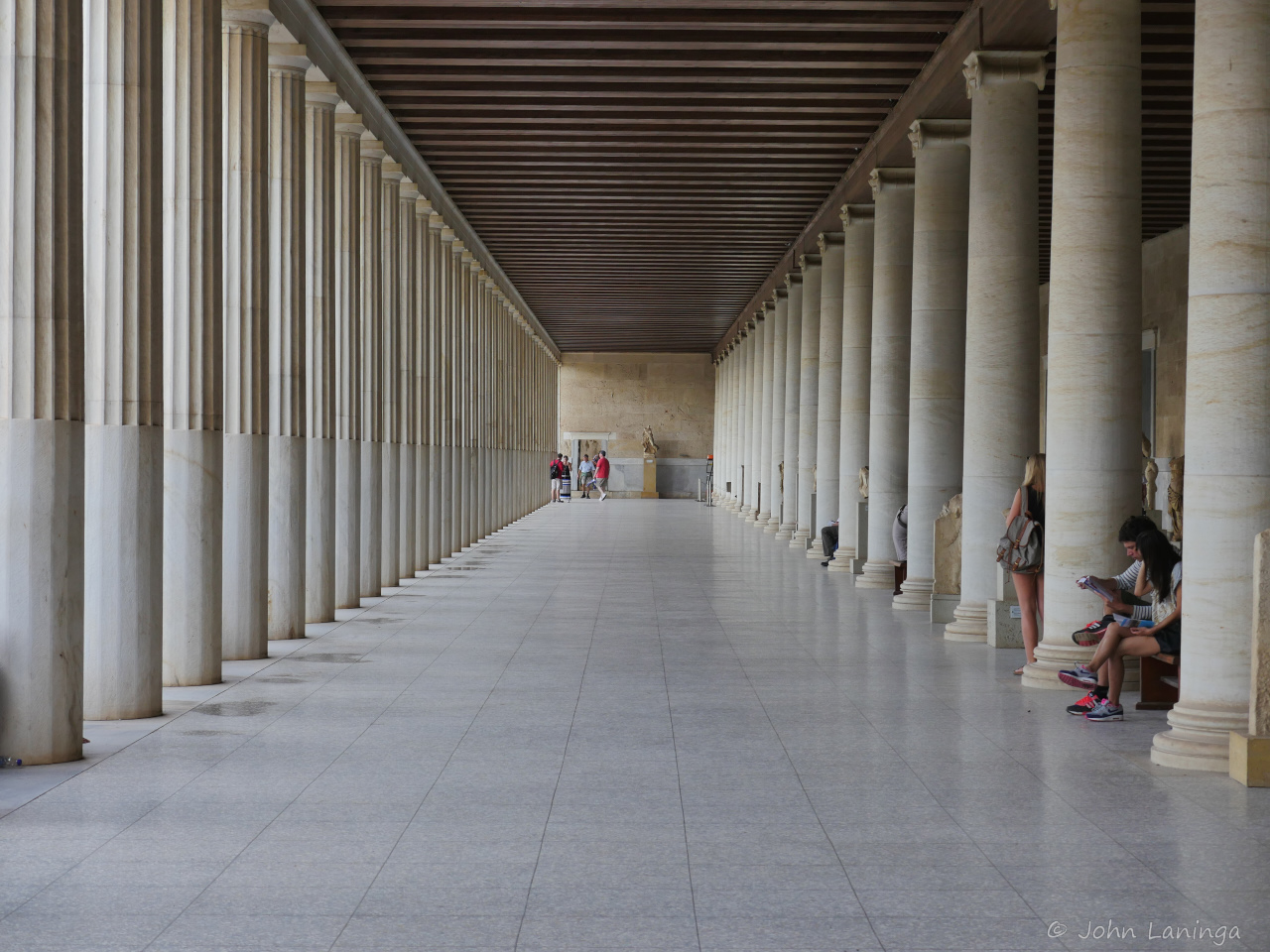
Lower colonnade of the Stoa of Attalos.
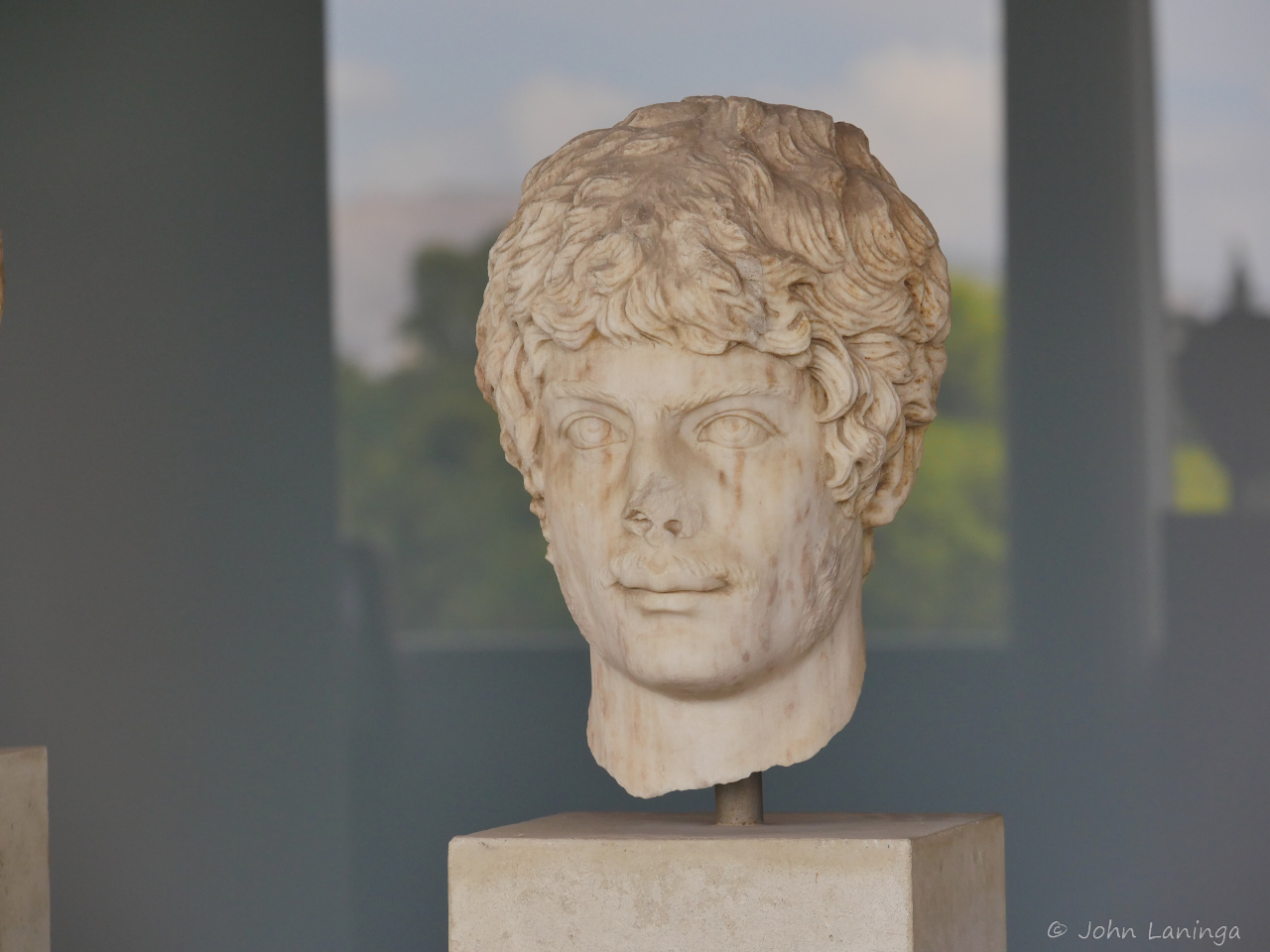
Bust of one of the residents of the Forum

Some of the statuary

Much of the Shrine has been rebuilt
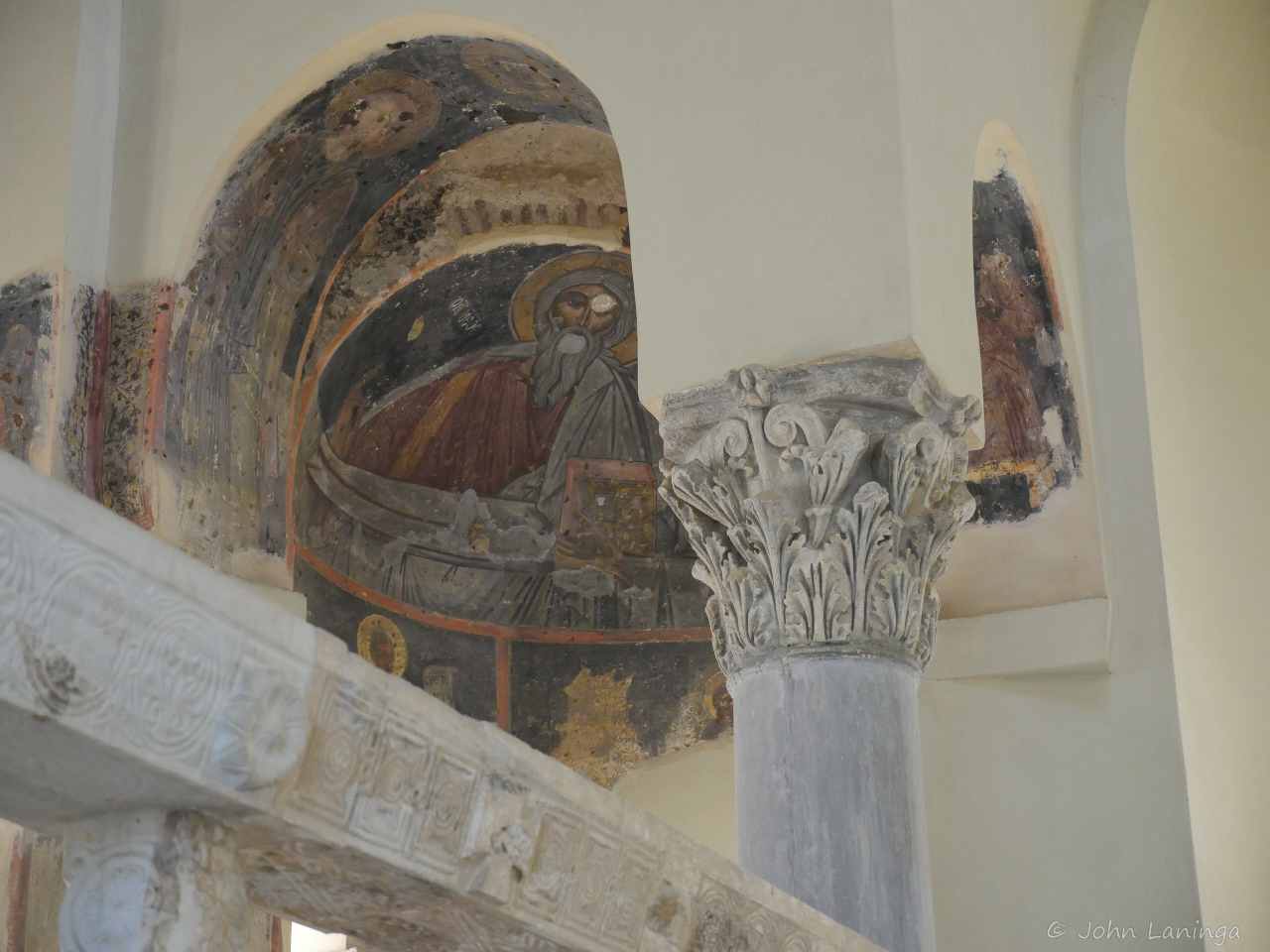
Inside the Shrine

Not much left of the Metroon, one of the early meeting places
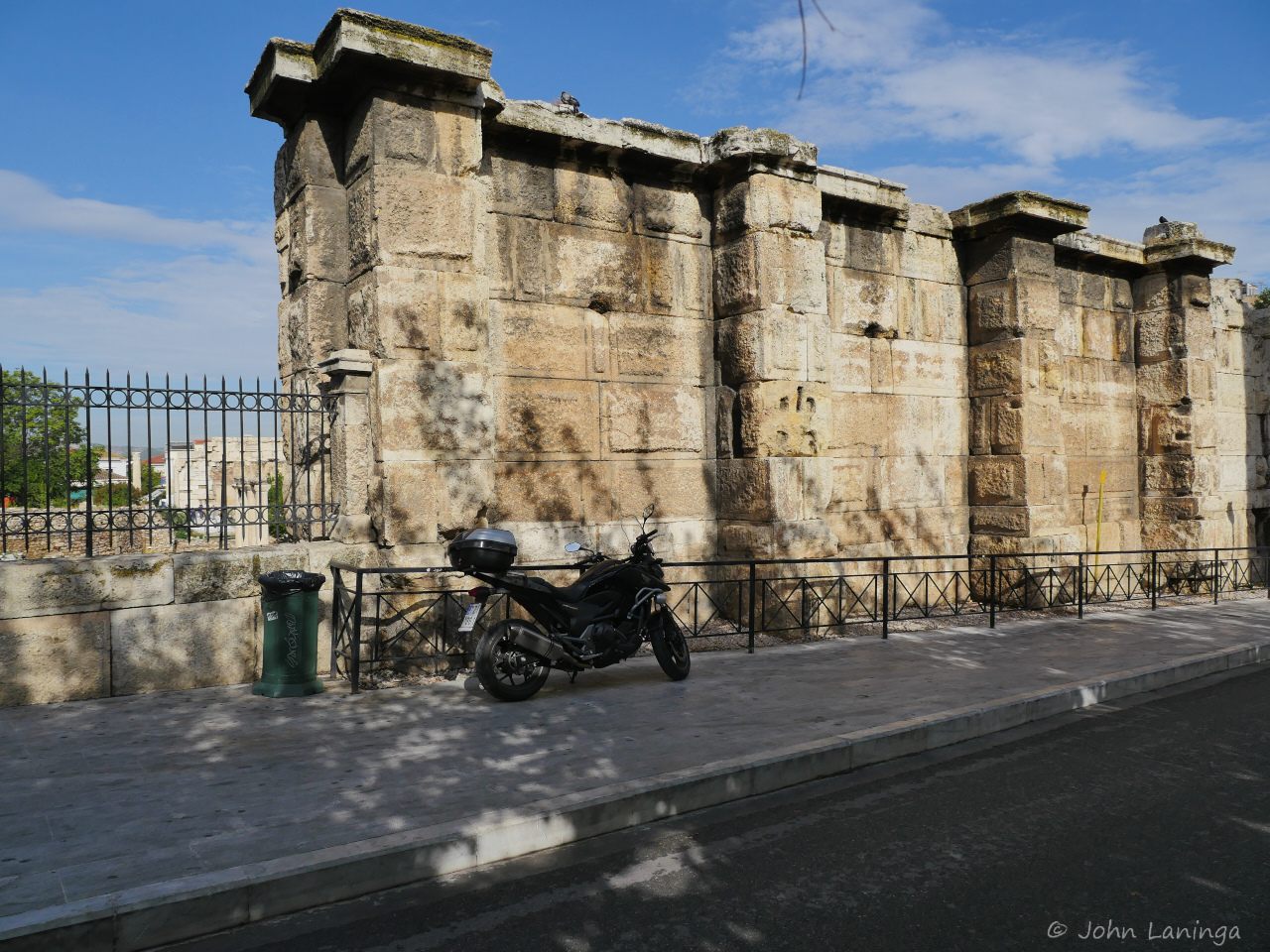
One of the old walls of the Forum
Athens – museums
Athens has a lot of museums. A lot. We didn’t have enough time for all so we just visited the New Acropolos Museum and the Archaeological Museum. We could have spent days in either one.
The New Acropolis Museum is considered one of Athens most important museums. Beautifully laid out, and still respecting the excavations underneath. In fact, you can still observe the ongoing excavations, either through viewing openings or transparent floor panels. Much of the Acropolis’ treasures are on display in this museum.
The National Archaeological Museum houses some of the most important artifacts from a variety of archaeological locations around Greece from prehistory to late antiquity. It is considered one of the greatest museums in the world and contains the richest collection of artifacts from Greek antiquity worldwide. Of special interest was the Antikythera mechanism, an ancient analog computer designed to predict astronomical positions for navigation as well as predicting the cycles of the Ancient Olympic Games.

Acropolis museum, at night
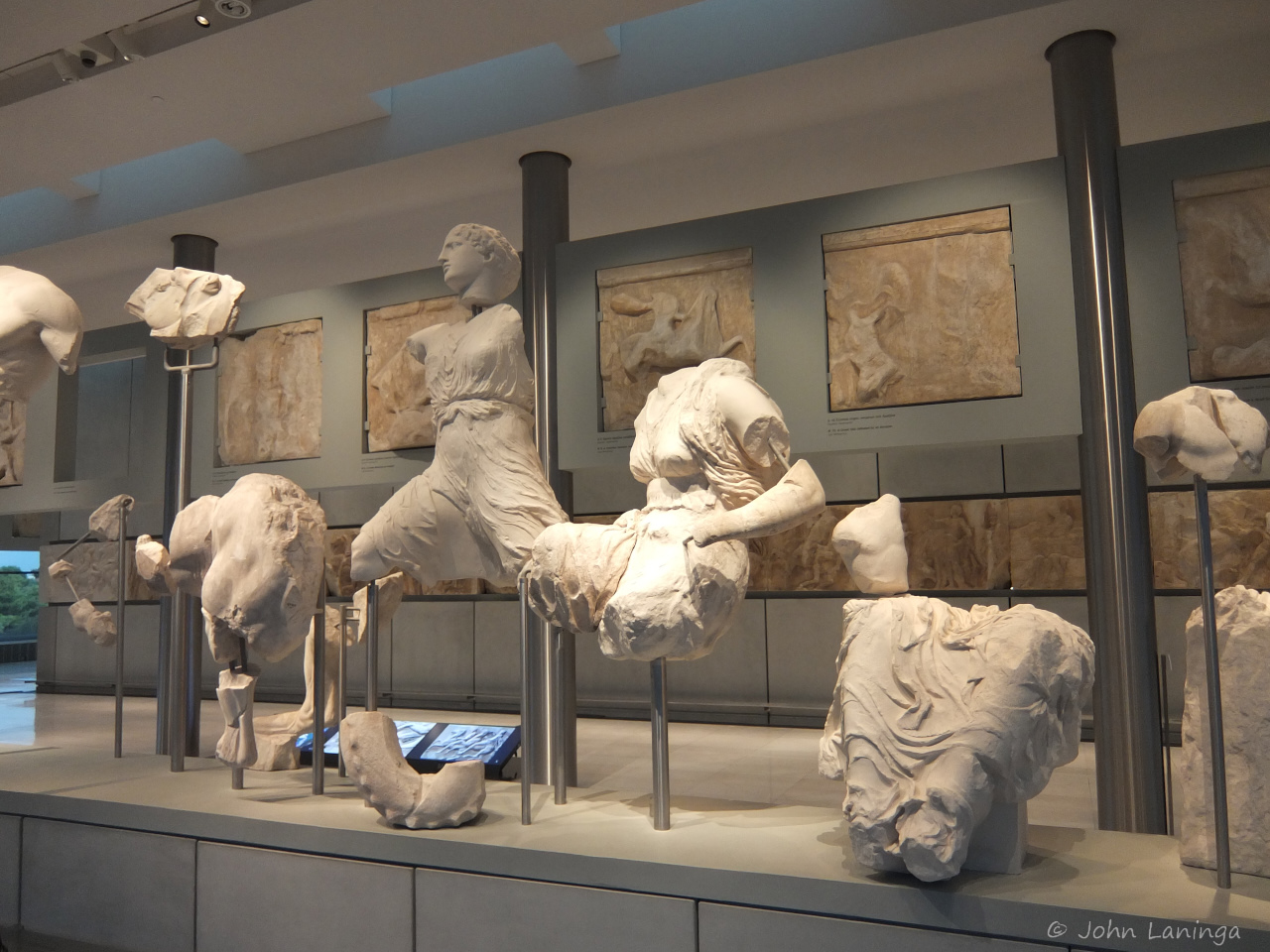
Pieces of the frieze
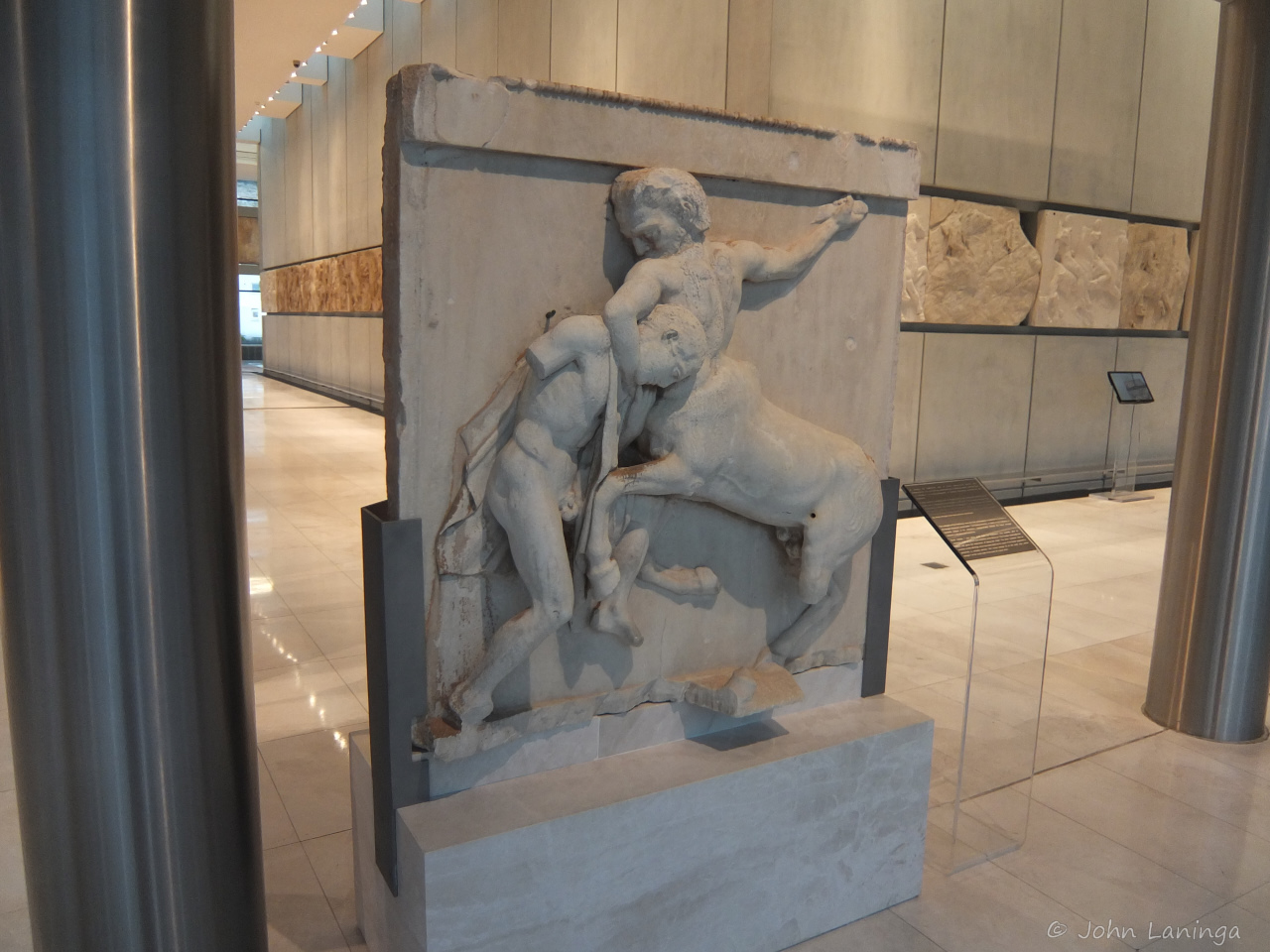
Parthenon carvings
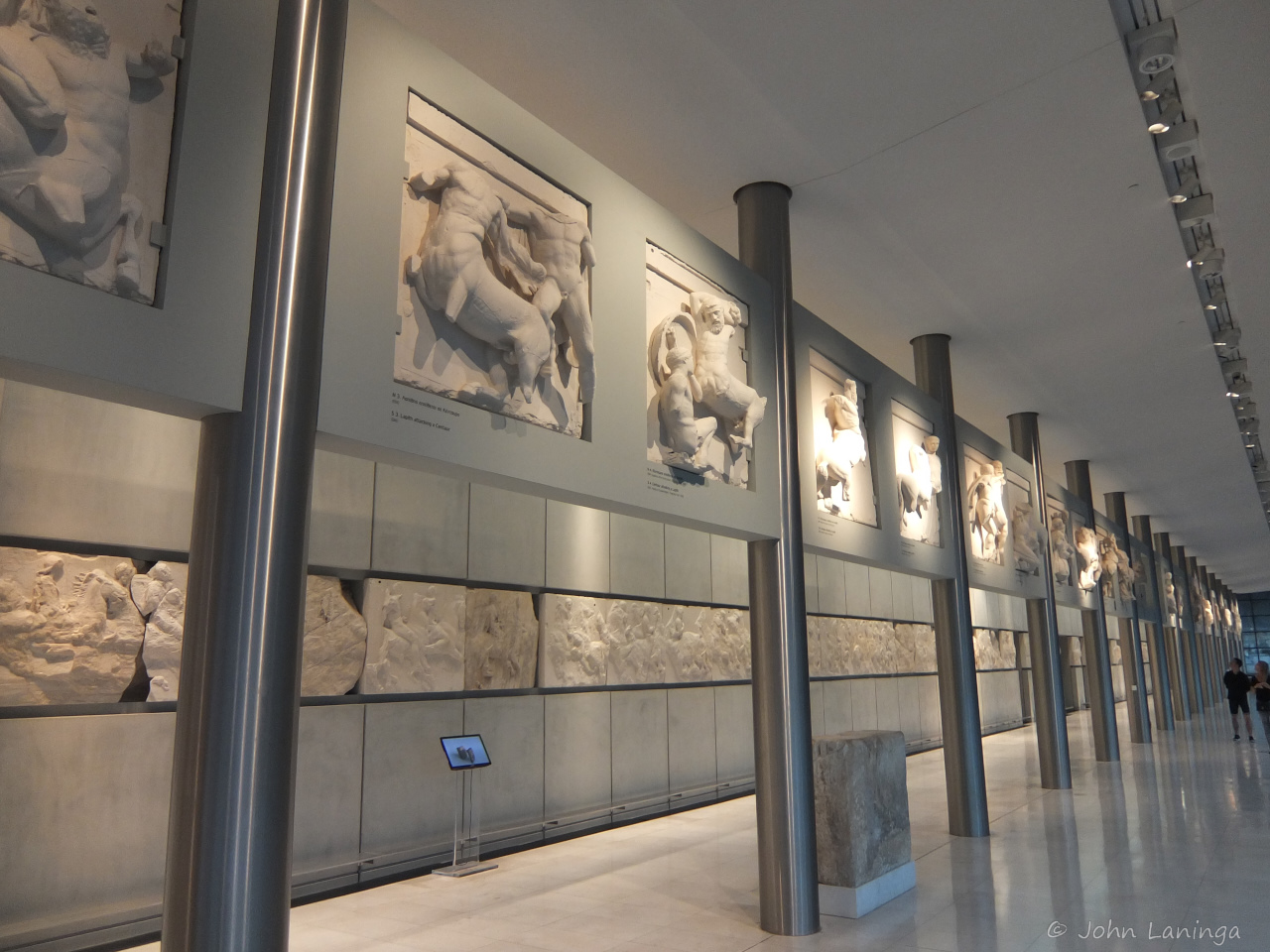
Parthenon carvings
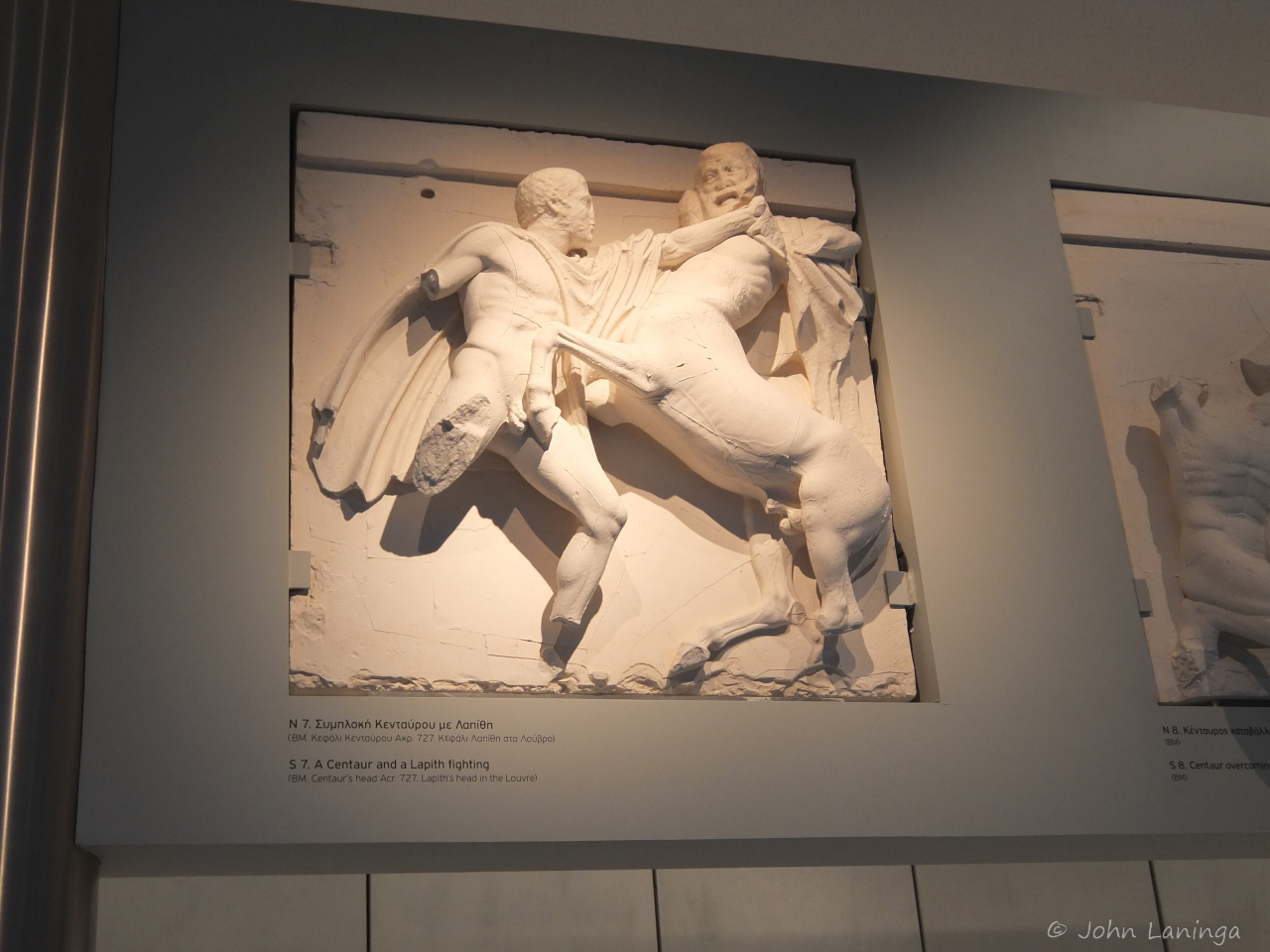
Parthenon carvings
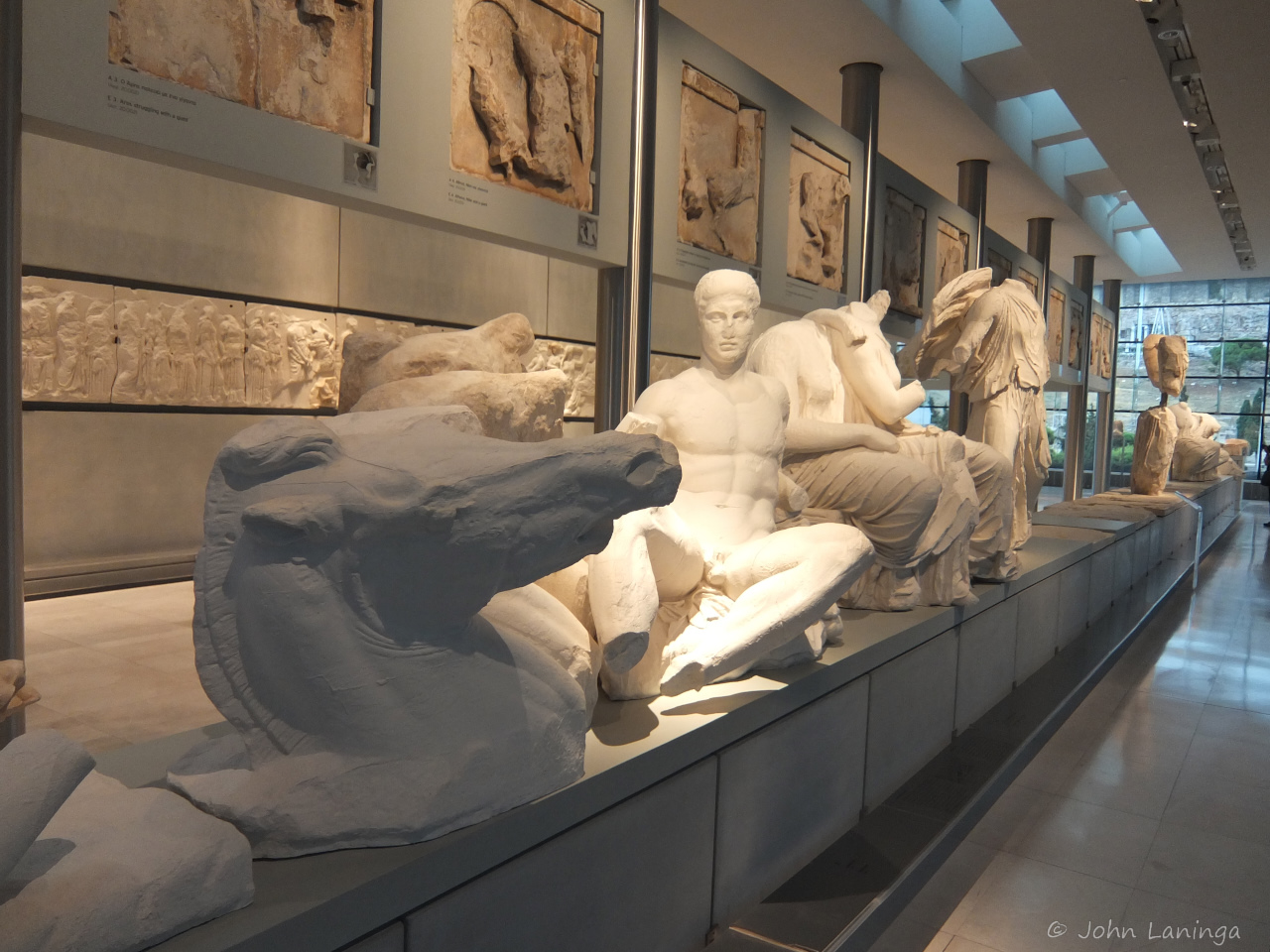
Parthenon carvings
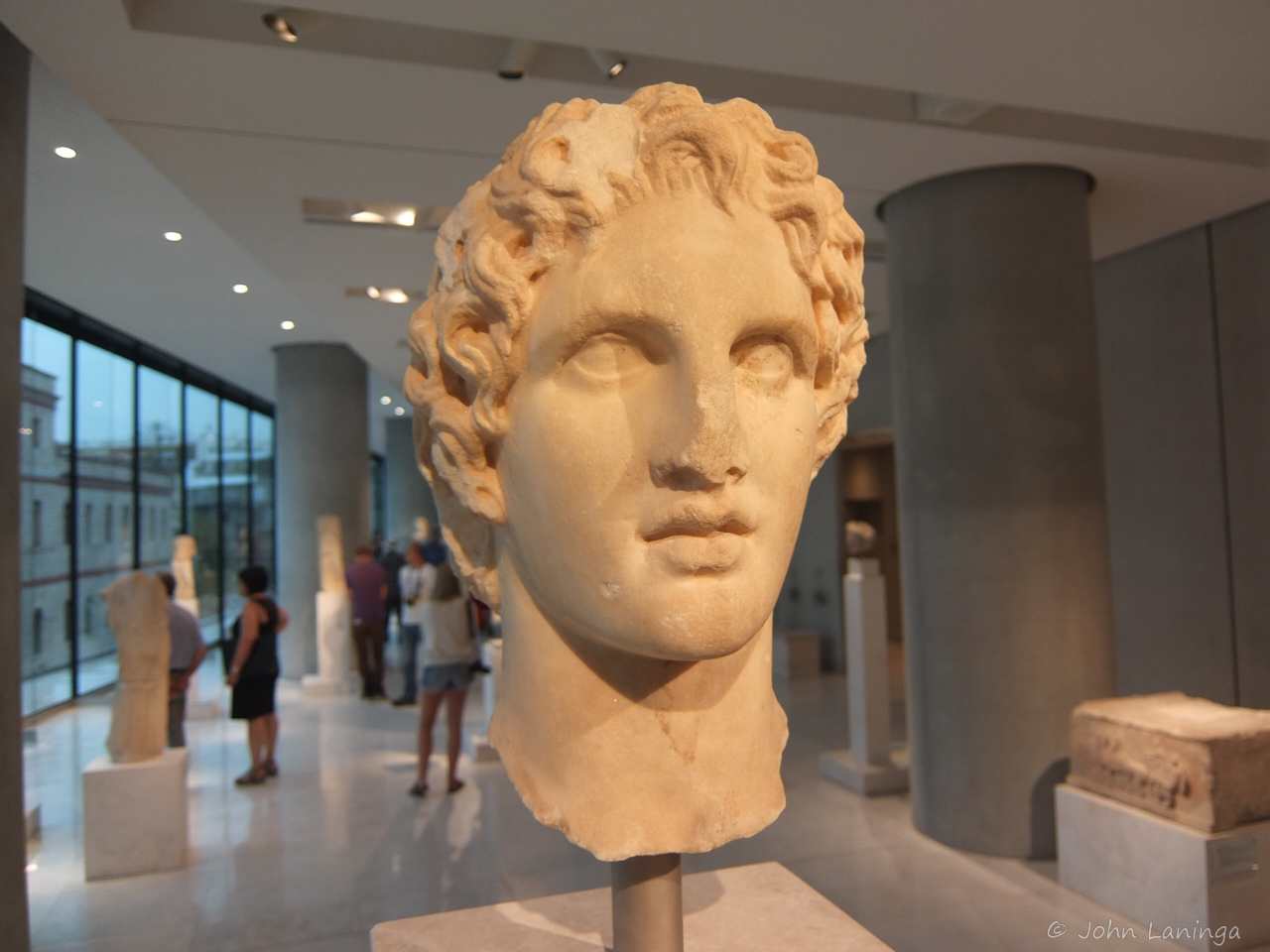
Parthenon busts
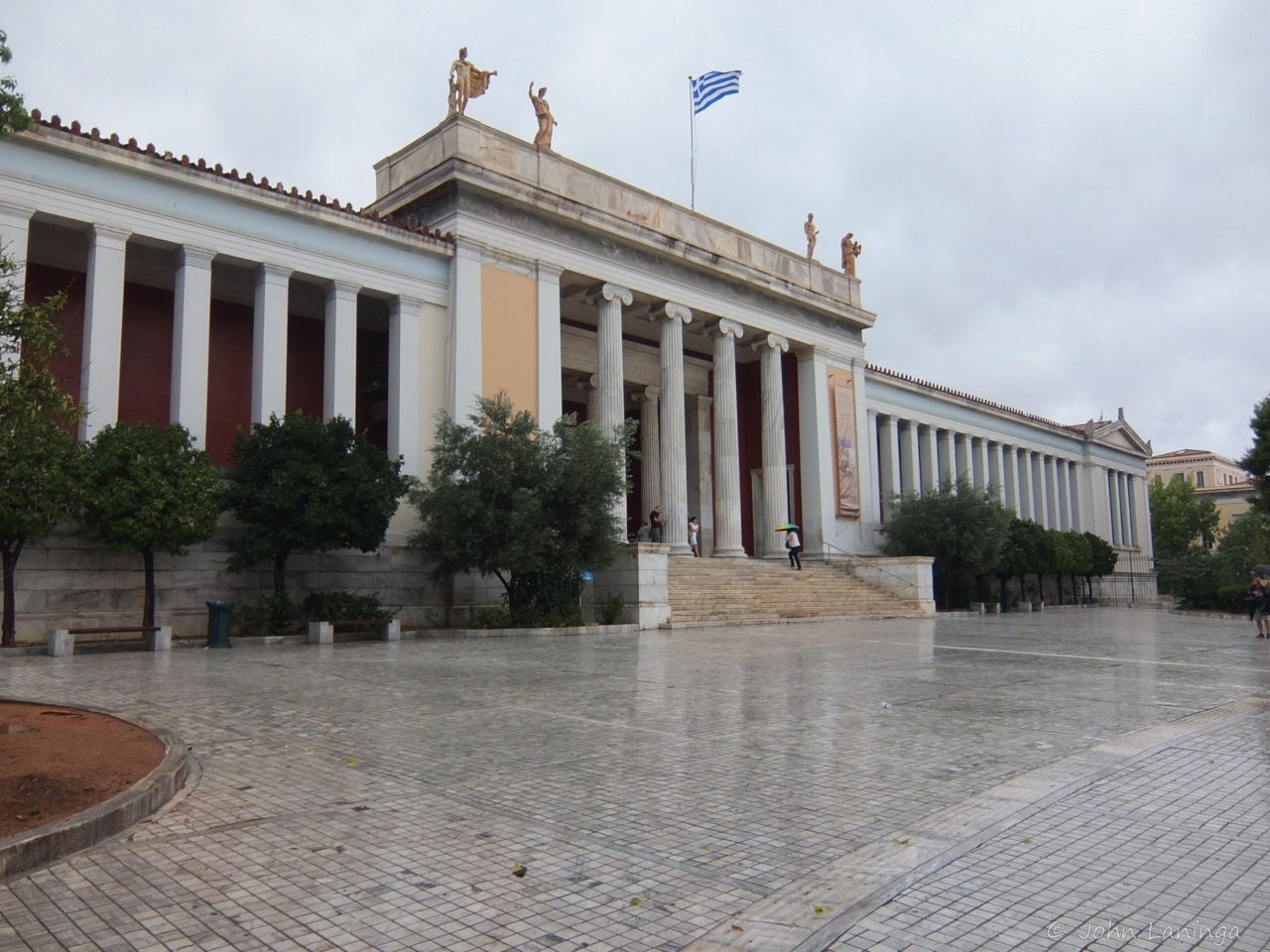
National Archeaological museum
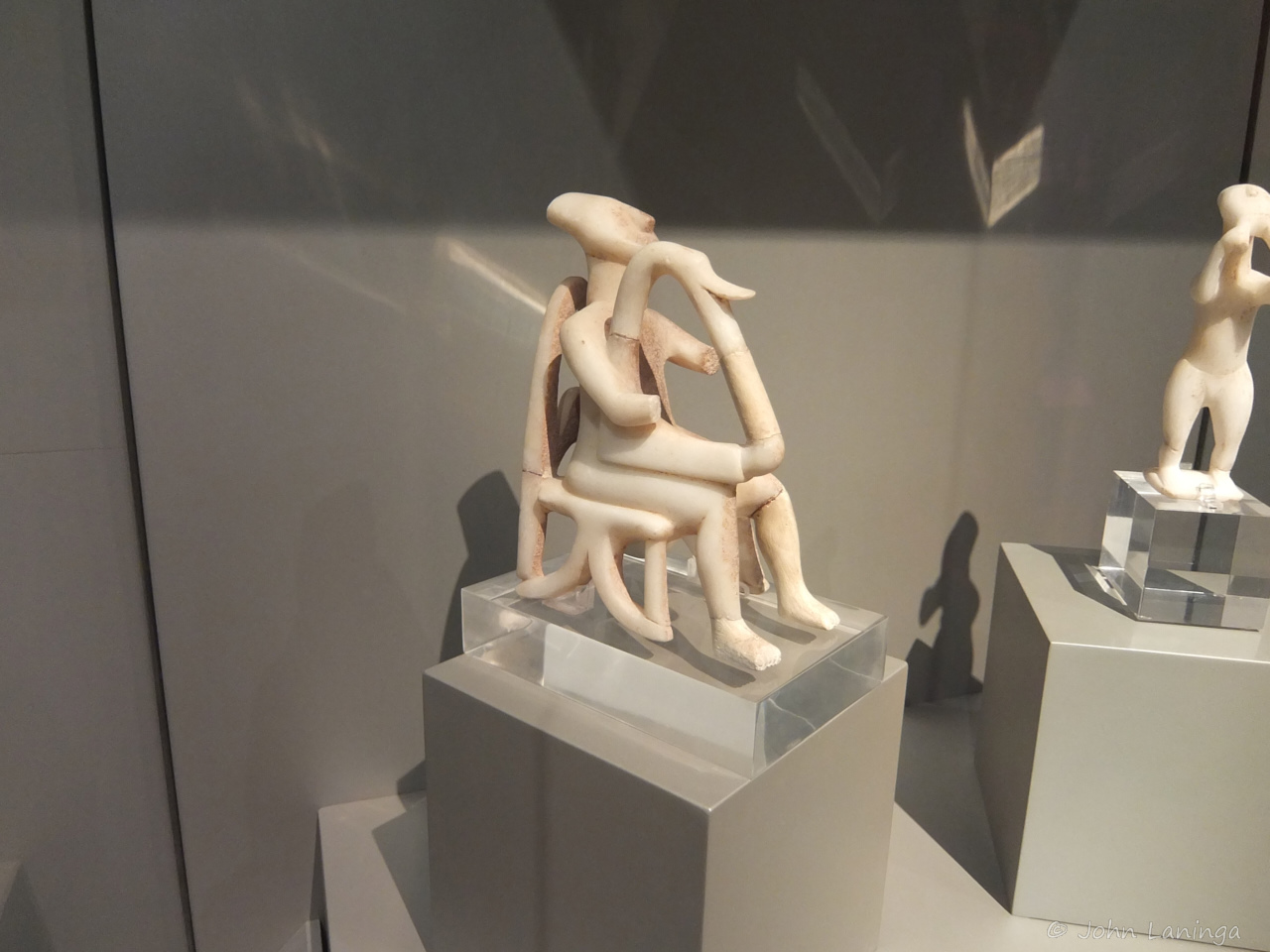
Detailed figurine some 5,000 years old
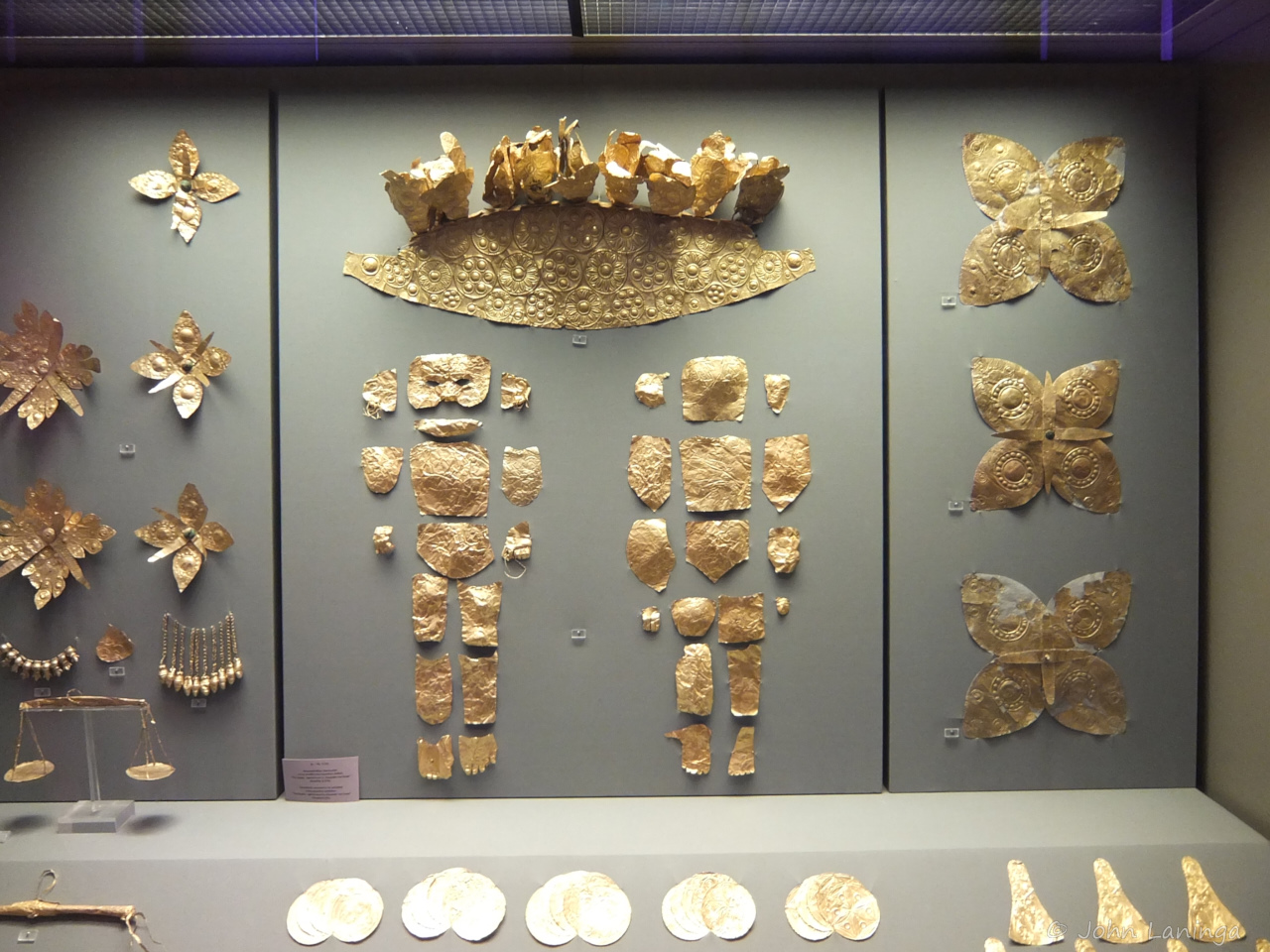
Gold burial decorations
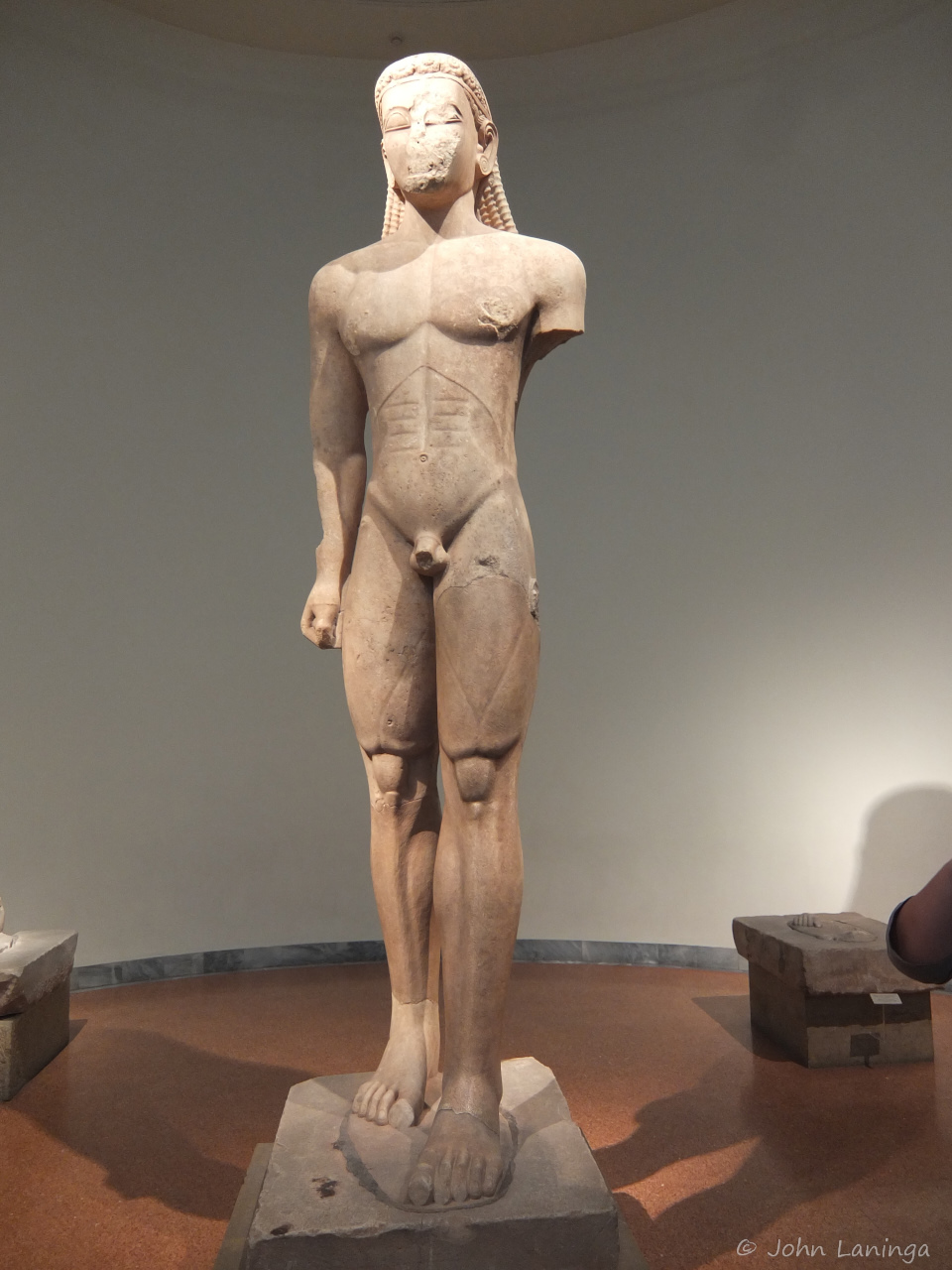
This statue is some 8 feet tall

Tall statue of a virgin holding her robe
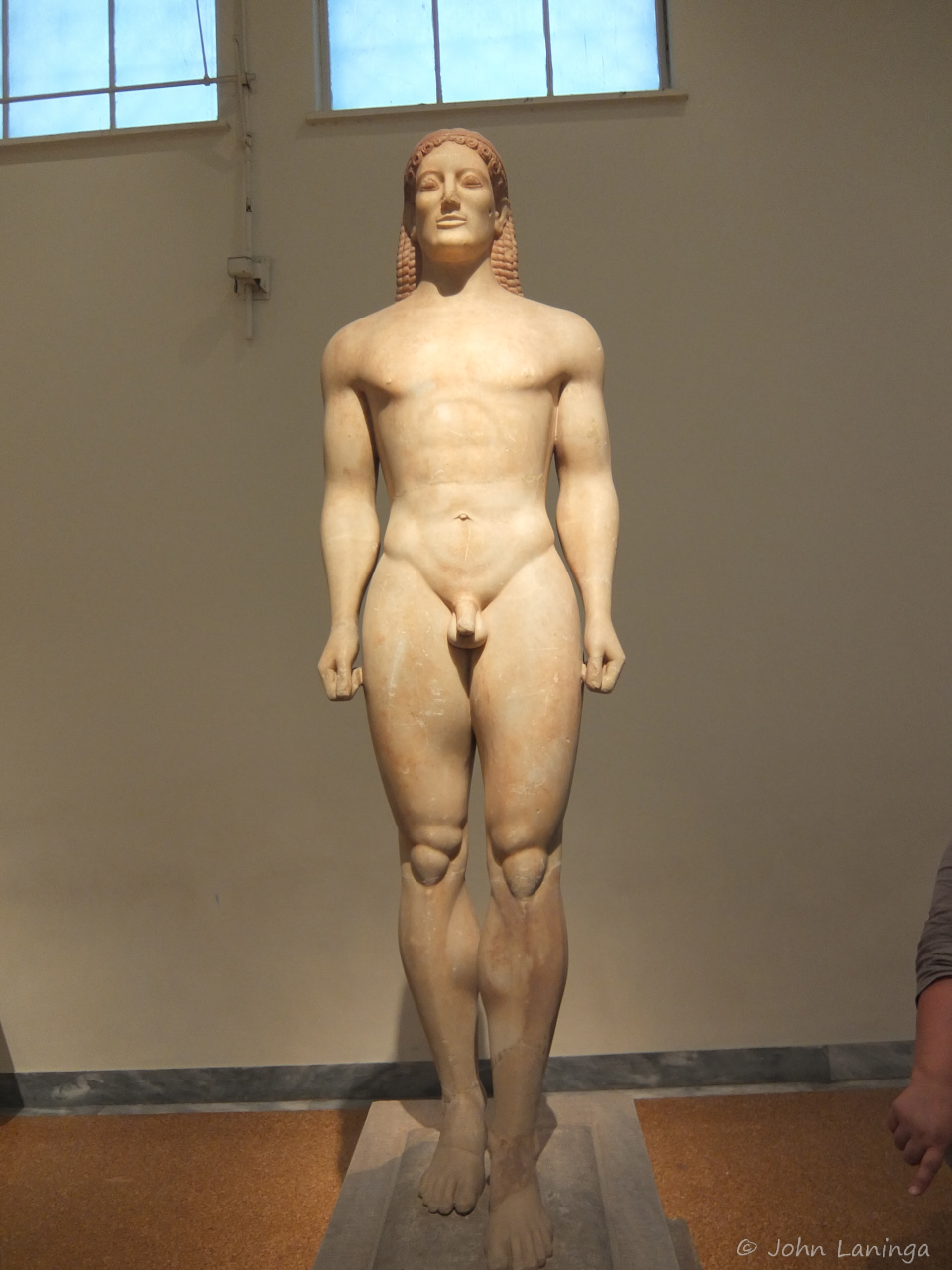
Men spent much of their time in the gym, and showed off by running around nude (really!)
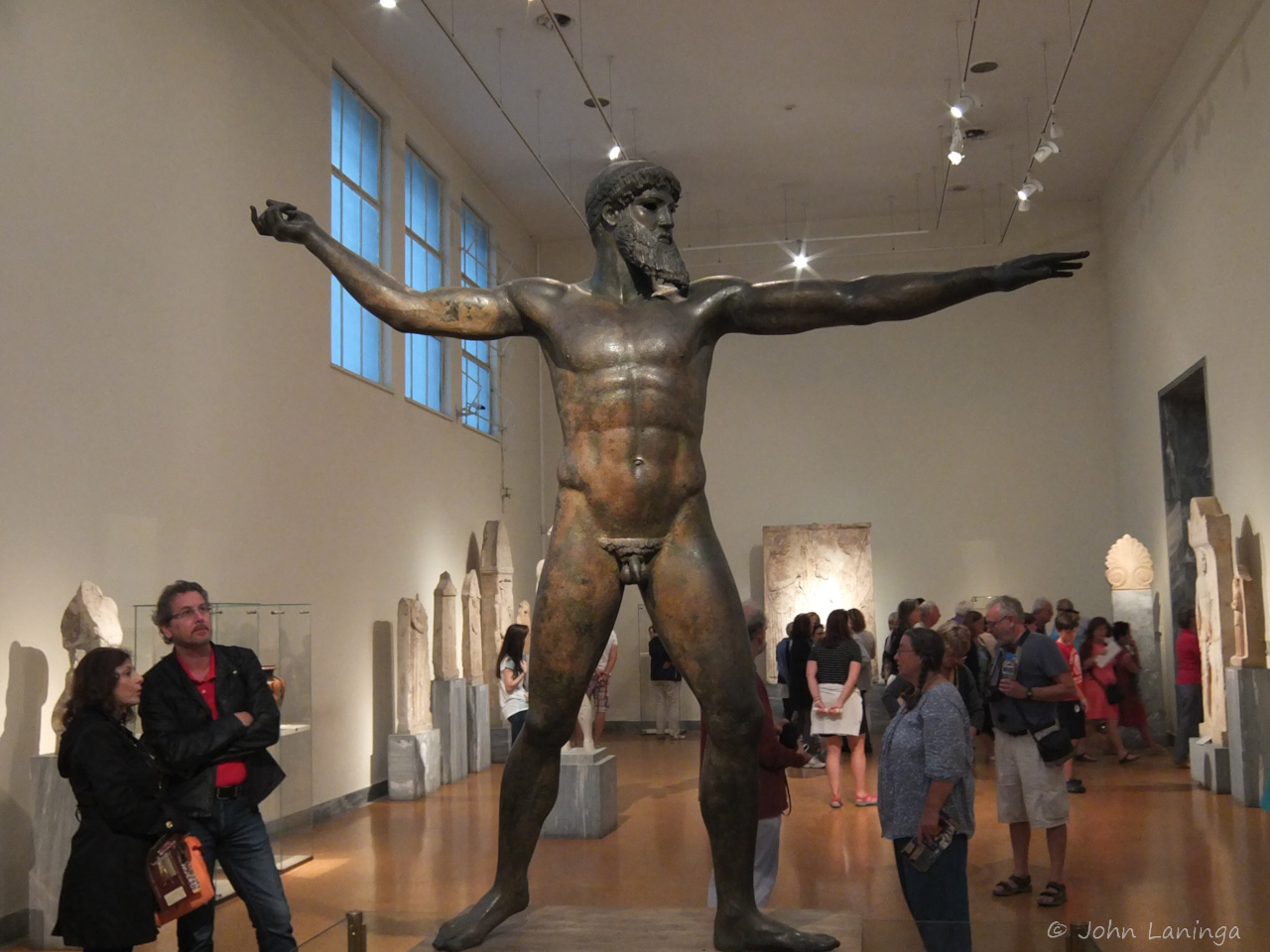
Artemision Bronze (God of the Sea), either Zeus or Poseidon

Depicting s killed warrior and his sad slave
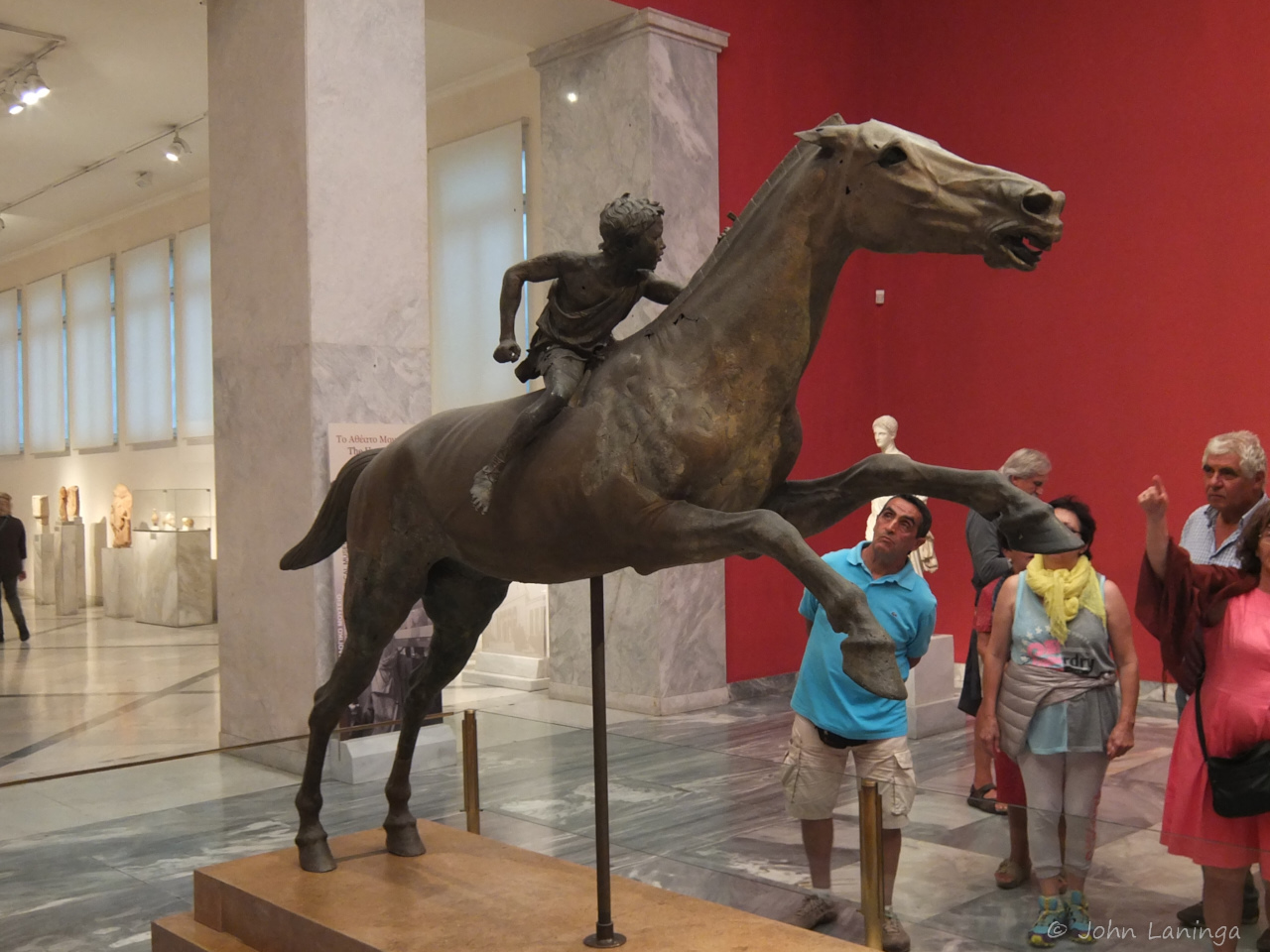
Massive bronze statues
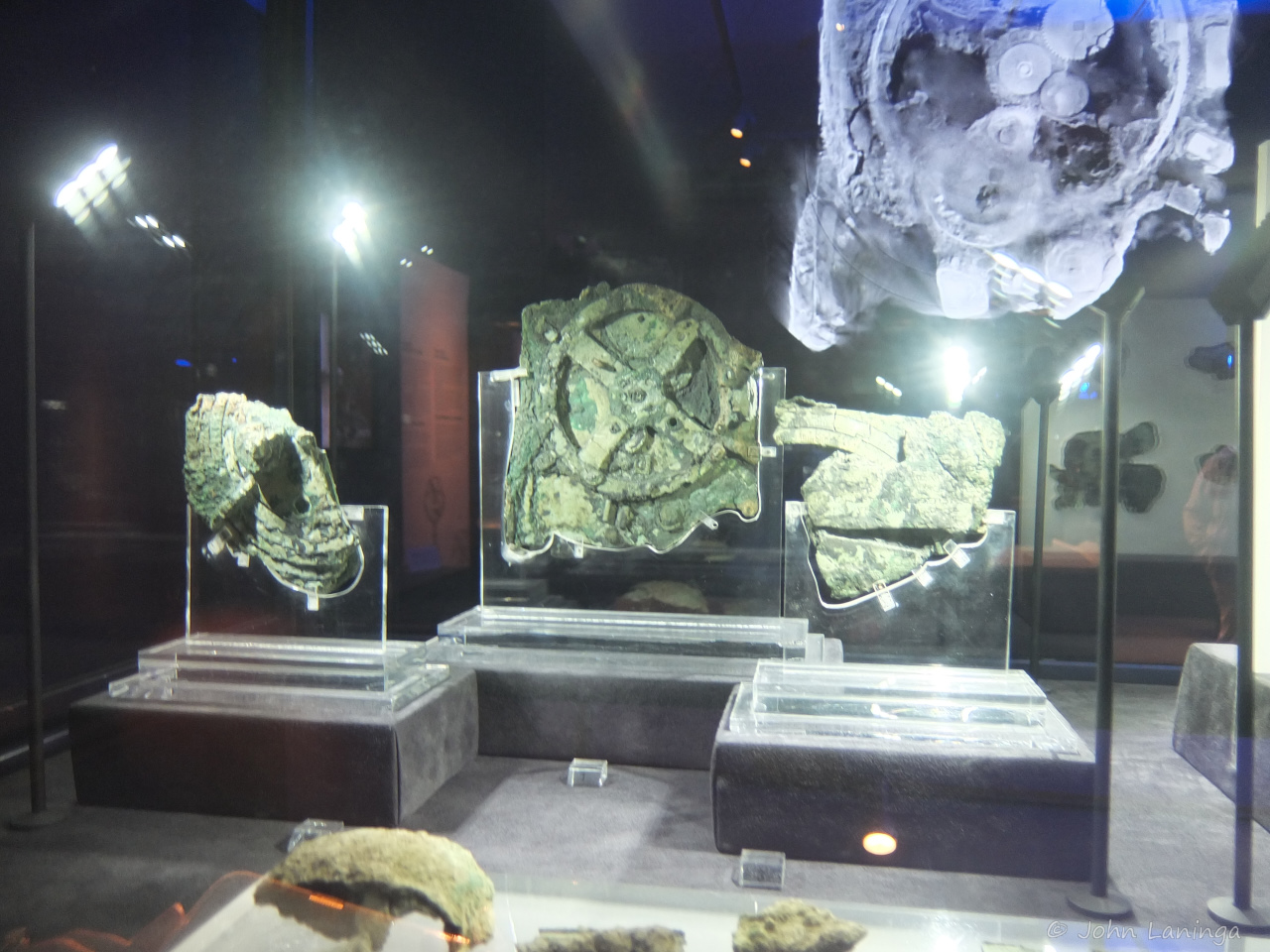
World’s first analog computer
Athens – Acropolis
Athens has been the center of Greek civilization for some 4,000 years. The capital of modern Greece, it’s still dominated by 5th century BC landmarks, including the Acropolis, a hilltop citadel topped with ancient buildings such as the colonnaded Parthenon temple. So it was fitting that we started our Athens trip at this iconic location.
The first observation was that of people. Crowds everywhere, it took1/2 hour to buy tickets, then 15 minutes to get in. There was even a 15 minute line to leave the grounds! But put all that behind you, and enjoy not only the scenery but the awareness of walking in (on) the steps of people over some 4,000 years. And marvel at the abilities of people who did not have any benefits of modern equipment.
Across from our hotel was the Temple of Olympian Zeus, definitely worth a visit. The work on the column top was incredible. Then a walk to the Panathenaic Stadium, site of the first modern Olympic games in 1896, again in 2004, and now hosting ceremonial events & live music concerts.
We ended the day with a terrific dinner at a most pleasant local Greek restaurant. And oh yes, we walked around 9 miles today.
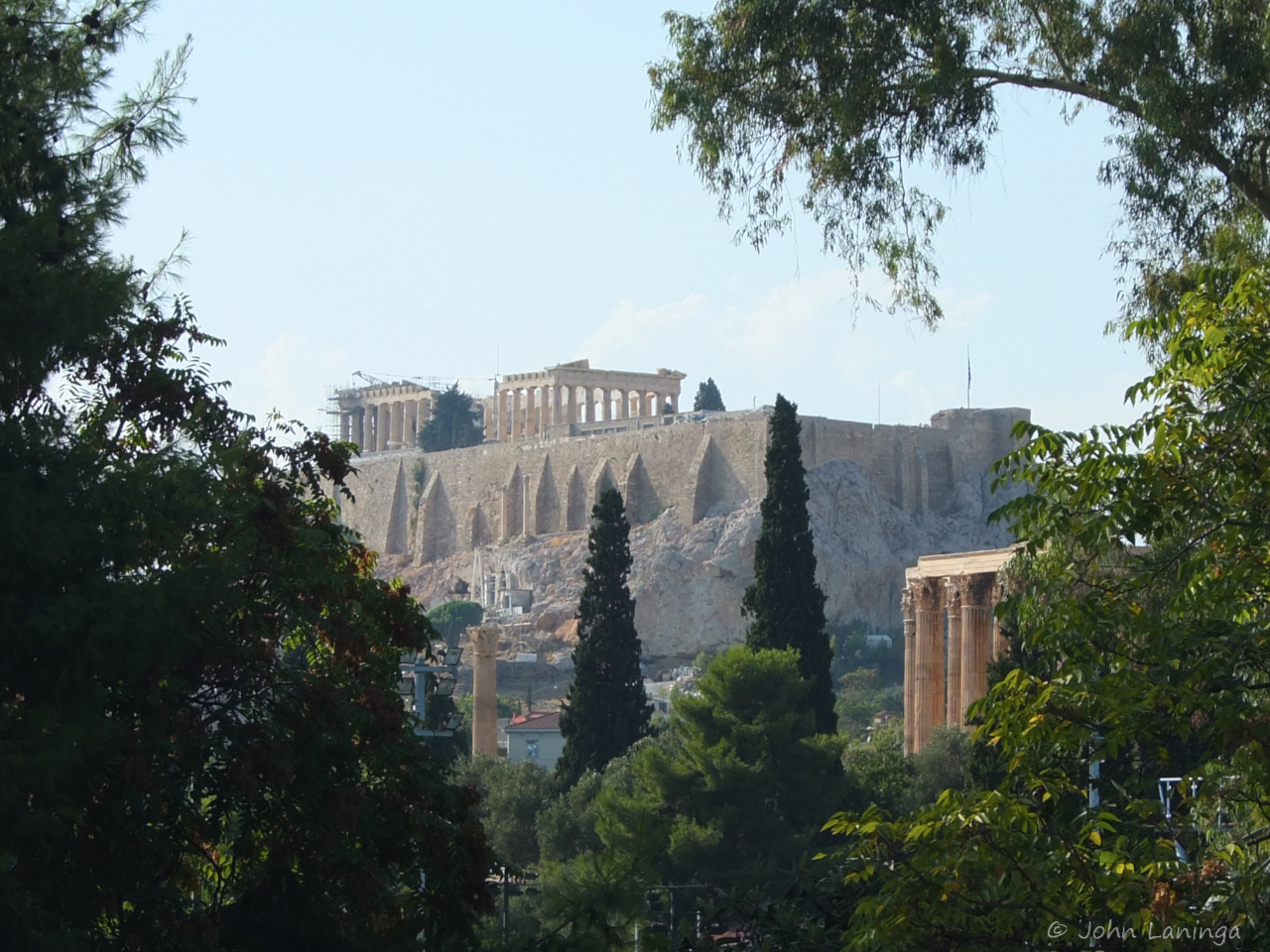
The Parthenon as viewed from the Olympic Stadium; Zeus Temple peeking from behind the trees
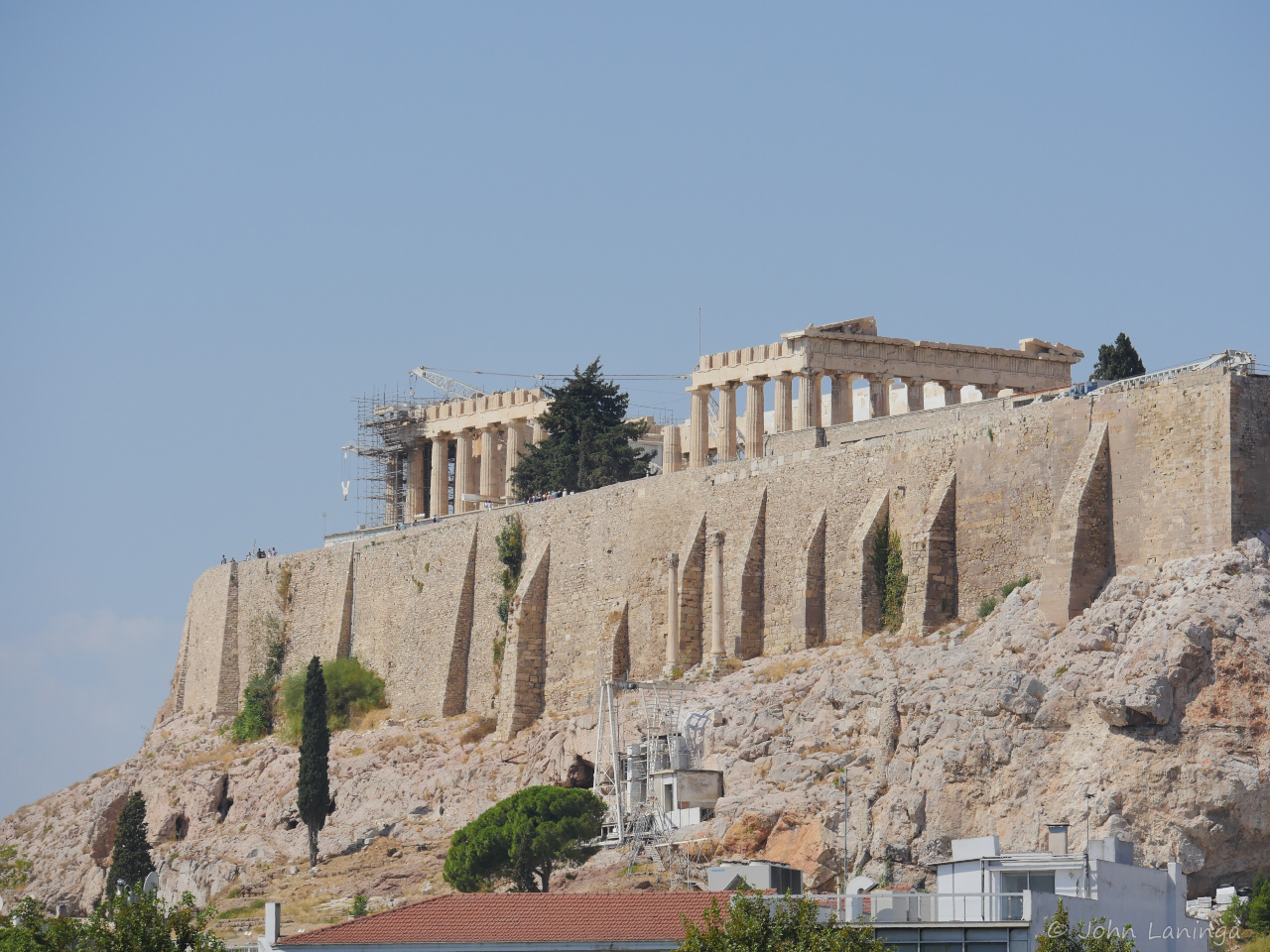
The Parthenon, picture taken from the rooftop bar in our hotel
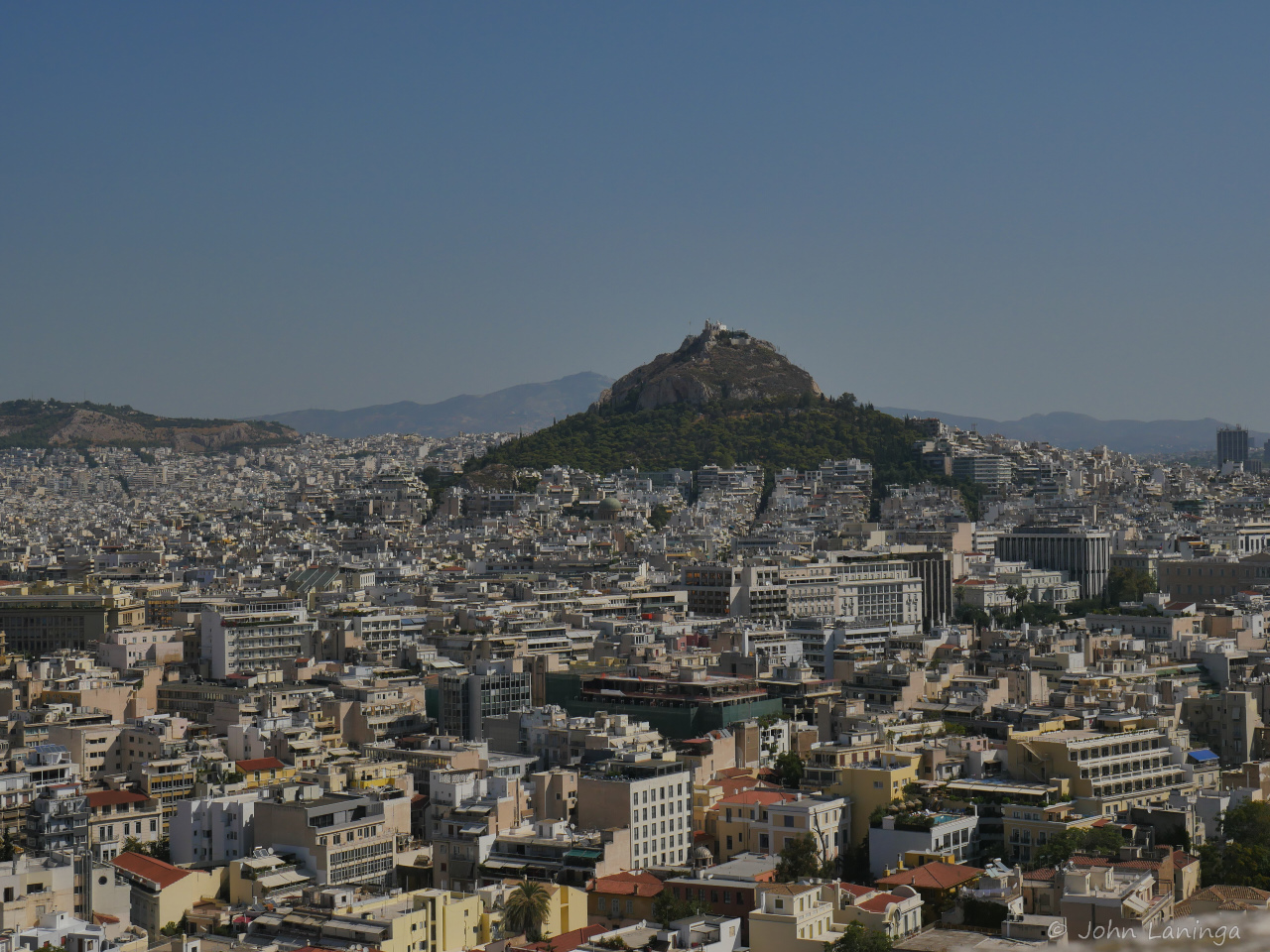
St. George Chapel, on Lycovitus Hill
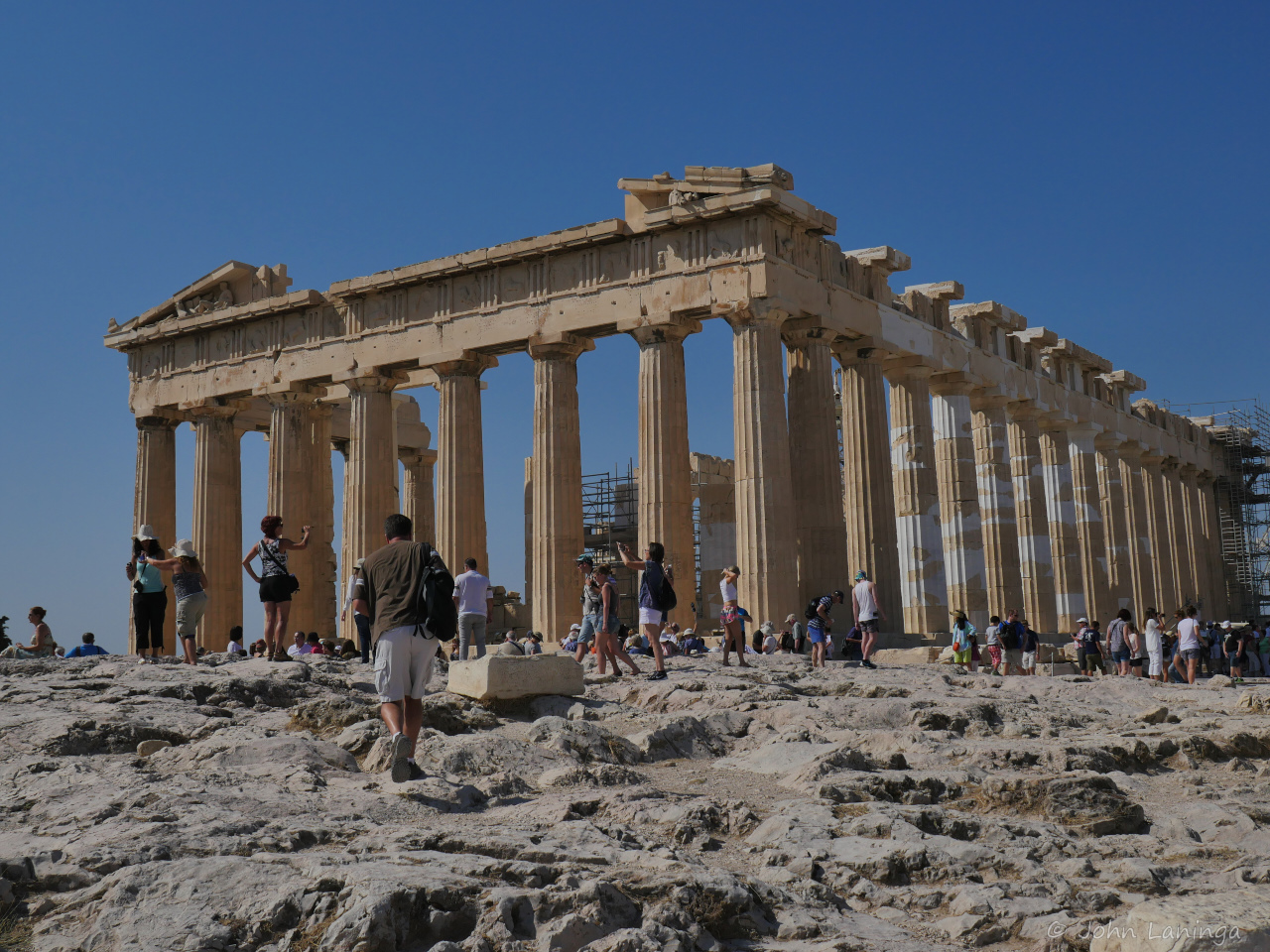
Parthenon elevation
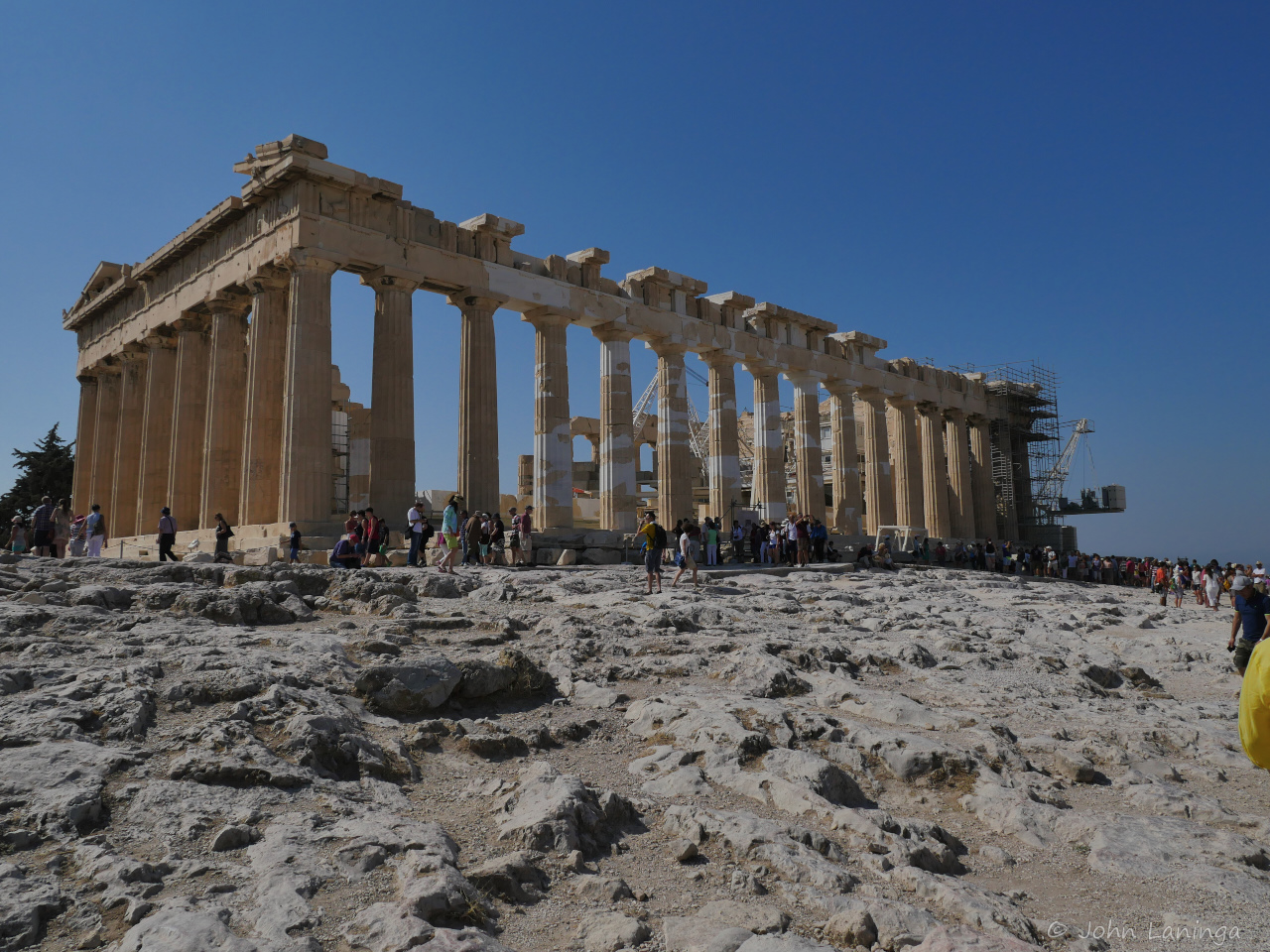
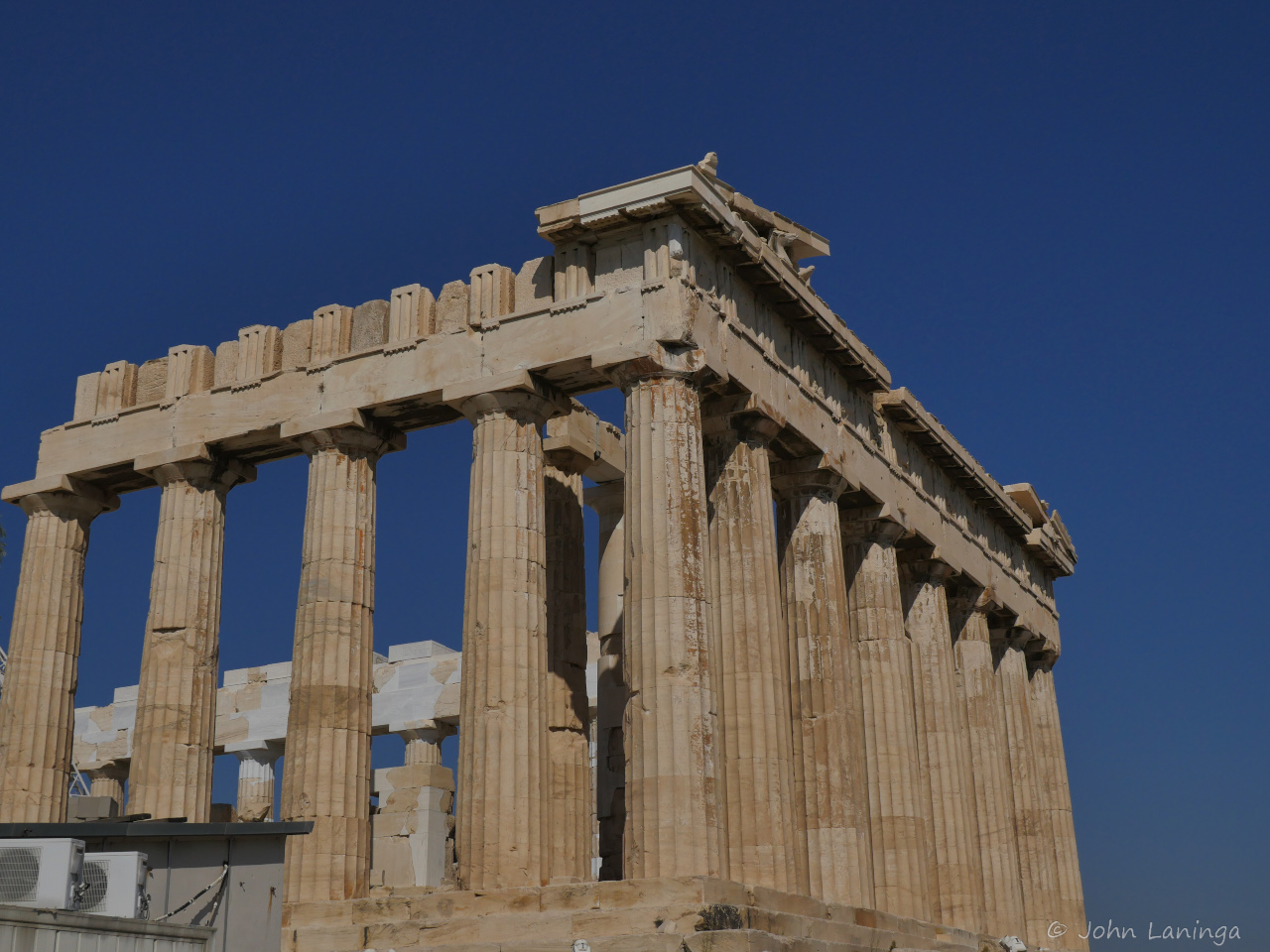
Parthenon corner
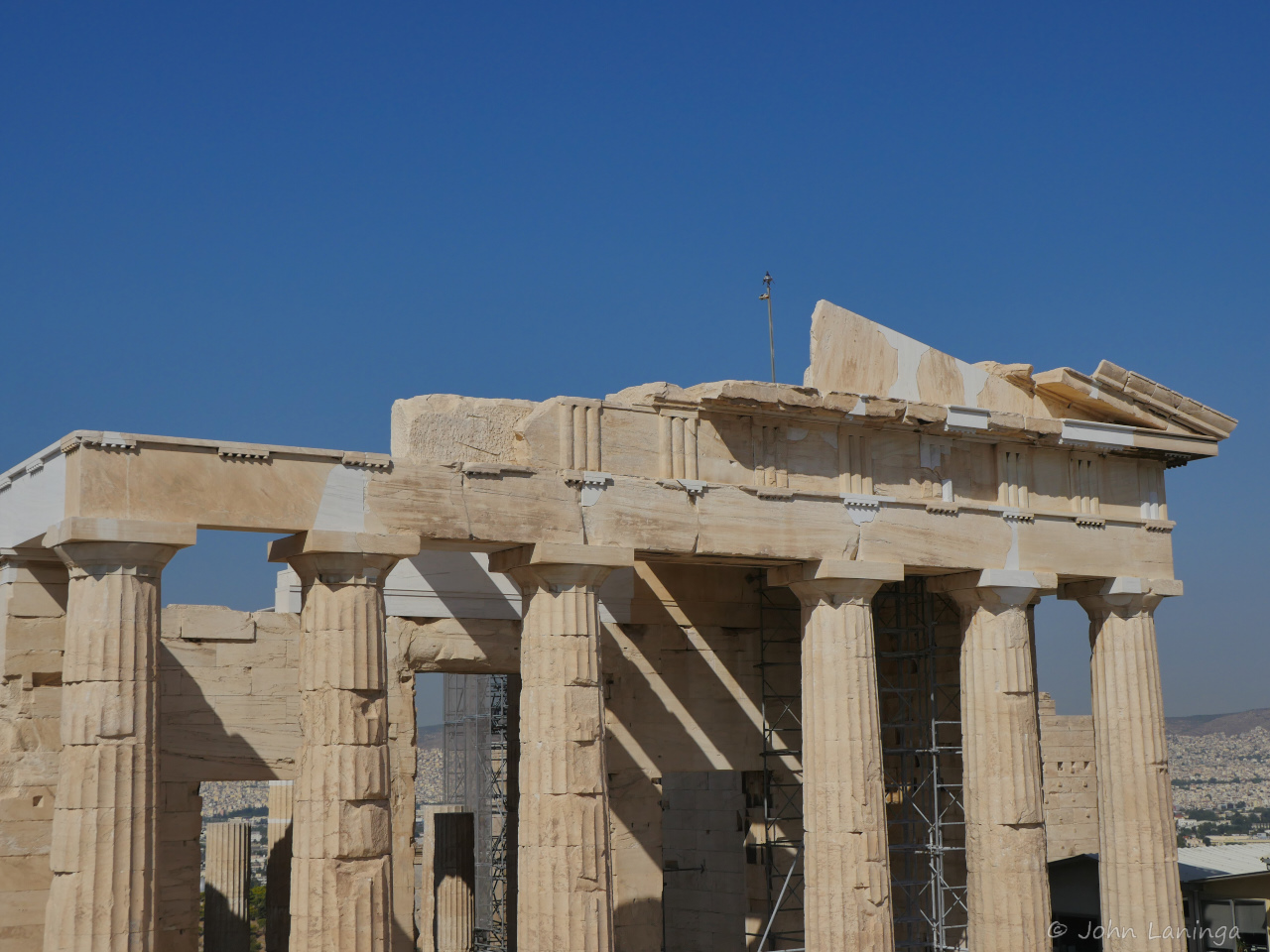
Hard to imagine how these were built!
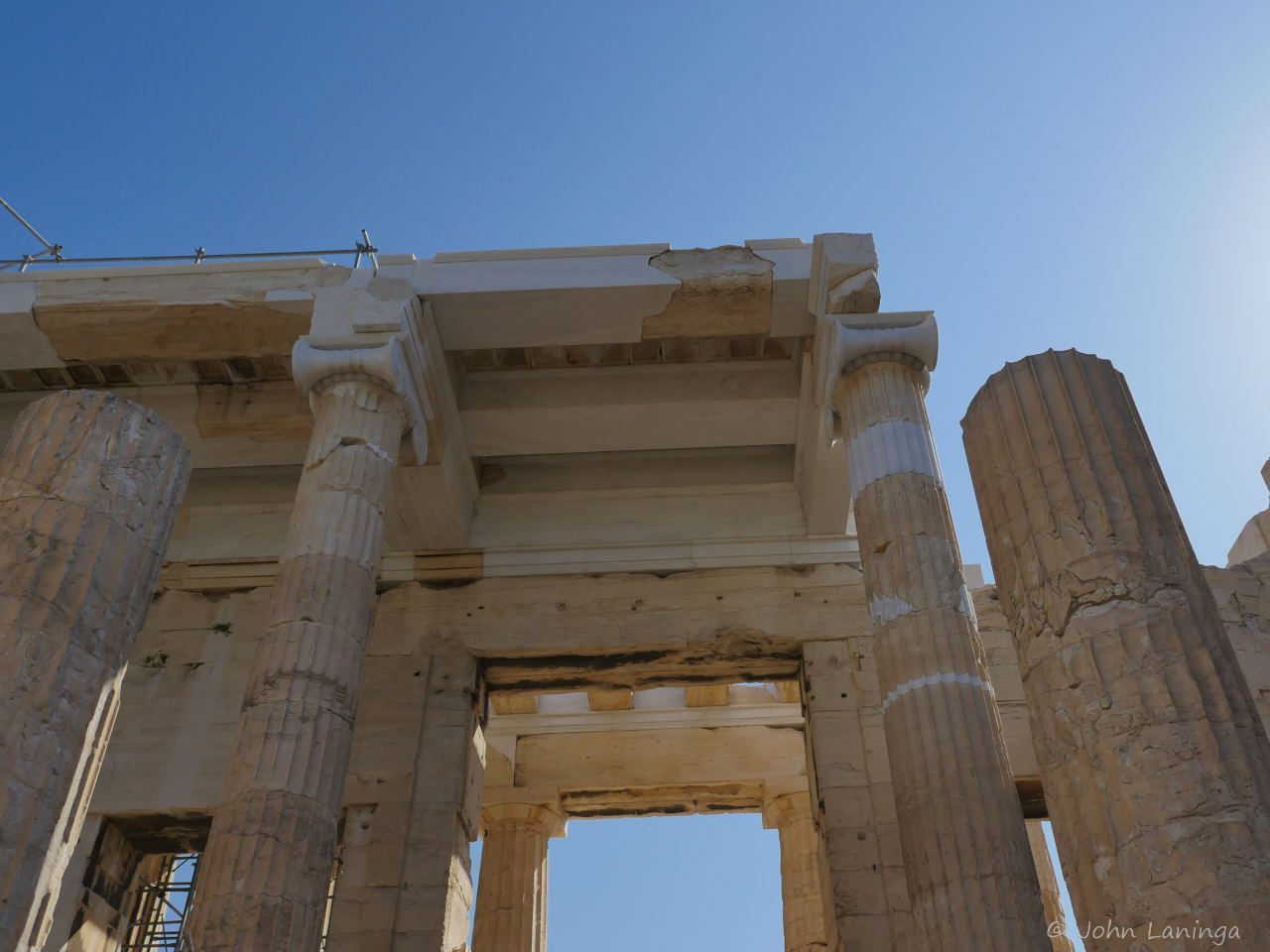
Looking up at the massive stonework
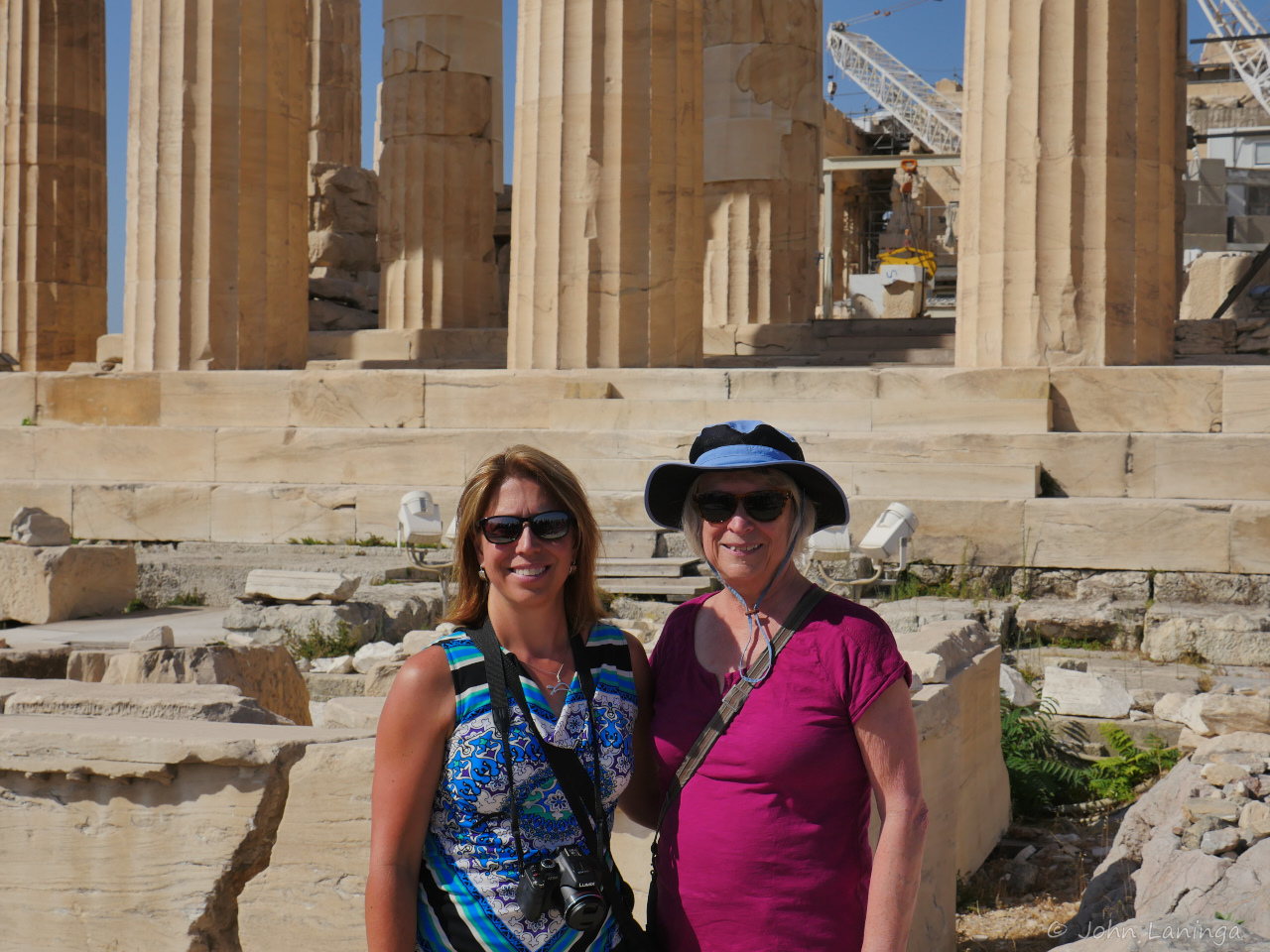
Tanya and Romola in front of the Parthenon
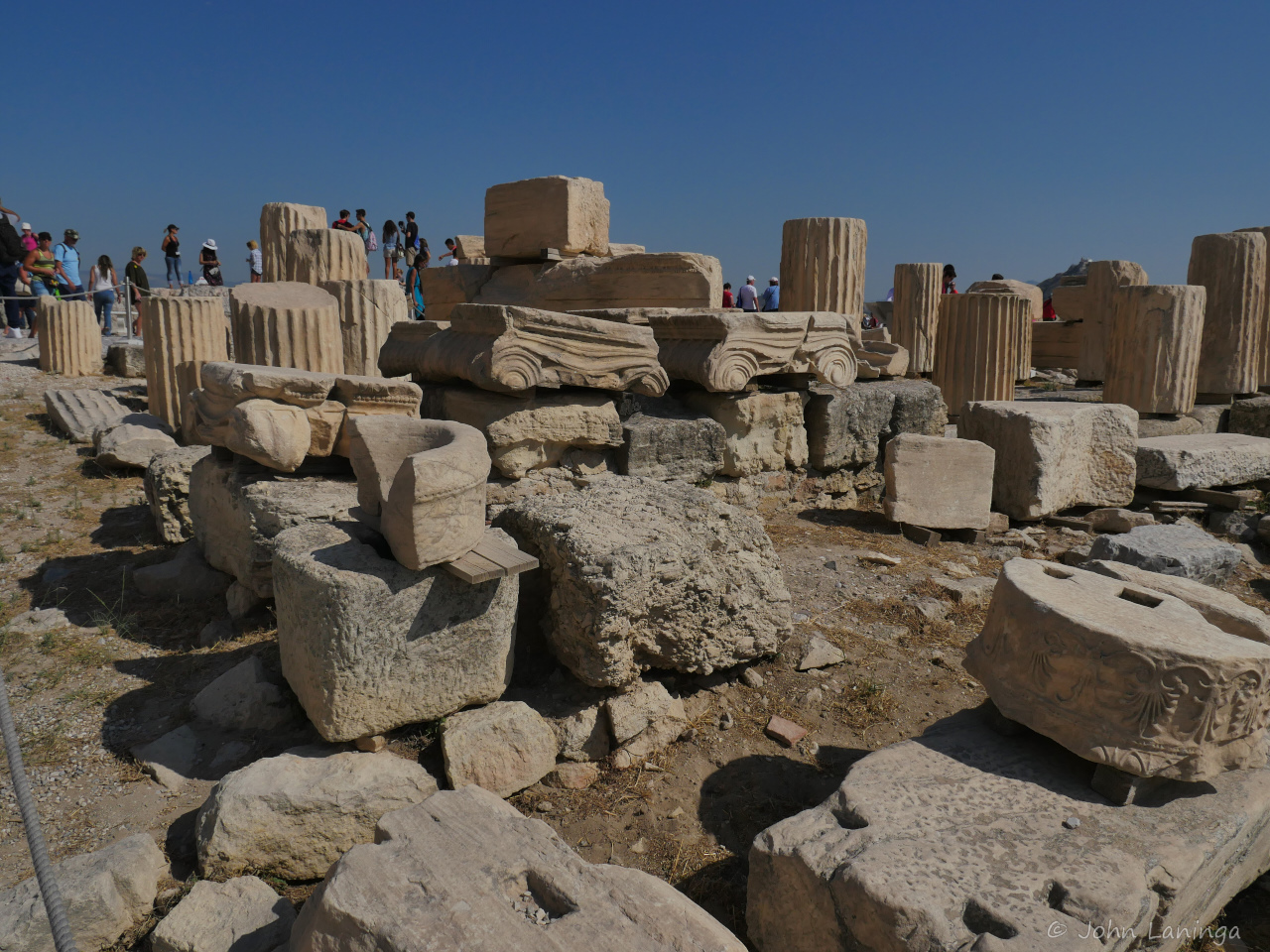
Lots of pieces left to put together!
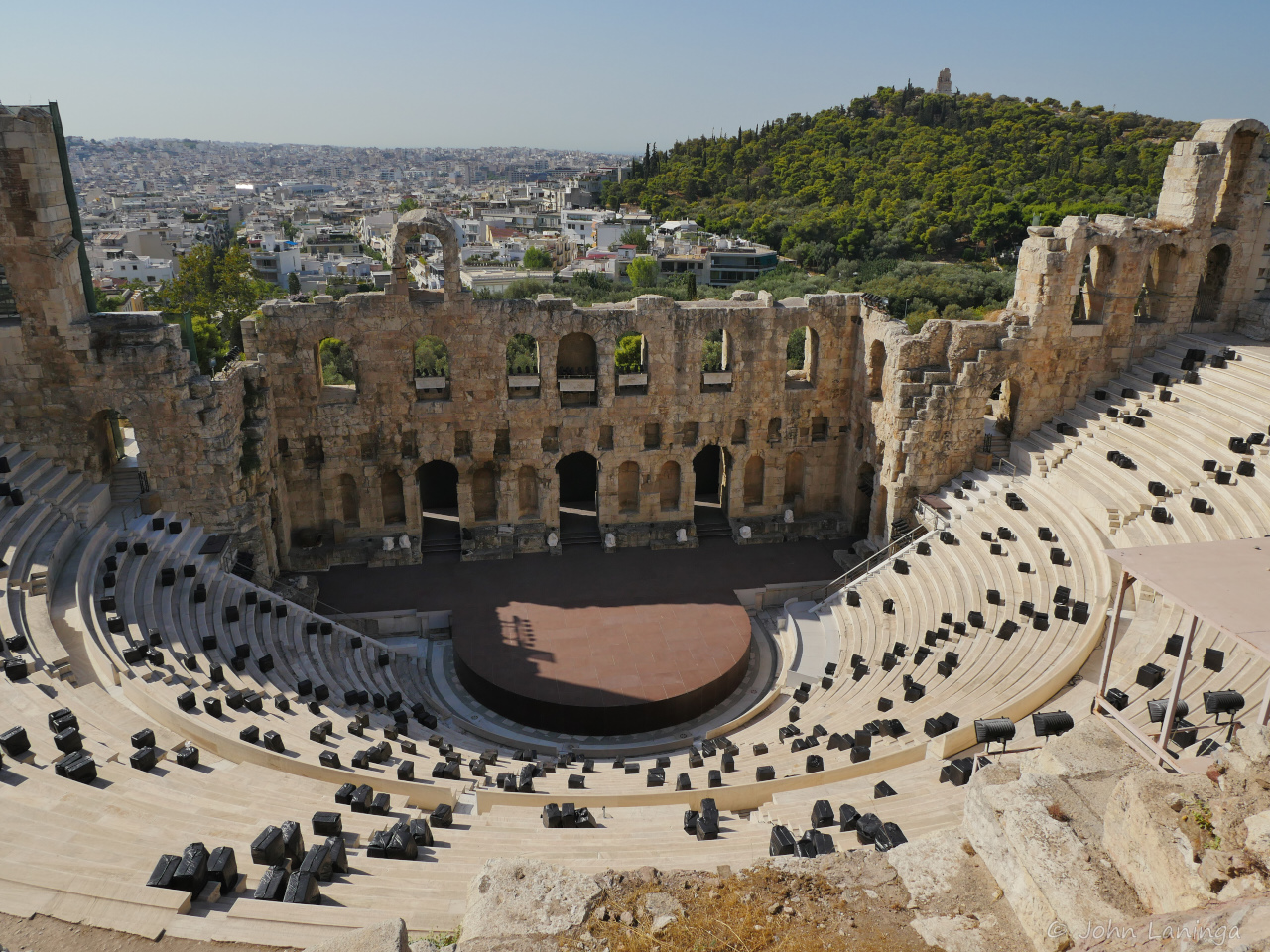
A view down to the old theater, still used today
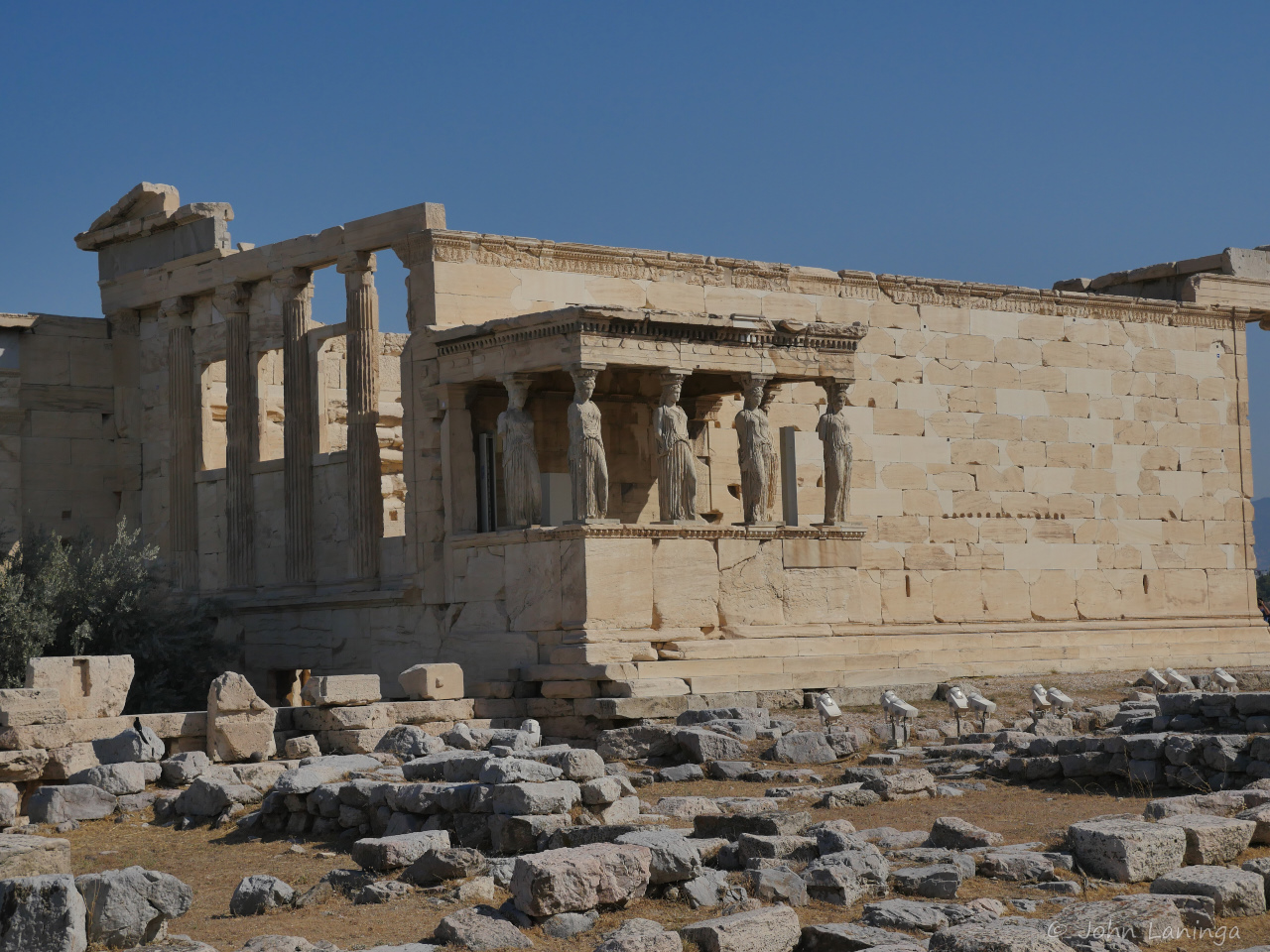
“Porch of the Maidens”
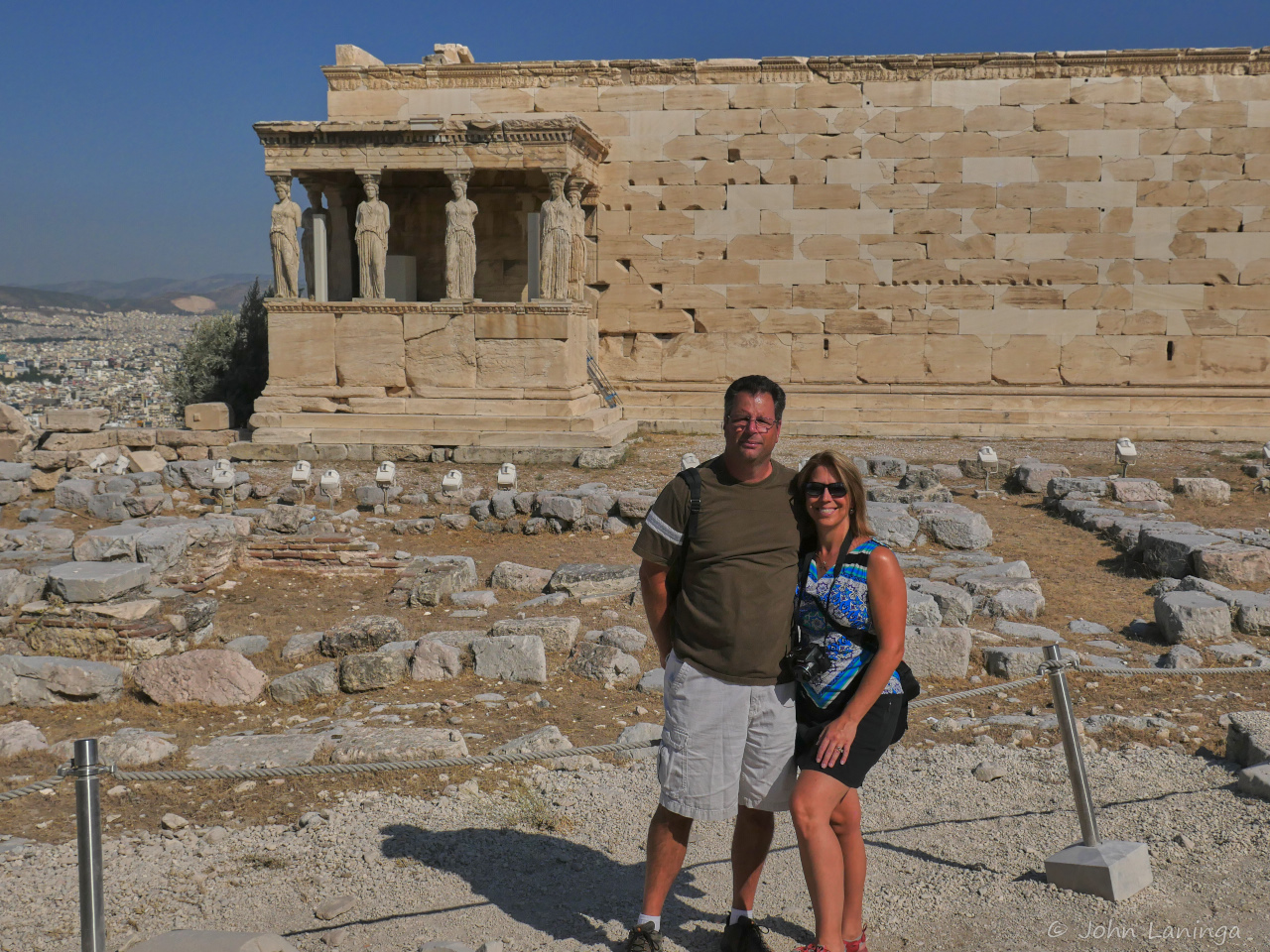
Tanya and Shane in front of the caryatids (female statues)
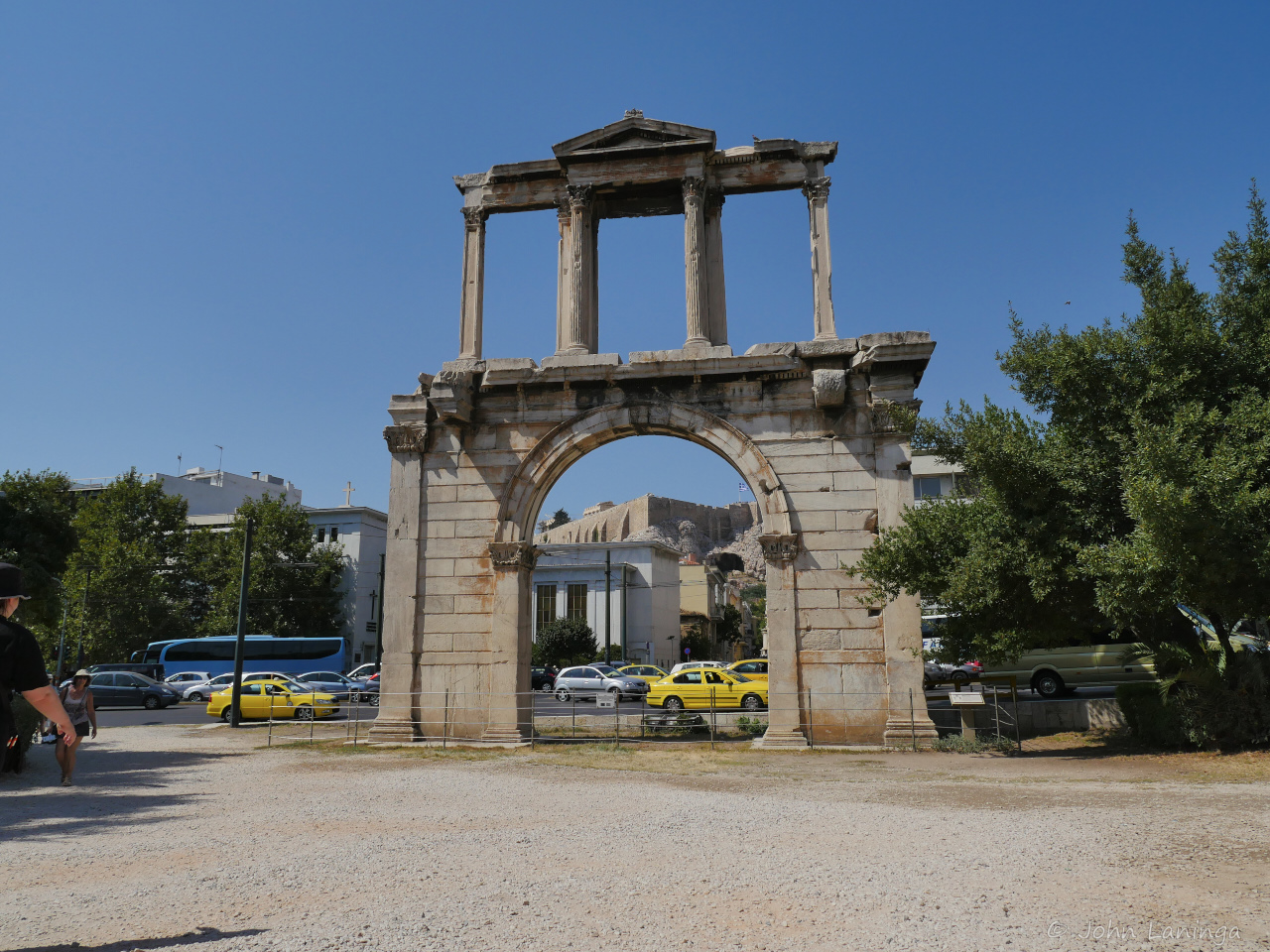
Hadrian Arch
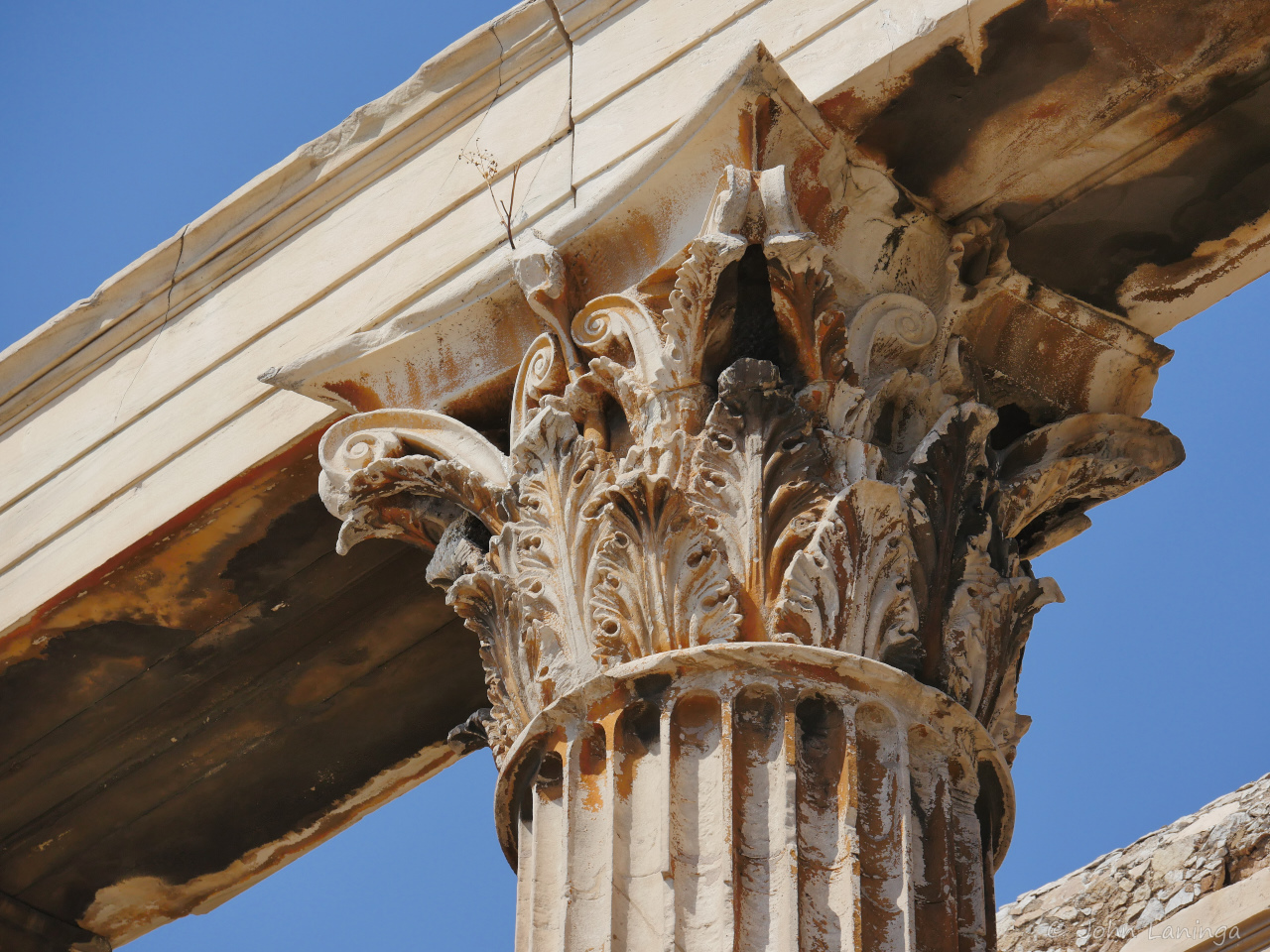
Detail of the column tops
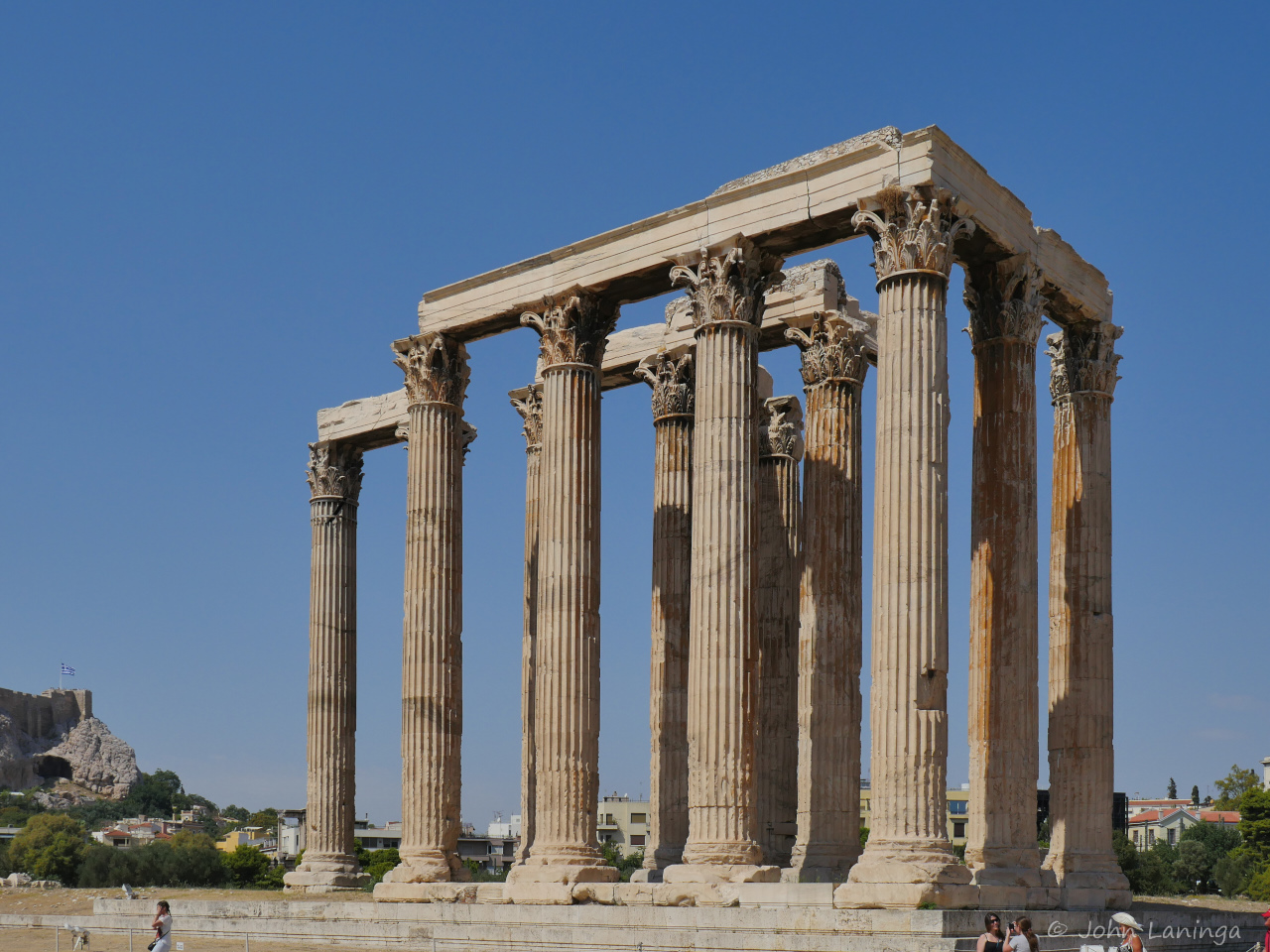
Temple of Olympian Zues
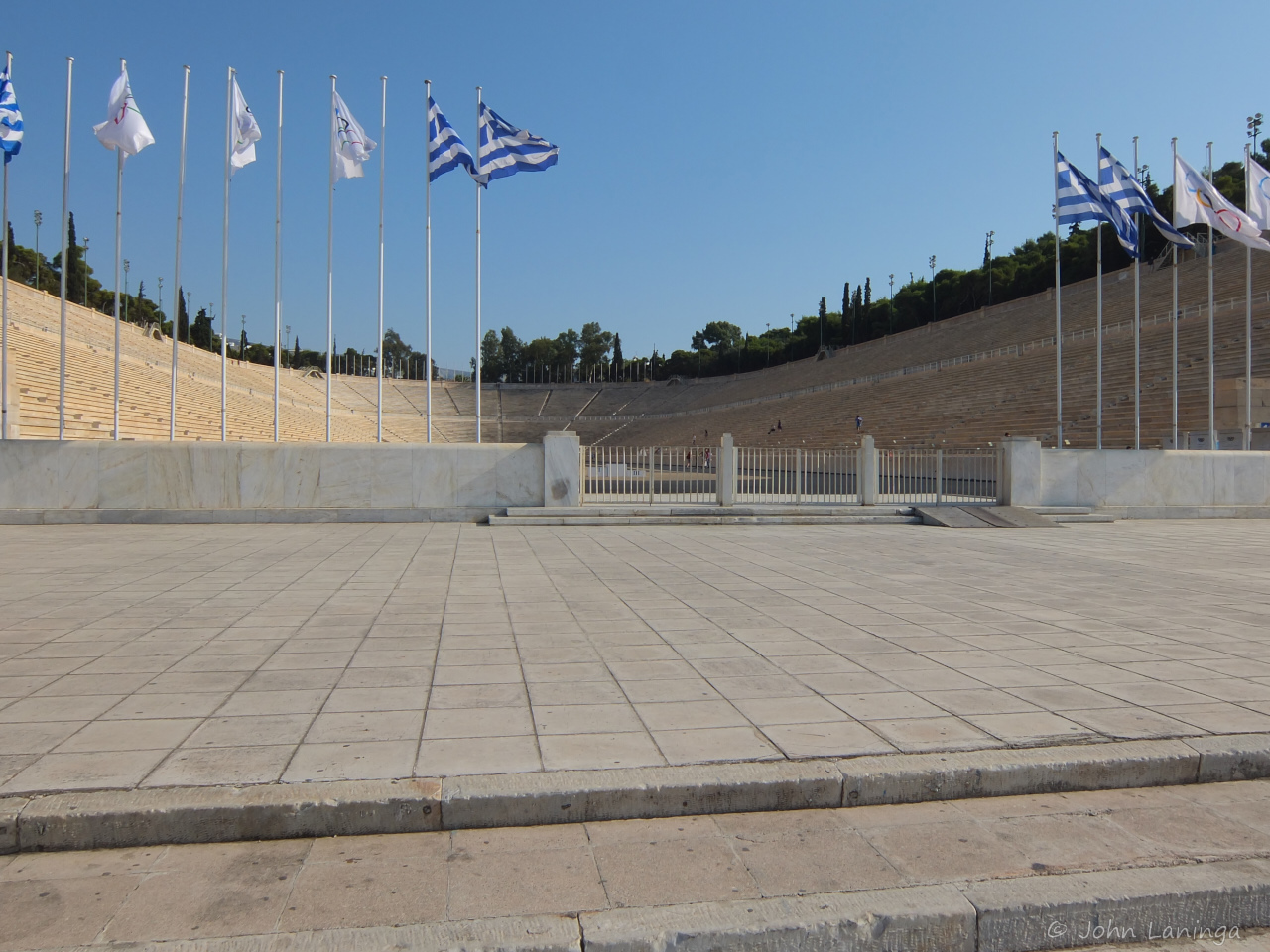
Looking into the open end of the stadium
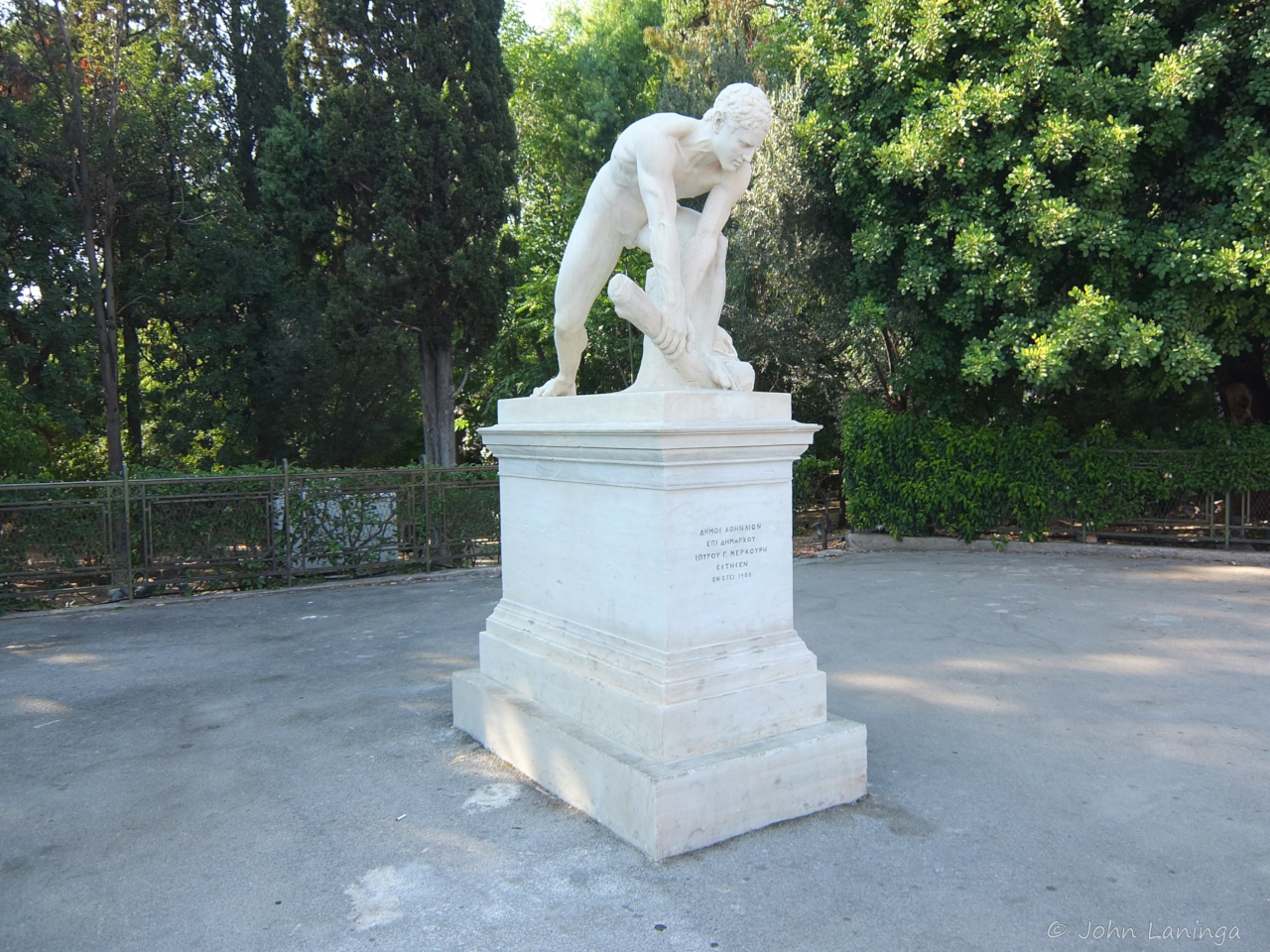
Statue at the Stadium
Nafplio, Greece
Nafplio is a small seaport near Athens, and at one time it was Greece’s capital. There is an amazing amount of historical sites to see. We visited:
Epidaurus Theater: Built around 3000BC, this theater will seat around 16,000 people. The acoustics are amazing, even today, a sound made in the center can be heard throughout the seating area. An entire community was built, including schools, religious buildings, even a hospital. Even old medical instruments have been found.
Old Corinth: An important Ancient Roman town overlaying an important Ancient Greek town AND the site where St. Paul was tried and acquitted for blasphemy by the Ancient Jewish establishment. The hilltop fortress site above the archaeological town is also the site of “the 1000 temple prostitutes” in the ancient temple of Aphrodite against which St. Paul preached in his Epistle to the Corinthians.
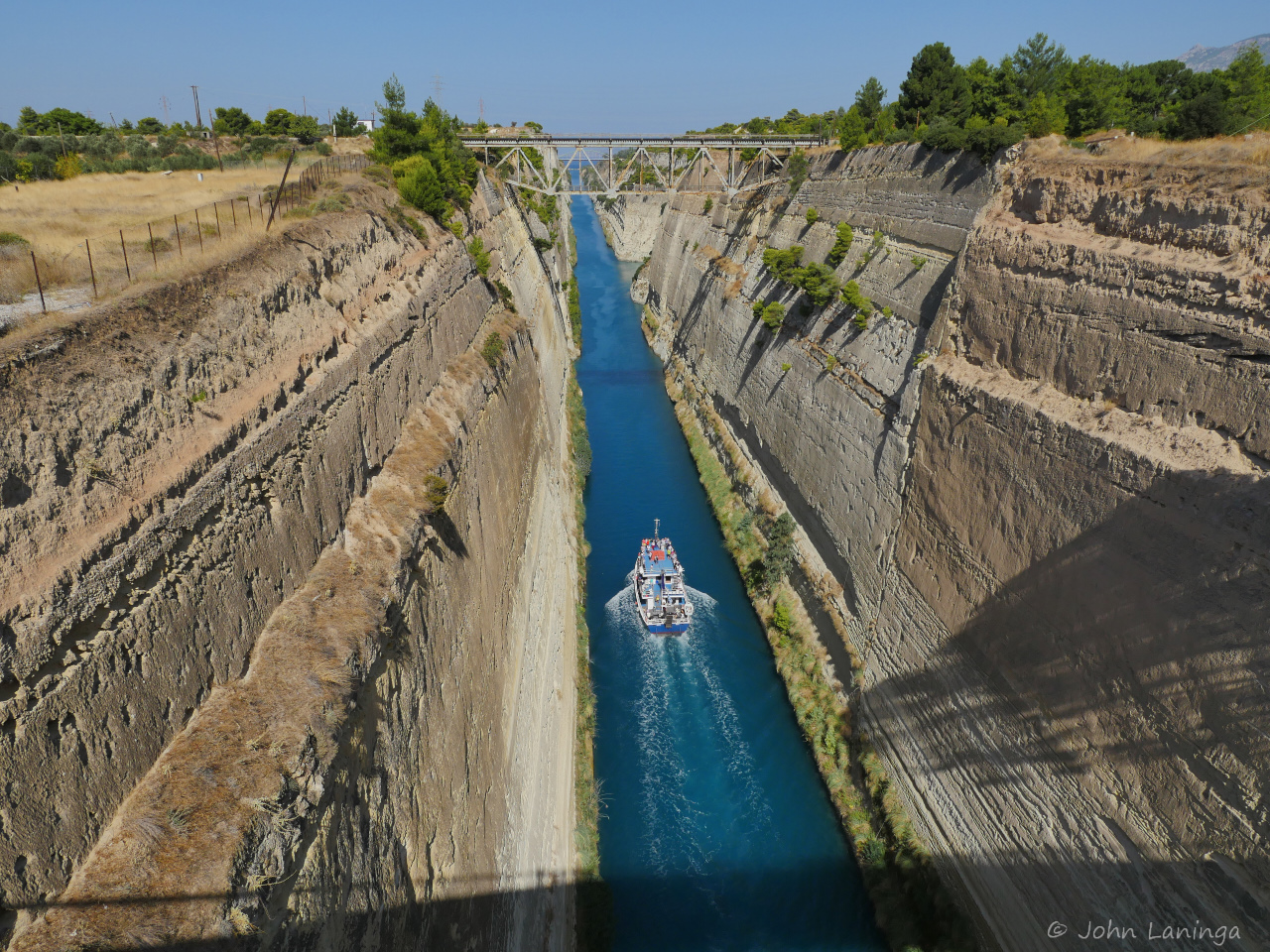
The Corinth Canal connects the Gulf of Corinth with the Saronic Gulf in the Aegean Sea. It cuts through the narrow Isthmus of Corinth and separates the Peloponnese from the Greek mainland. The builders dug the canal through the Isthmus at sea level; no locks are employed. It is 4 miles long, and 70 ft wide at its base. The canal was started in classical times and an abortive effort was made to build it in the 1st century AD. Construction finally got under way in 1881 and was finished in 1897.
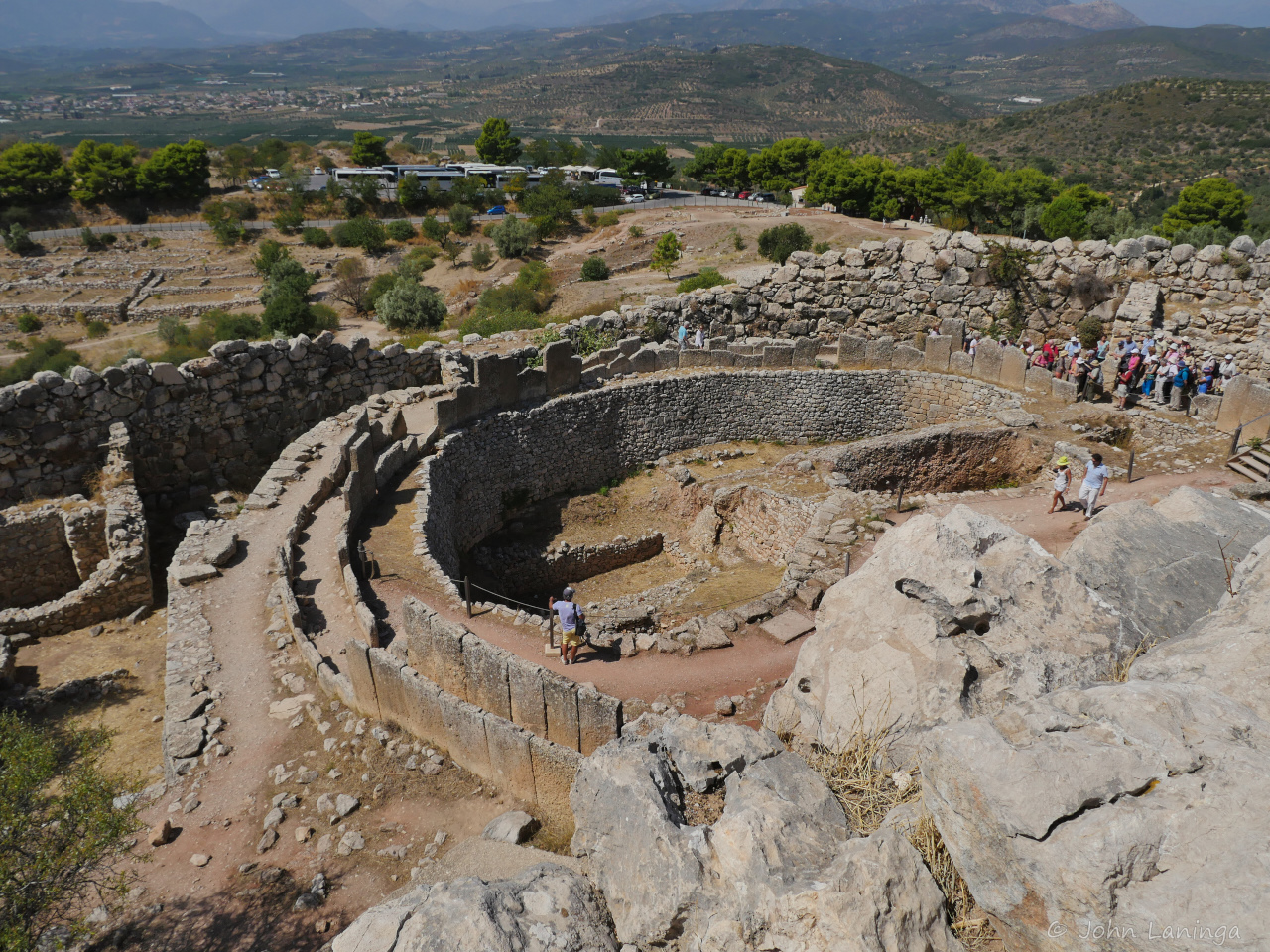
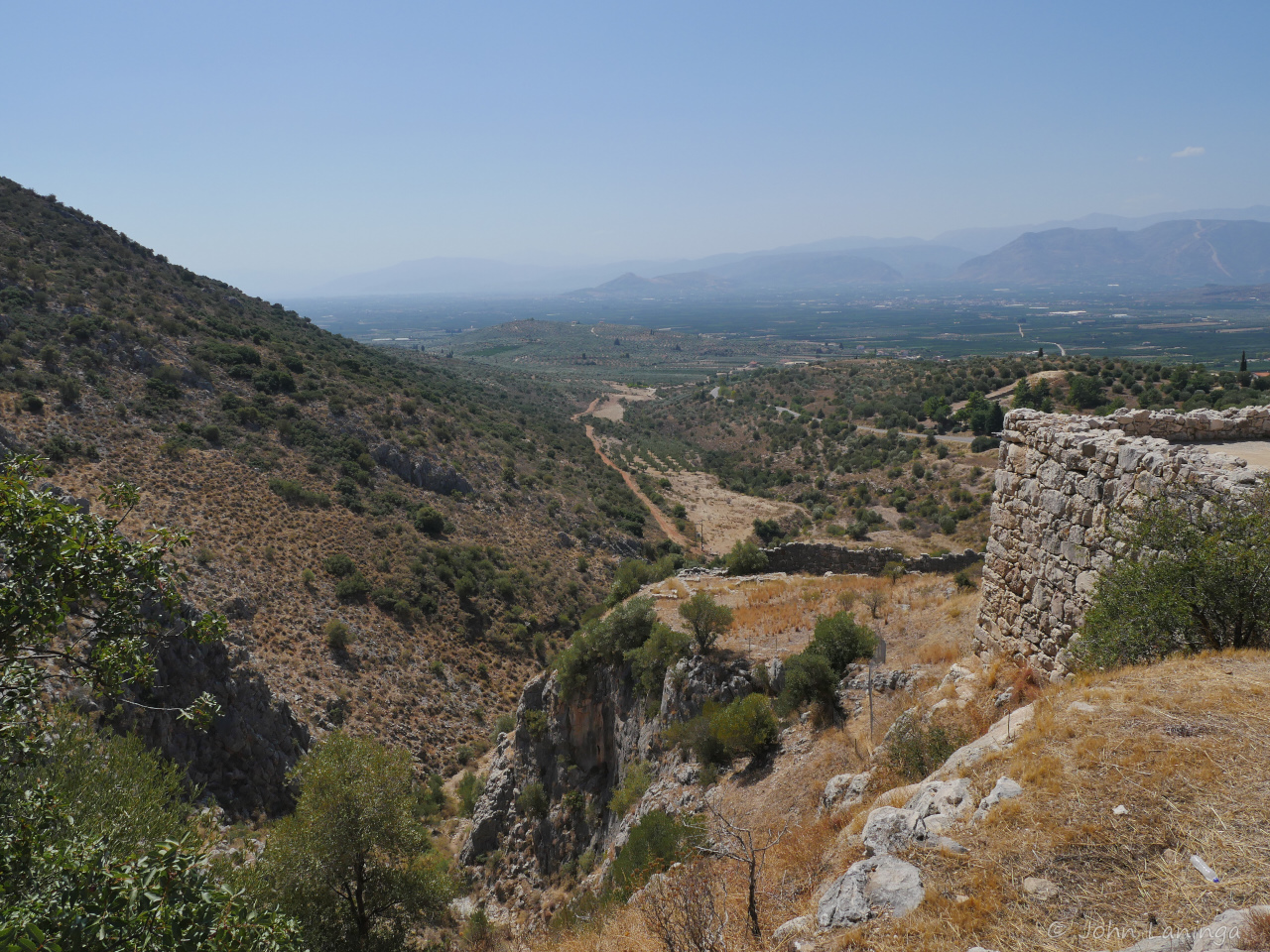
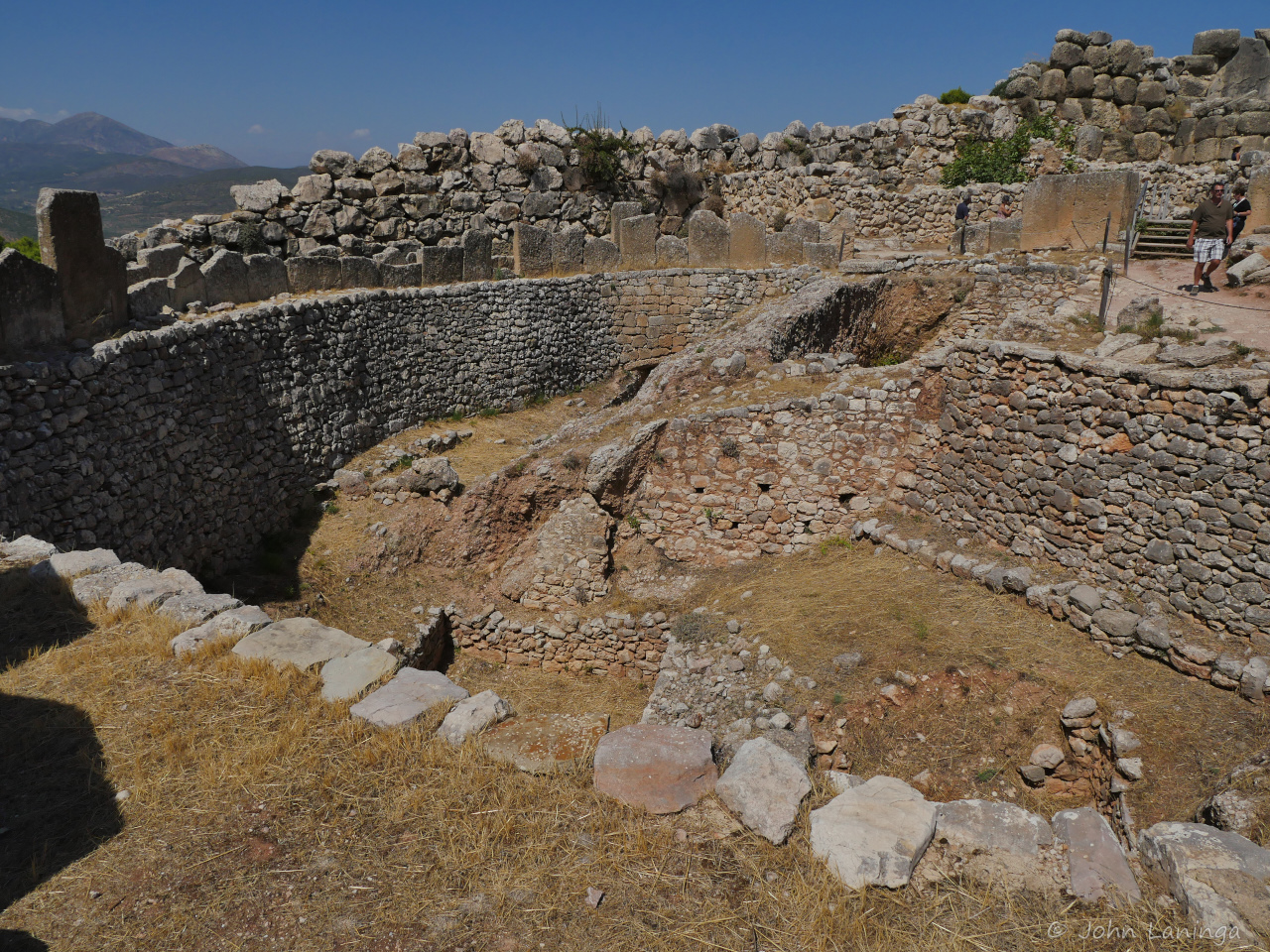
Mycenae is one of the most important archaeological sites of Greece. The fortified citadel is nested over the fertile plain of Argolis near the seashore in the northeast Peloponnese.
Mycenaean is the culture that dominated mainland Greece, the Aegean islands, and the shores of Asia Minor from about 1600-1100 BC. The Mycenaean Era flourished in mainland Greece since 3000 BC.
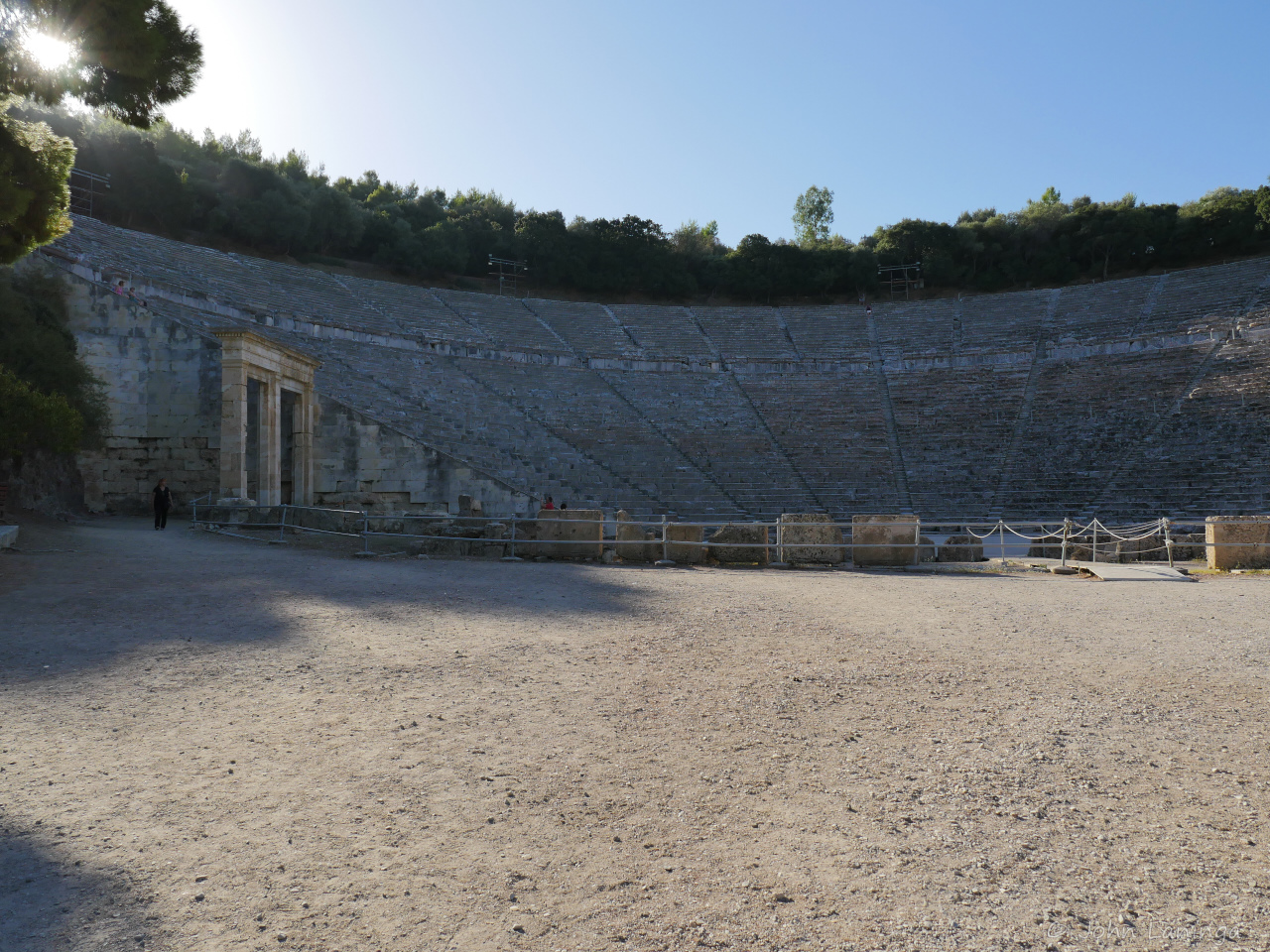
West view if the theater
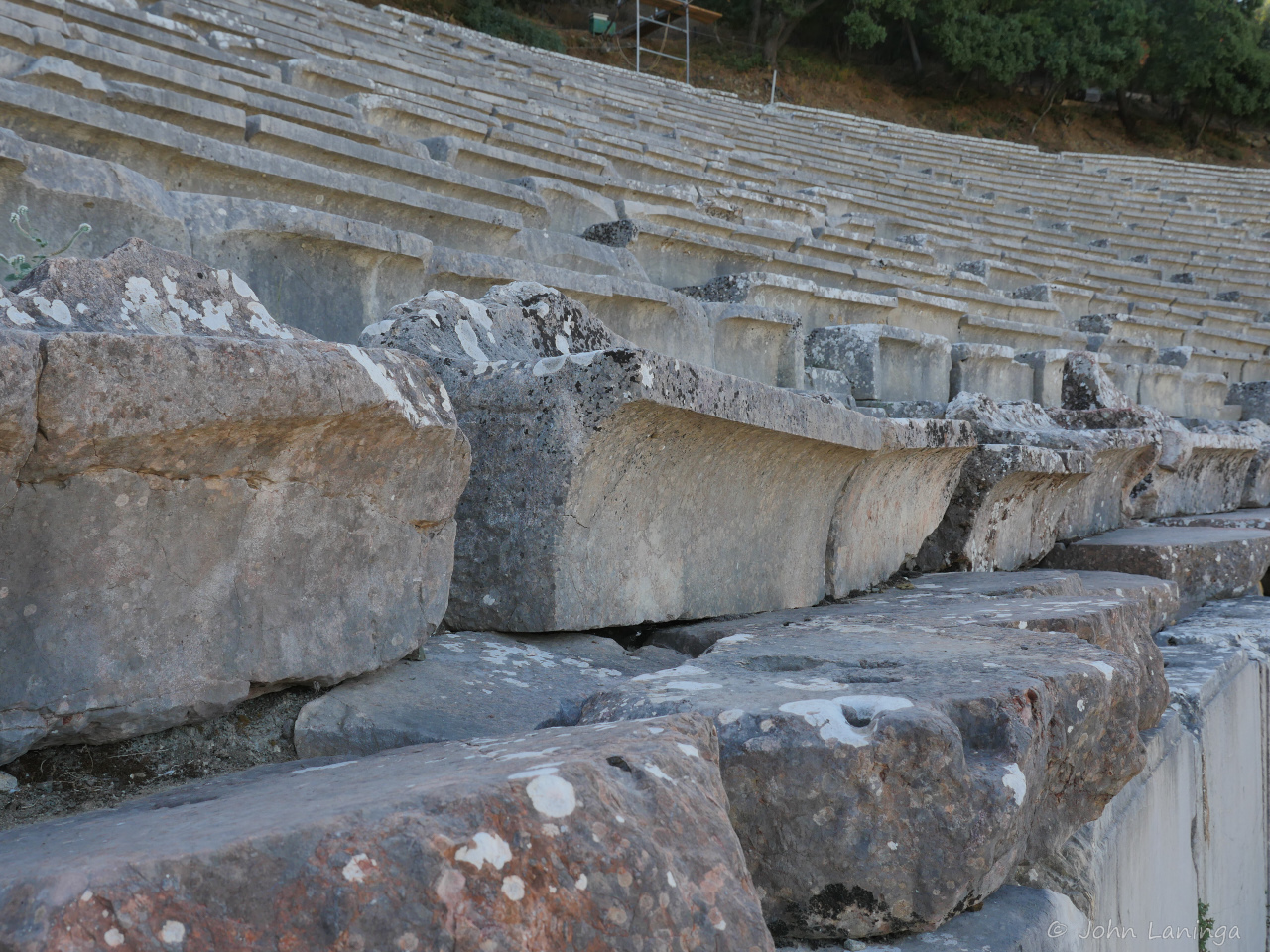
Seat detail
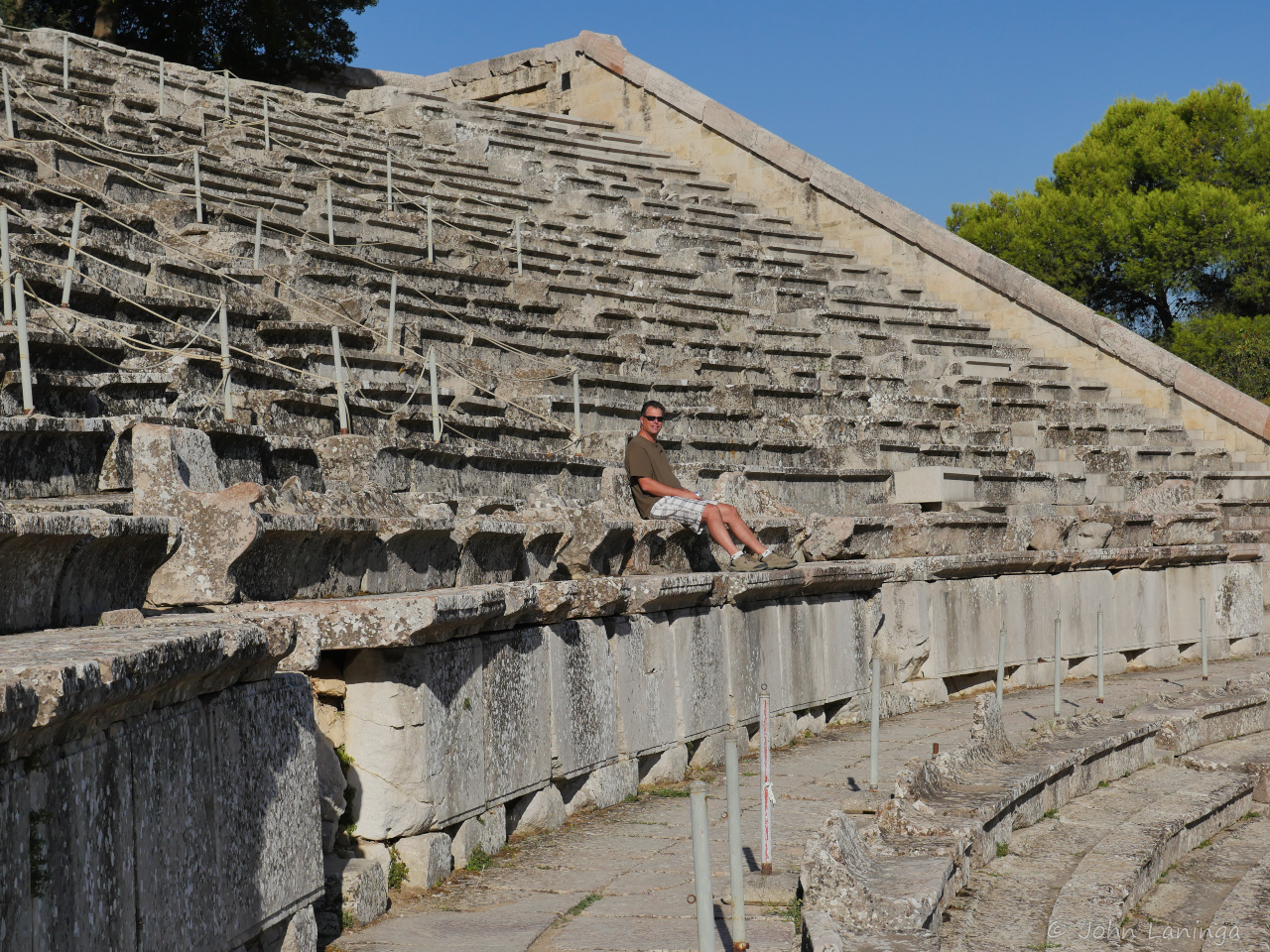
Seating rows
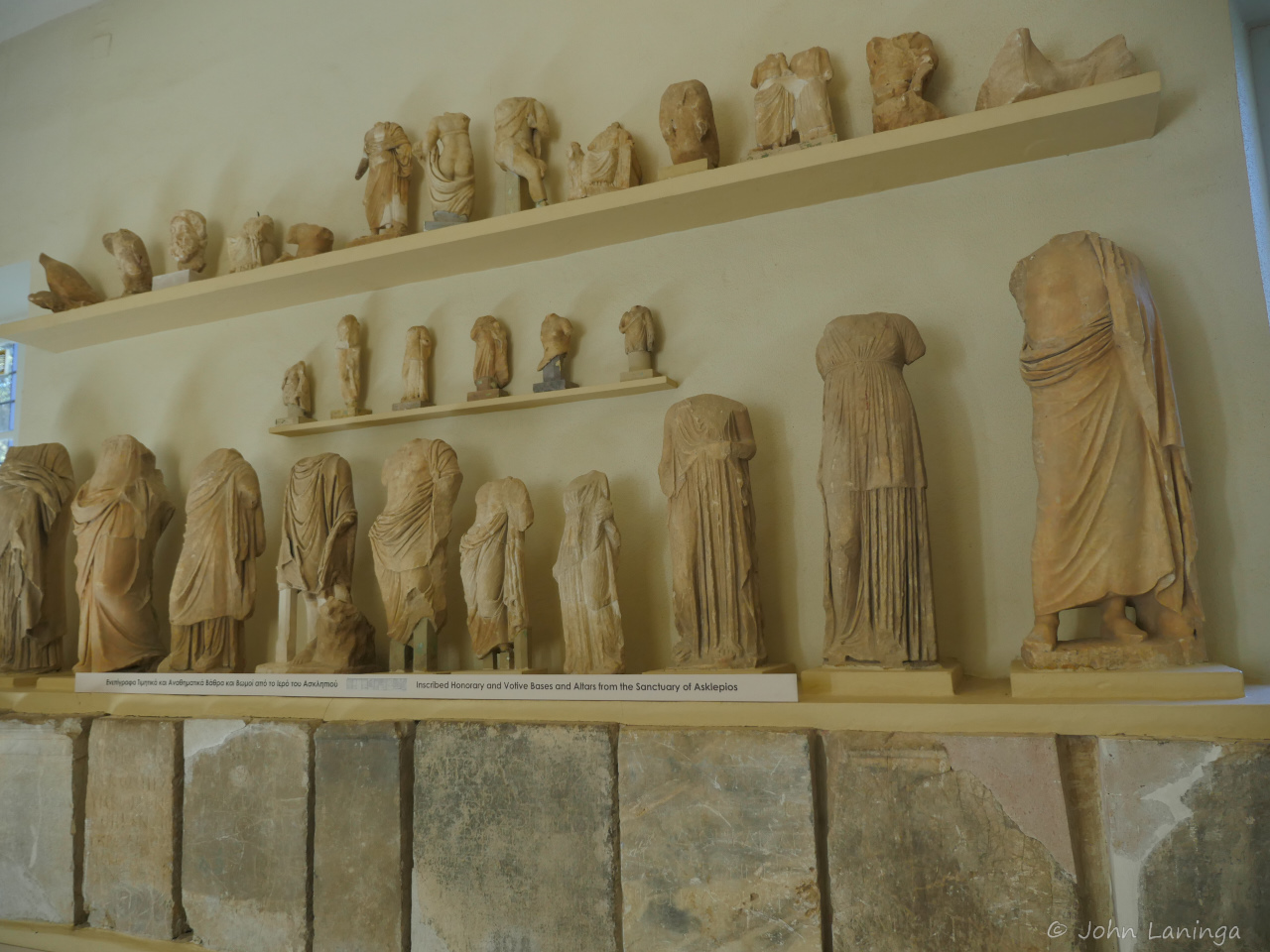
Museum pieces
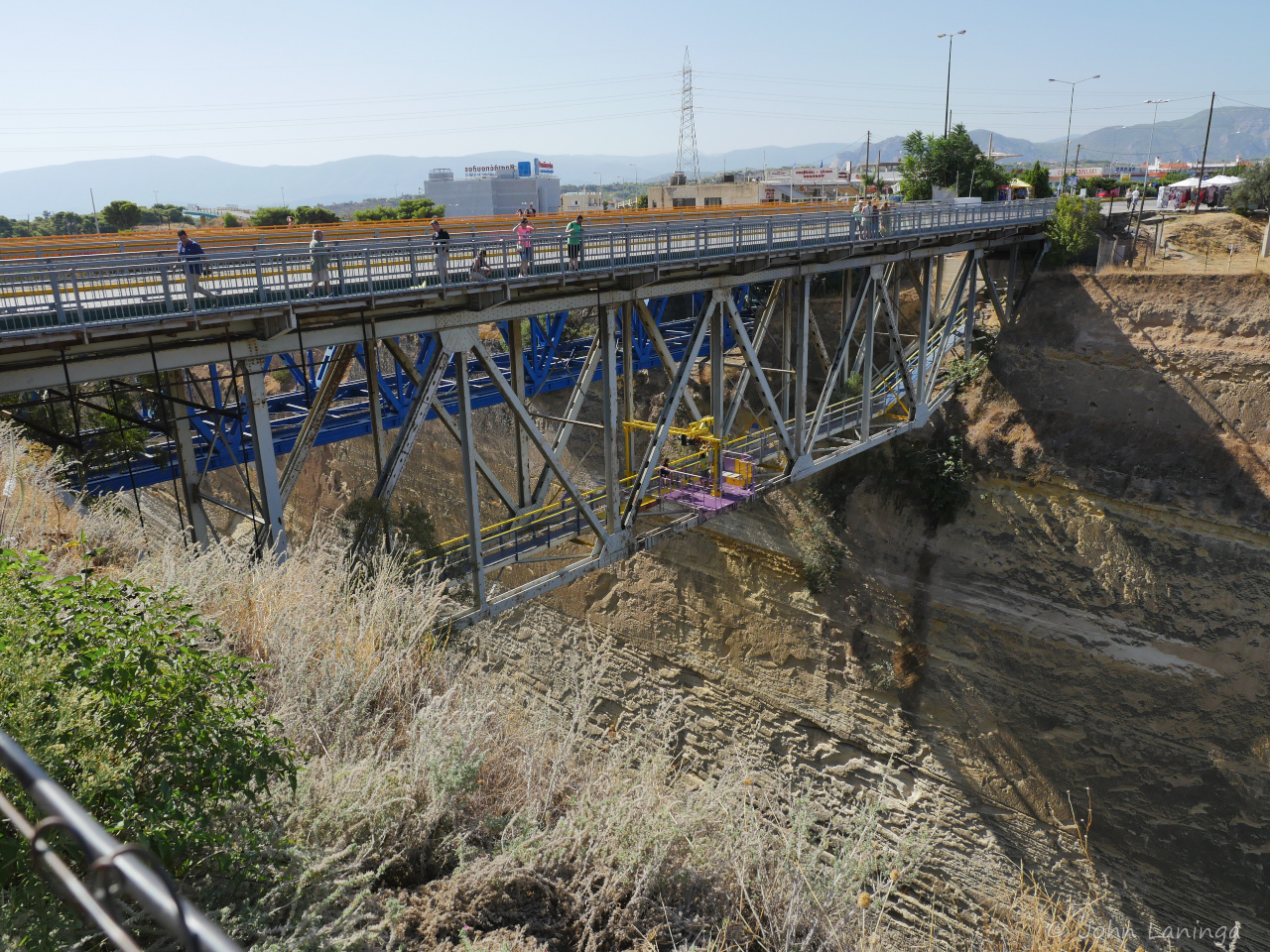
Bridge over the canal
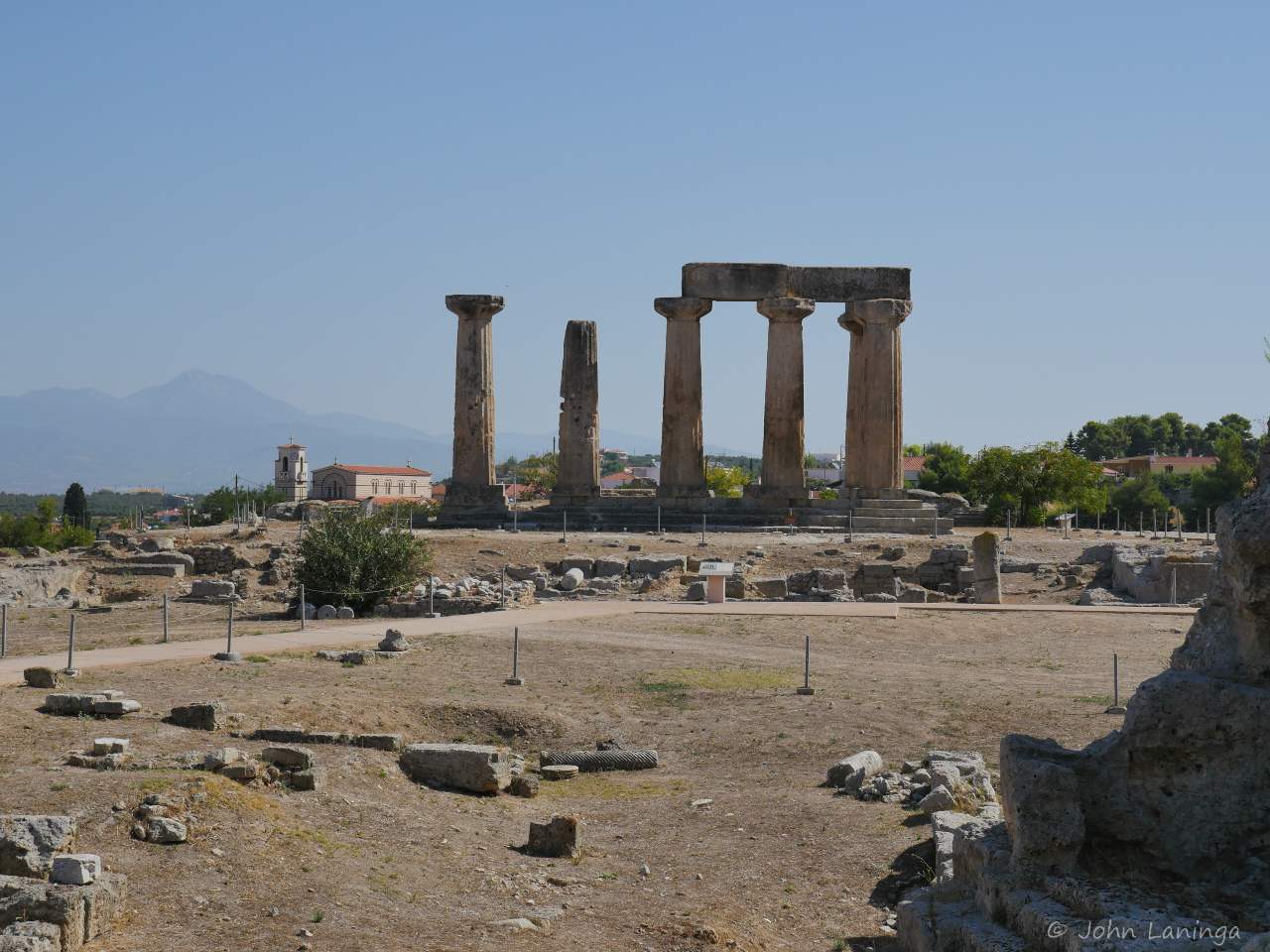
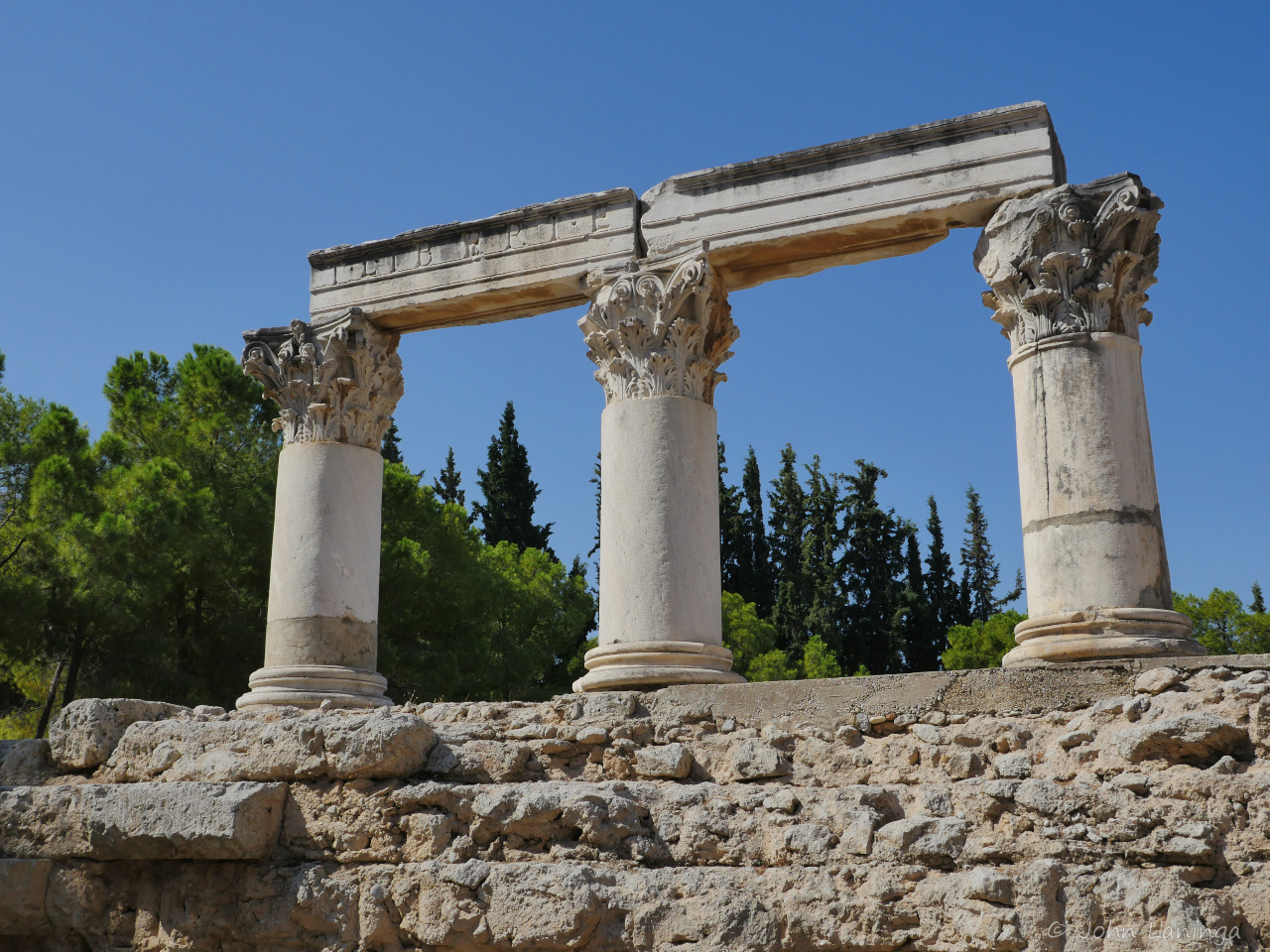
Another view of Old Corinth temple remains
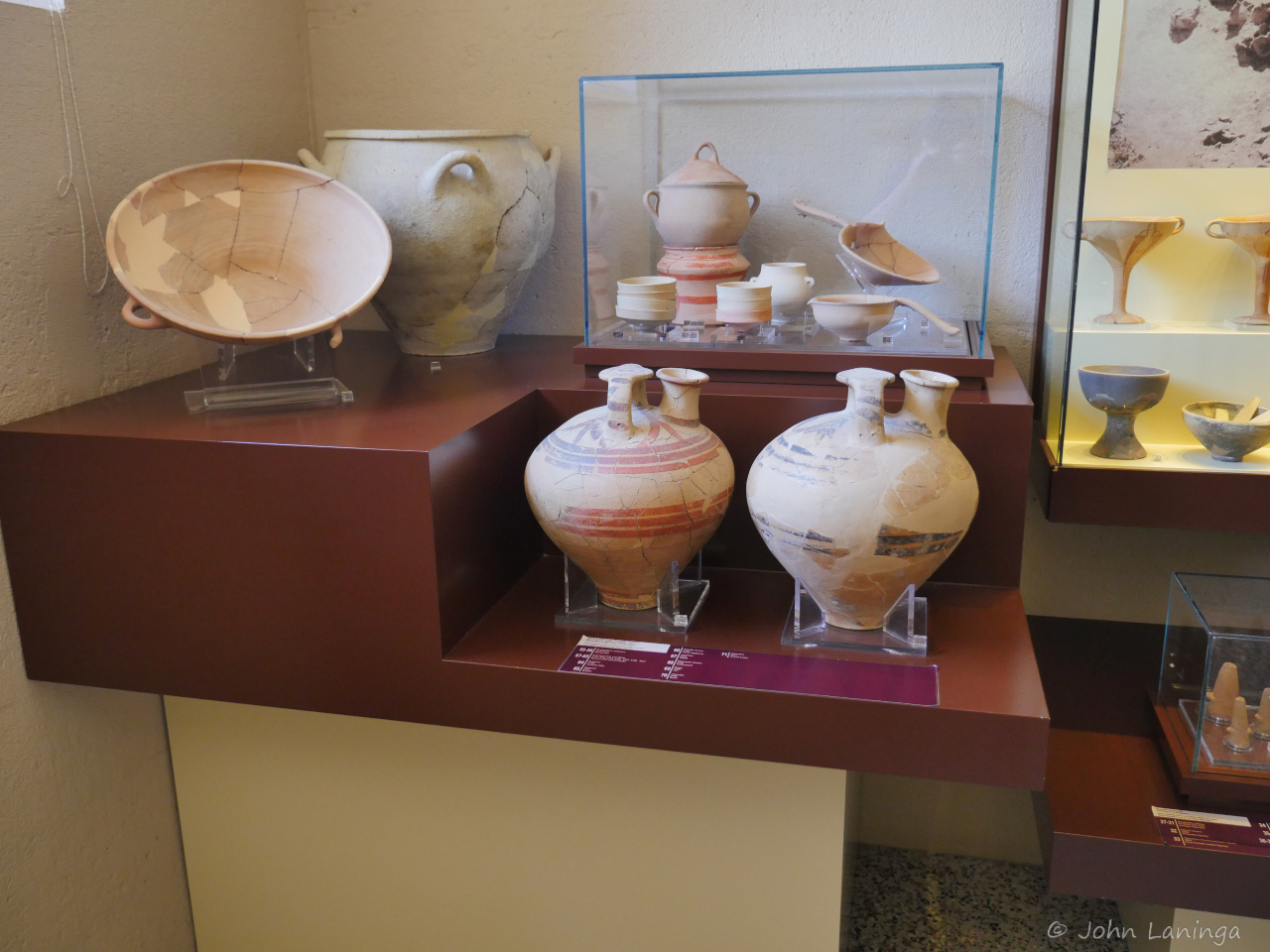
Many itms were found
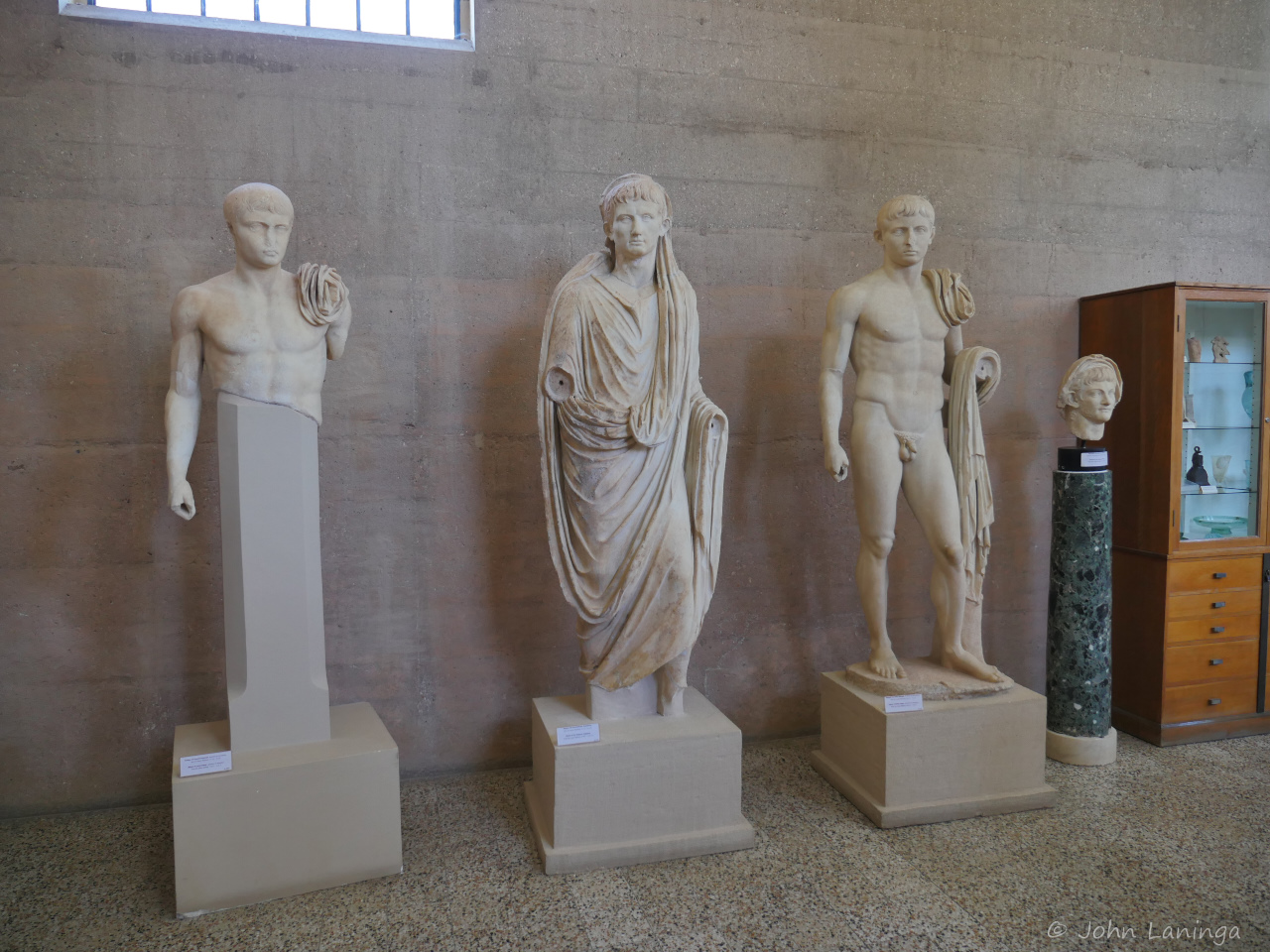
Statues were an important design element
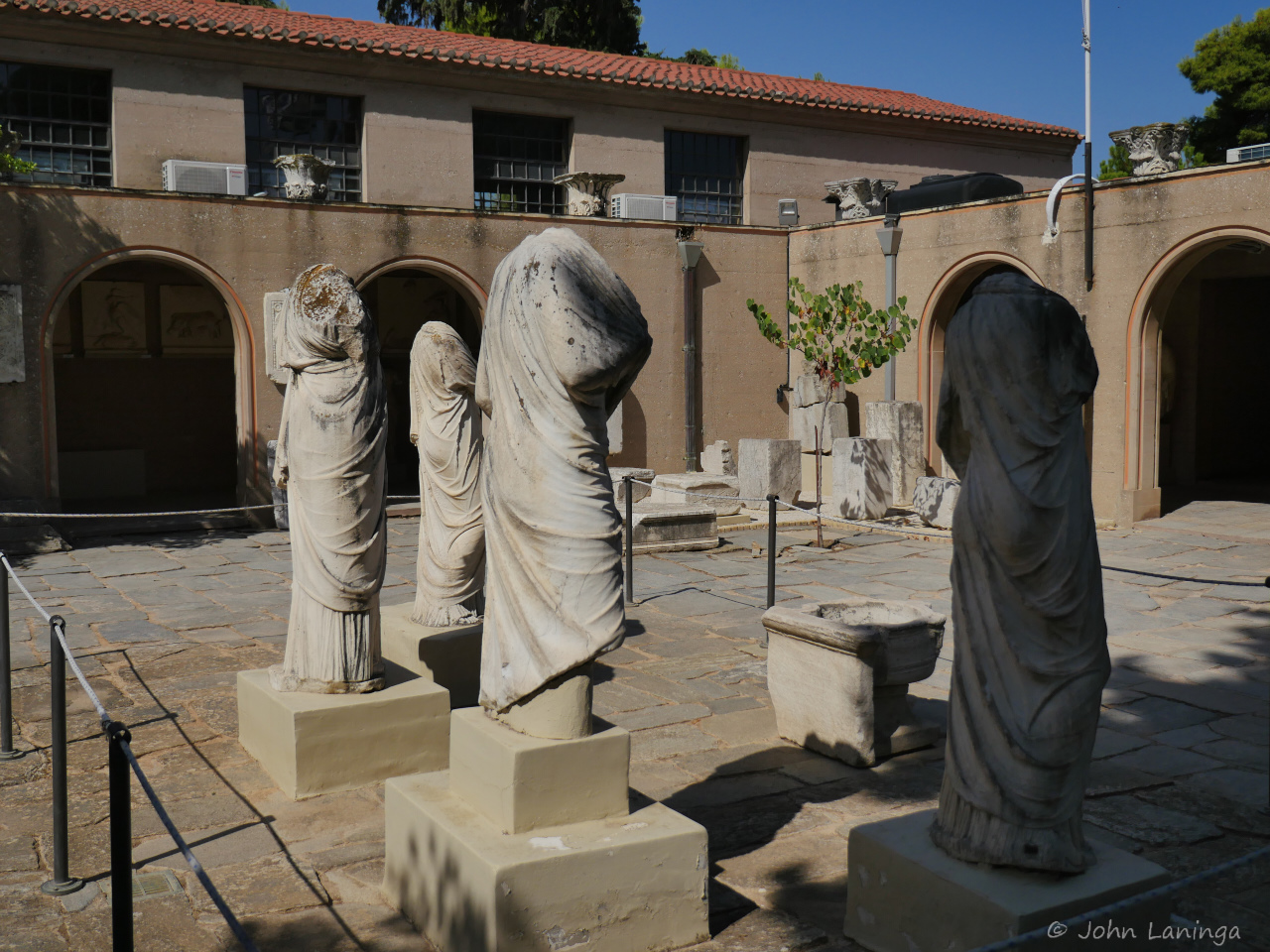
Another view of statues
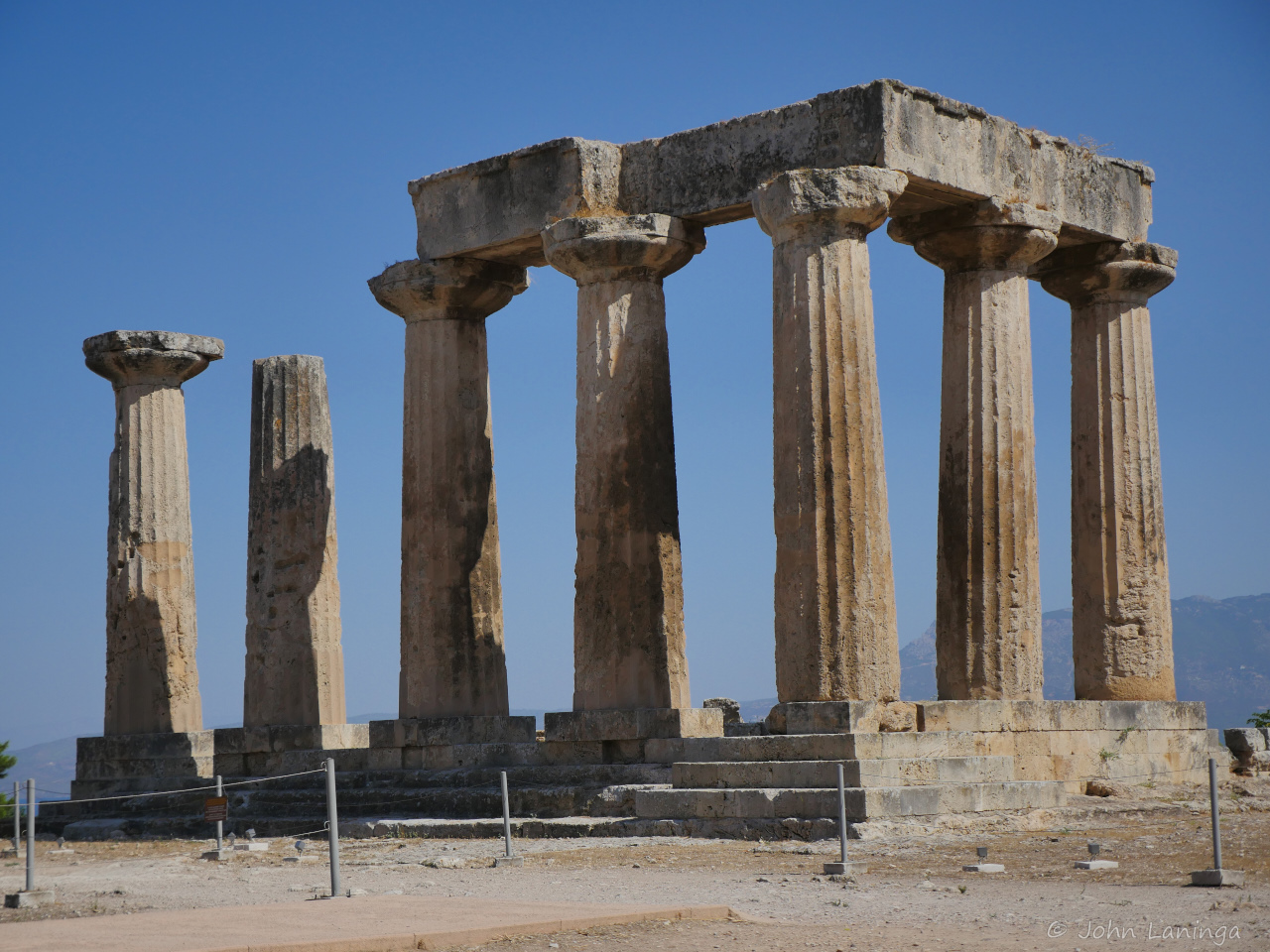
Temple of Aphrodite
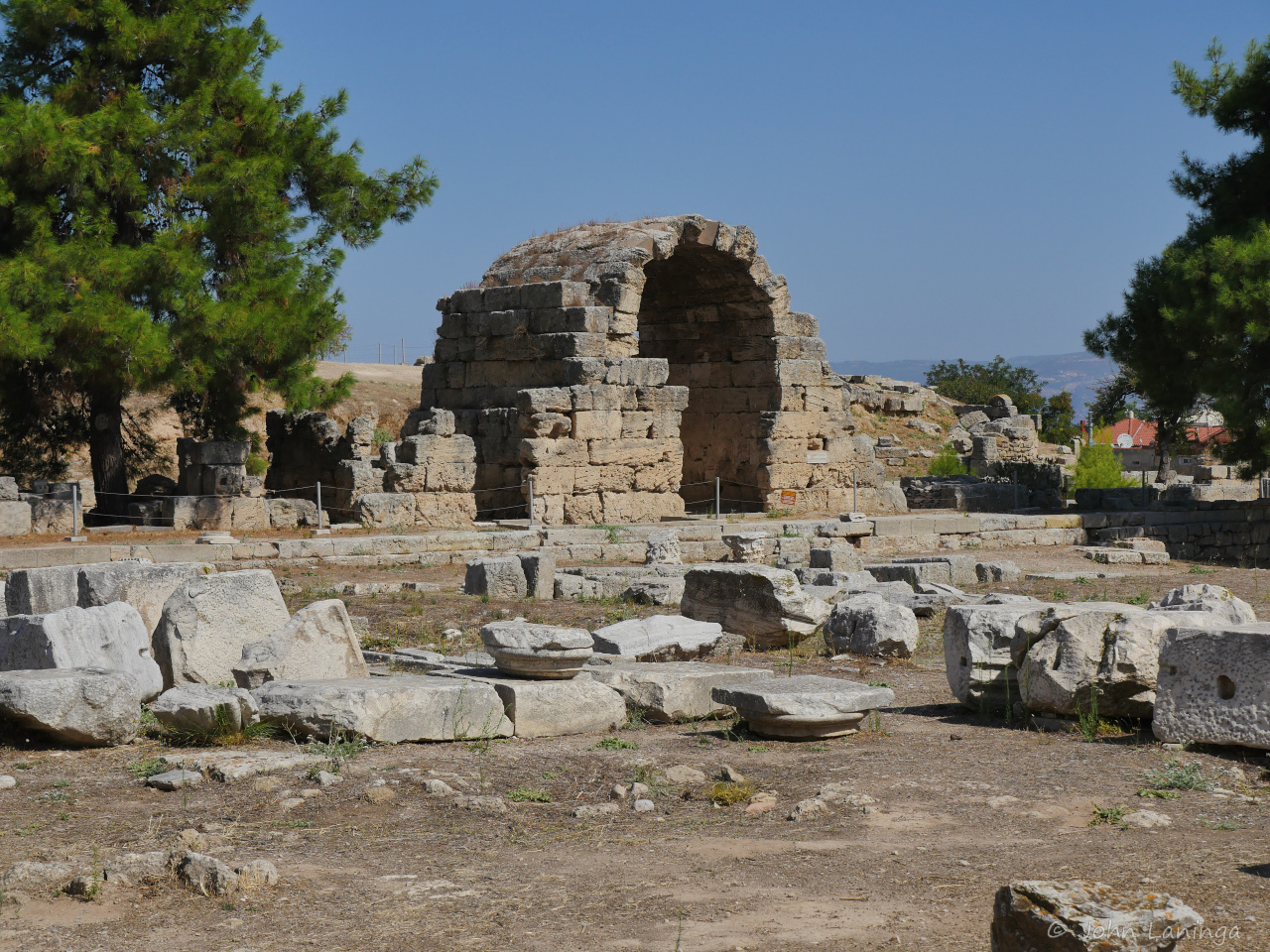
A gate opens to the temple
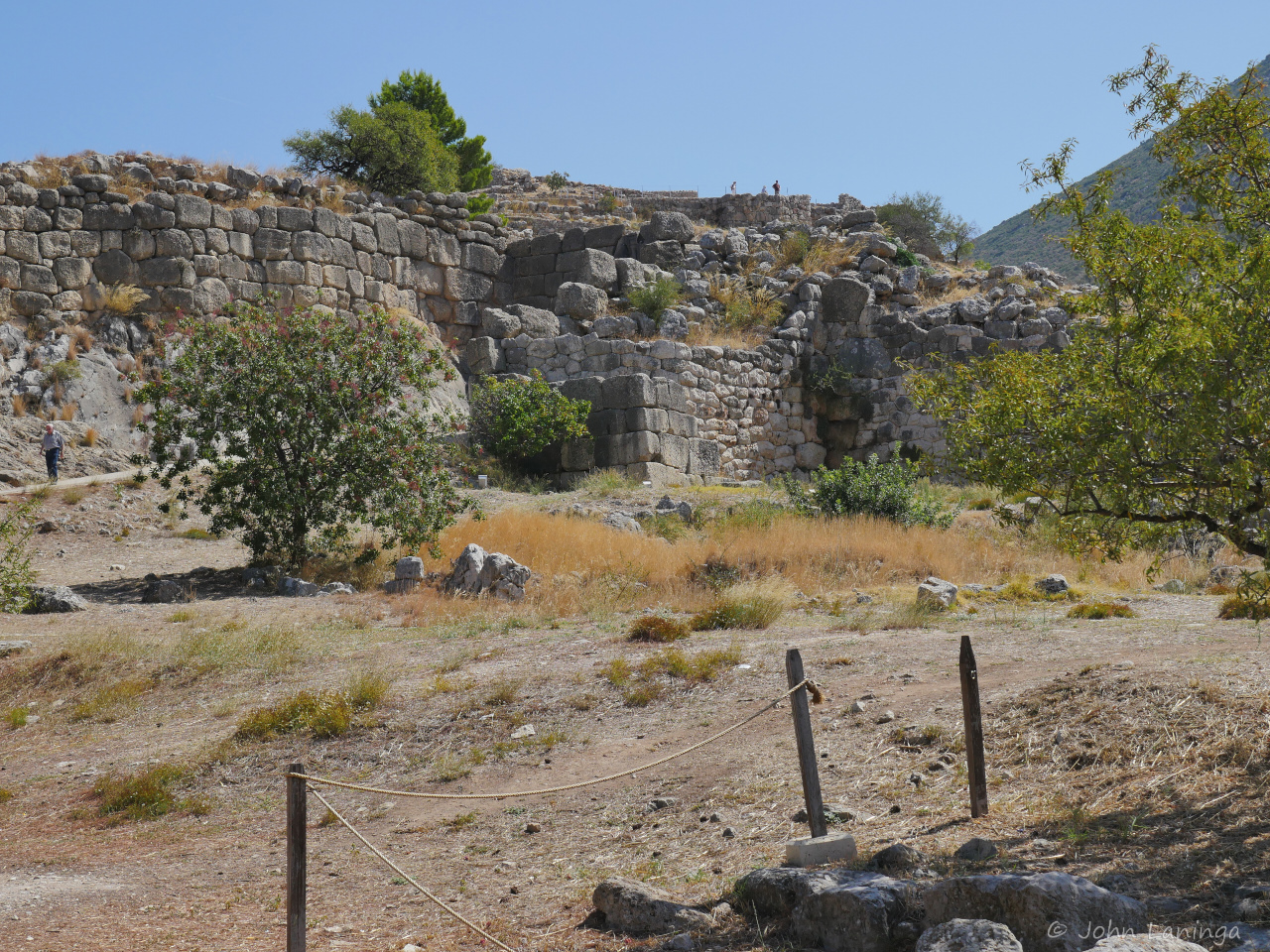
A view of Mycenau
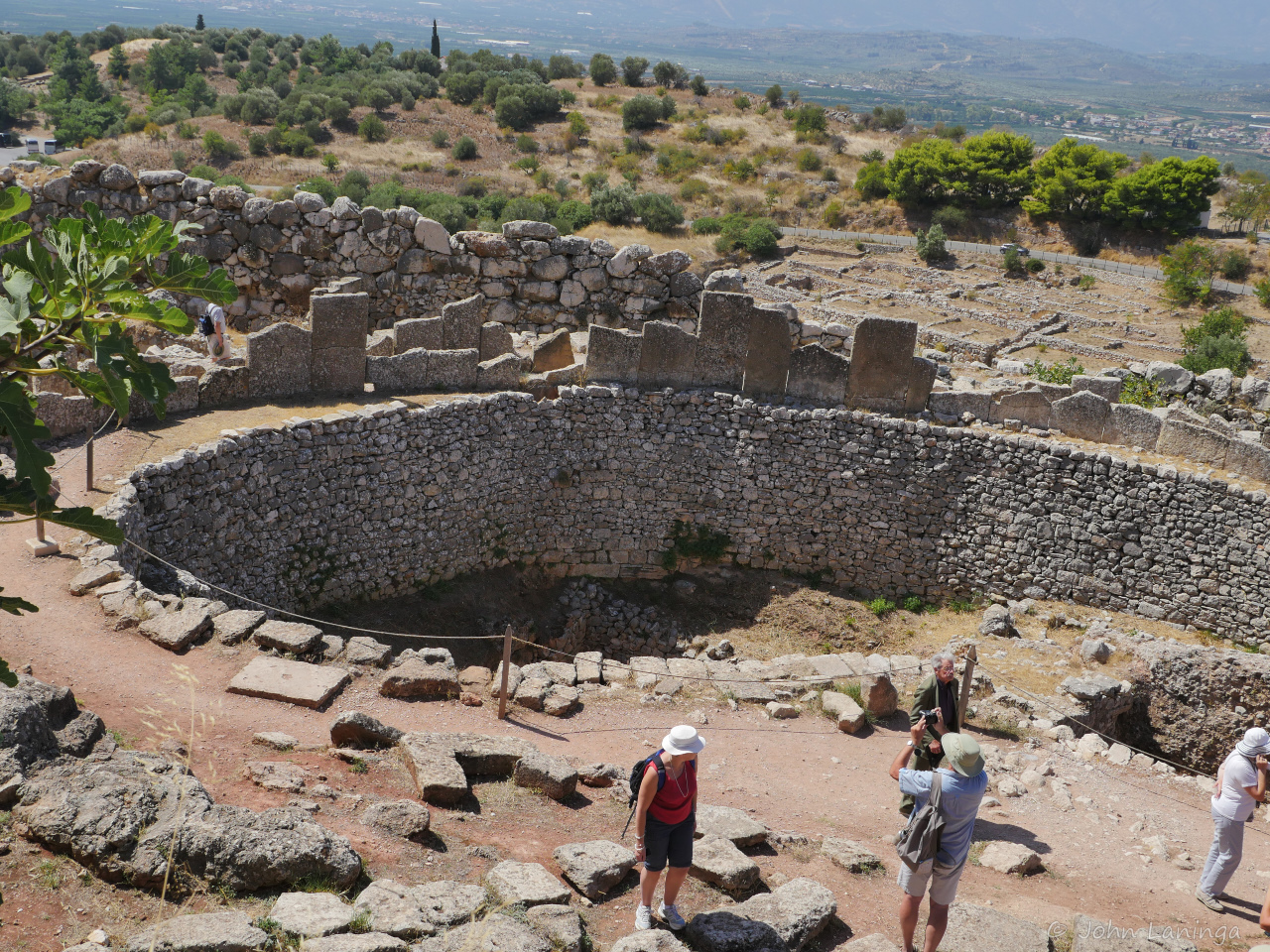
Myceneum gravesite


Santorini, Greece
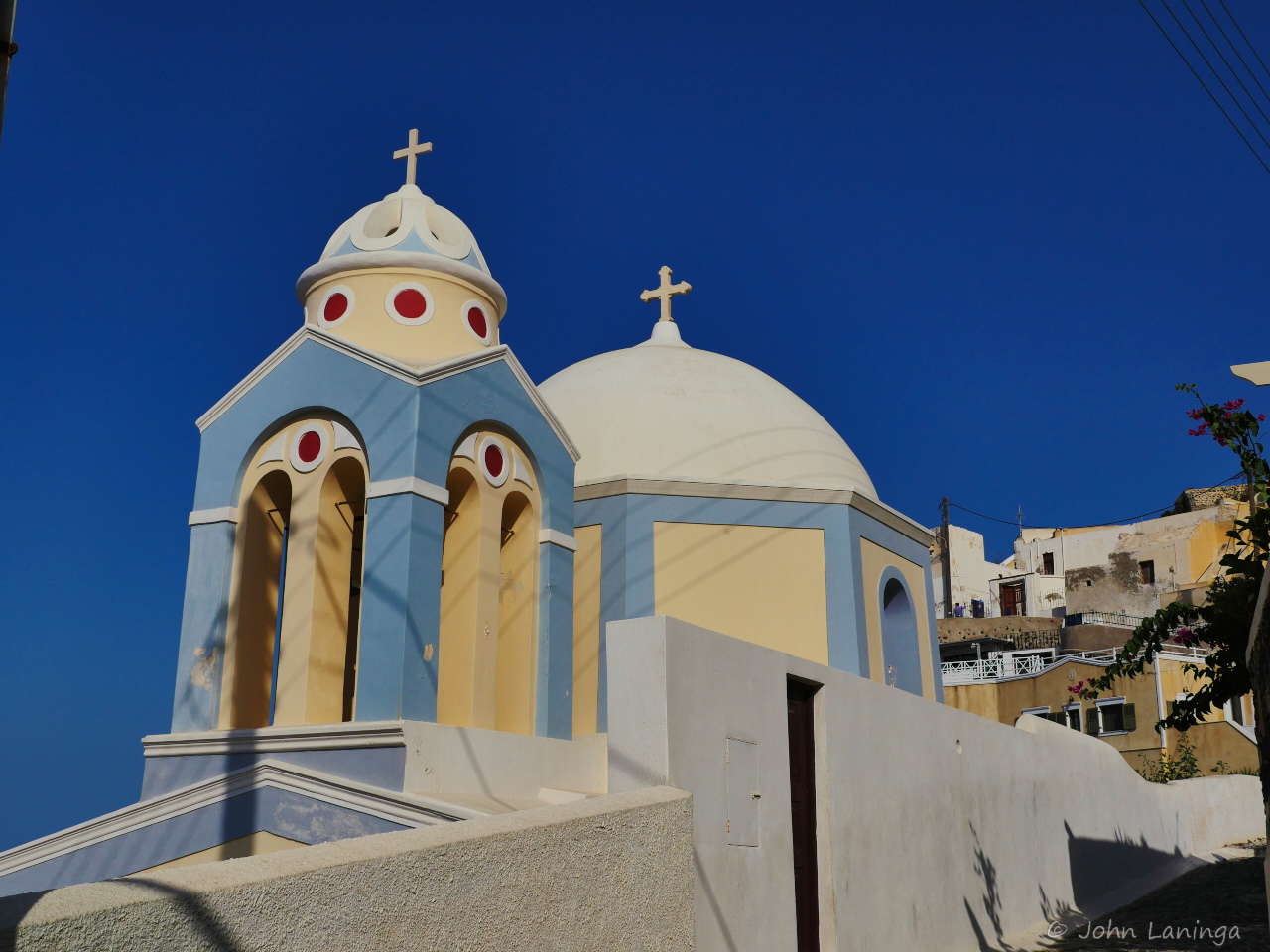
The first known inhabitants of Santorini date back from around 3,000BC. In the ensuing 5,000 years it has survived war, natural disasters, economic strife, and political unrest. In fact, at one time local resident were forbidden to fly the Greek flag, so the building wre painted the now famous white and blue.
Early nobles and wealthy people deied the best place was to view the ocen from the lower slopes, so the poor were banished to carving homes out of the “undesirable” caldera cliffs. Today, of course, the lower slopes are mainly farm and ndustrial, the prime places are looking inside the caldera.
There are three ways to get to the rim: on foot, by donkey, o by gondola. We took the gondola to the top, then explored the maze of small streets and alleys of the town of Fira. It is hard to choose what scenes not to photograph! We then took a local bus to the town of Oia (pronounced “eye-ah”), another beautiful city in white and blue. Again, picture lots opportunities, and we had a nice lunch of local food and wine.
The local bus is a story in itself. The road from one village to the next is high on the edge of a cliff, with lots of hairpin turns. In addition, the roads are narrow, and the bus driver fearless. I can see why some people don’t want to look!
All in all, the visit to Santorini was a memorable one.
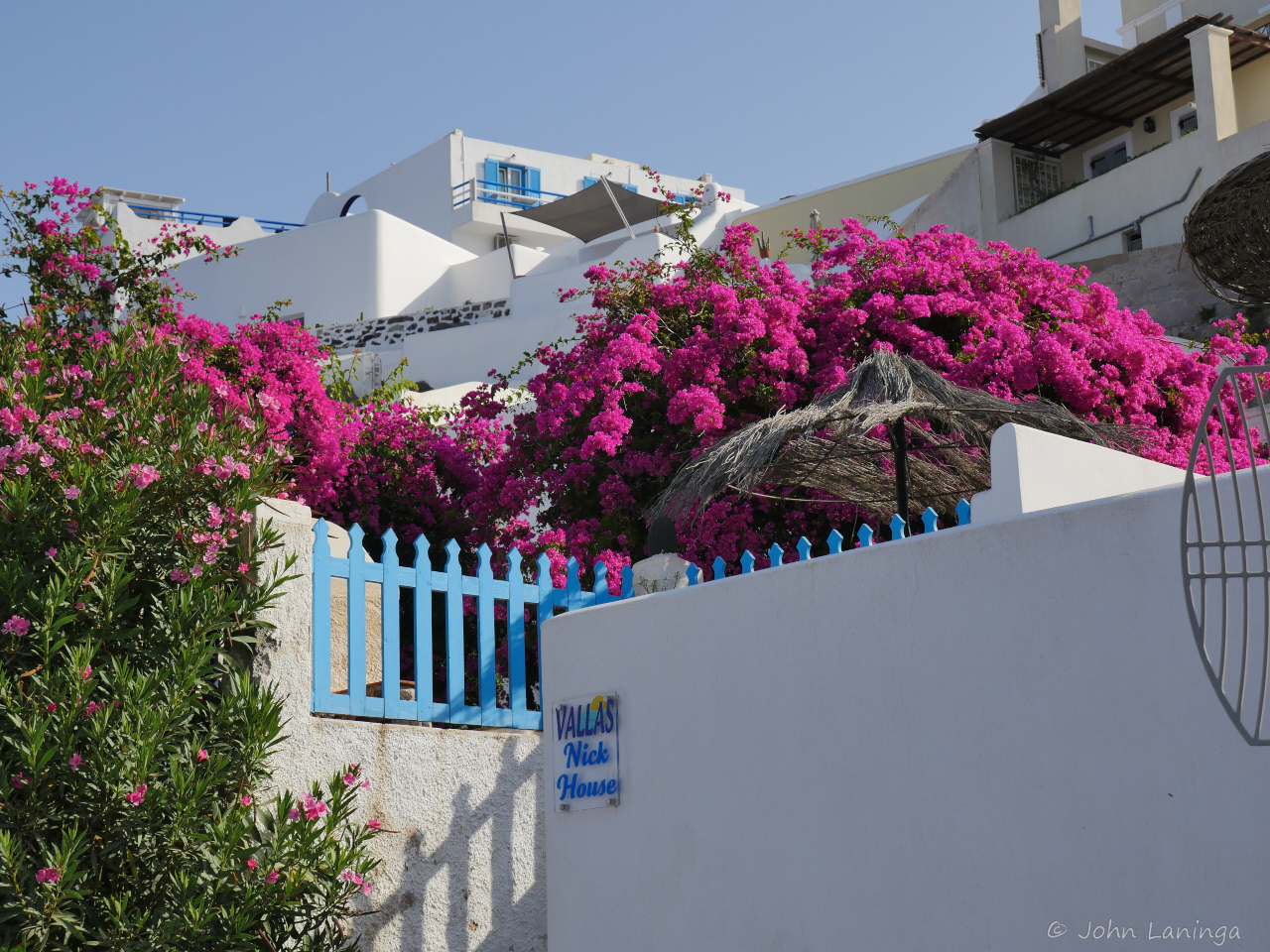
Colorful flowers against the white buildings
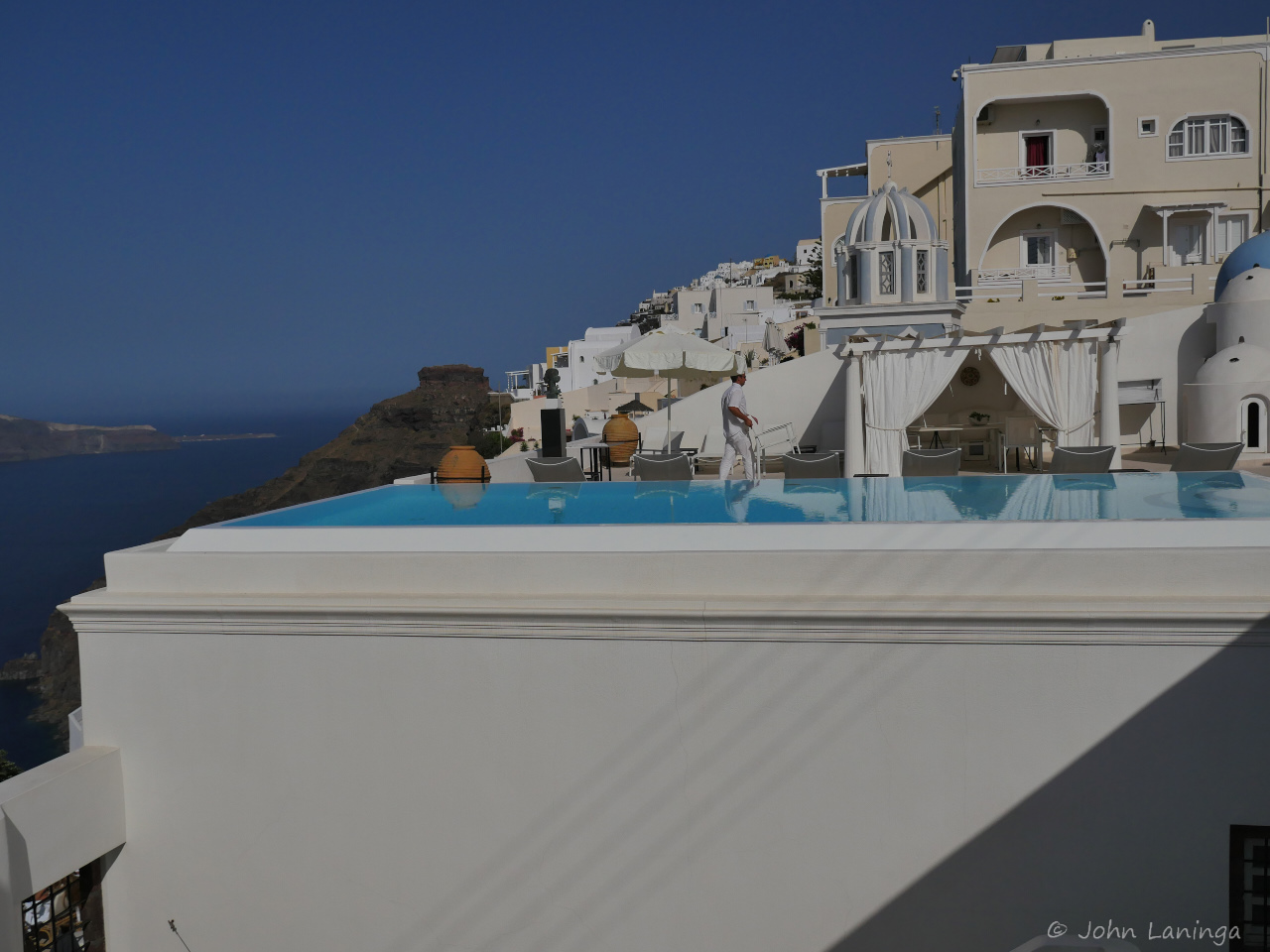
Nice looking pool!
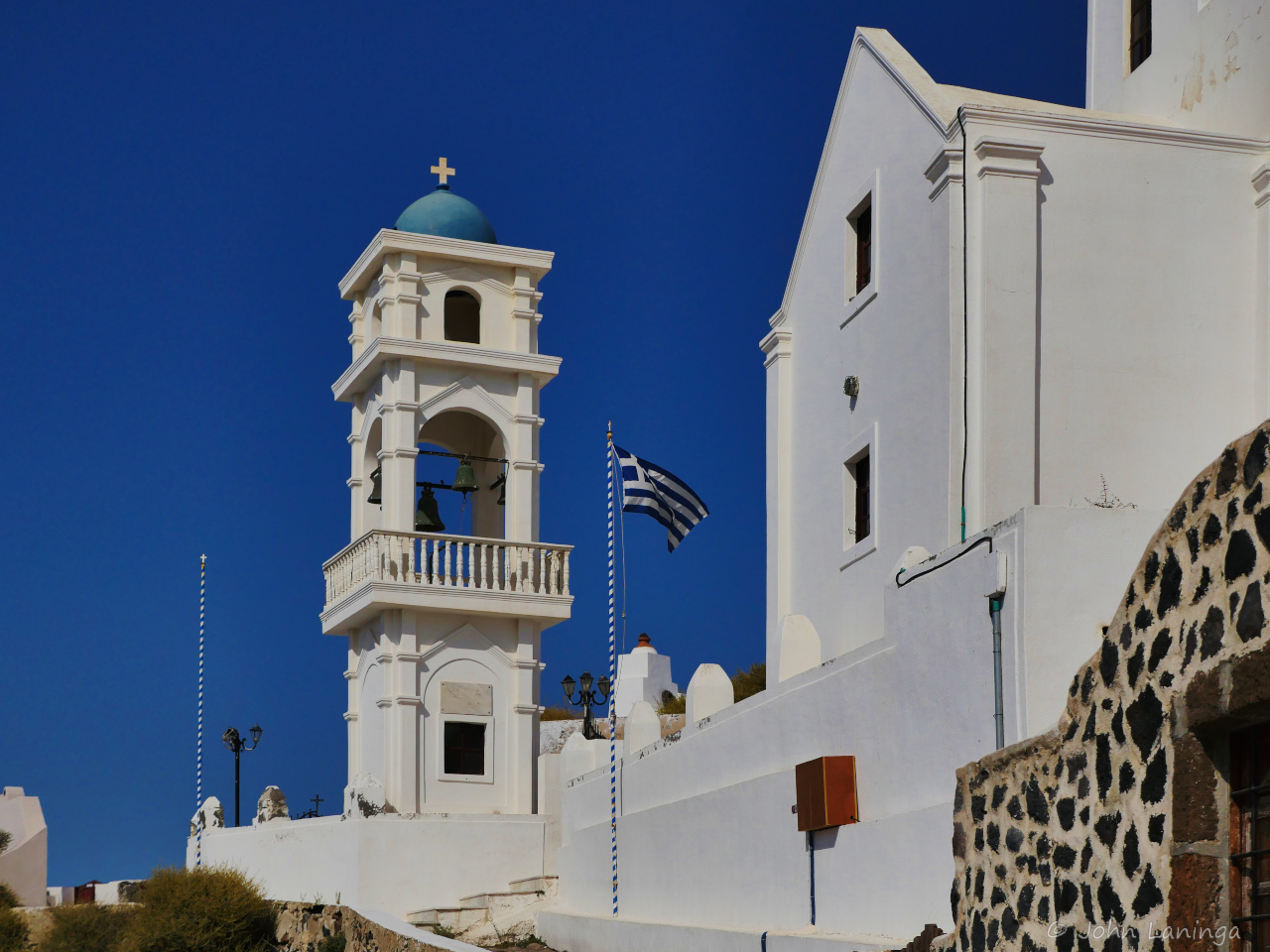
Church tower and building
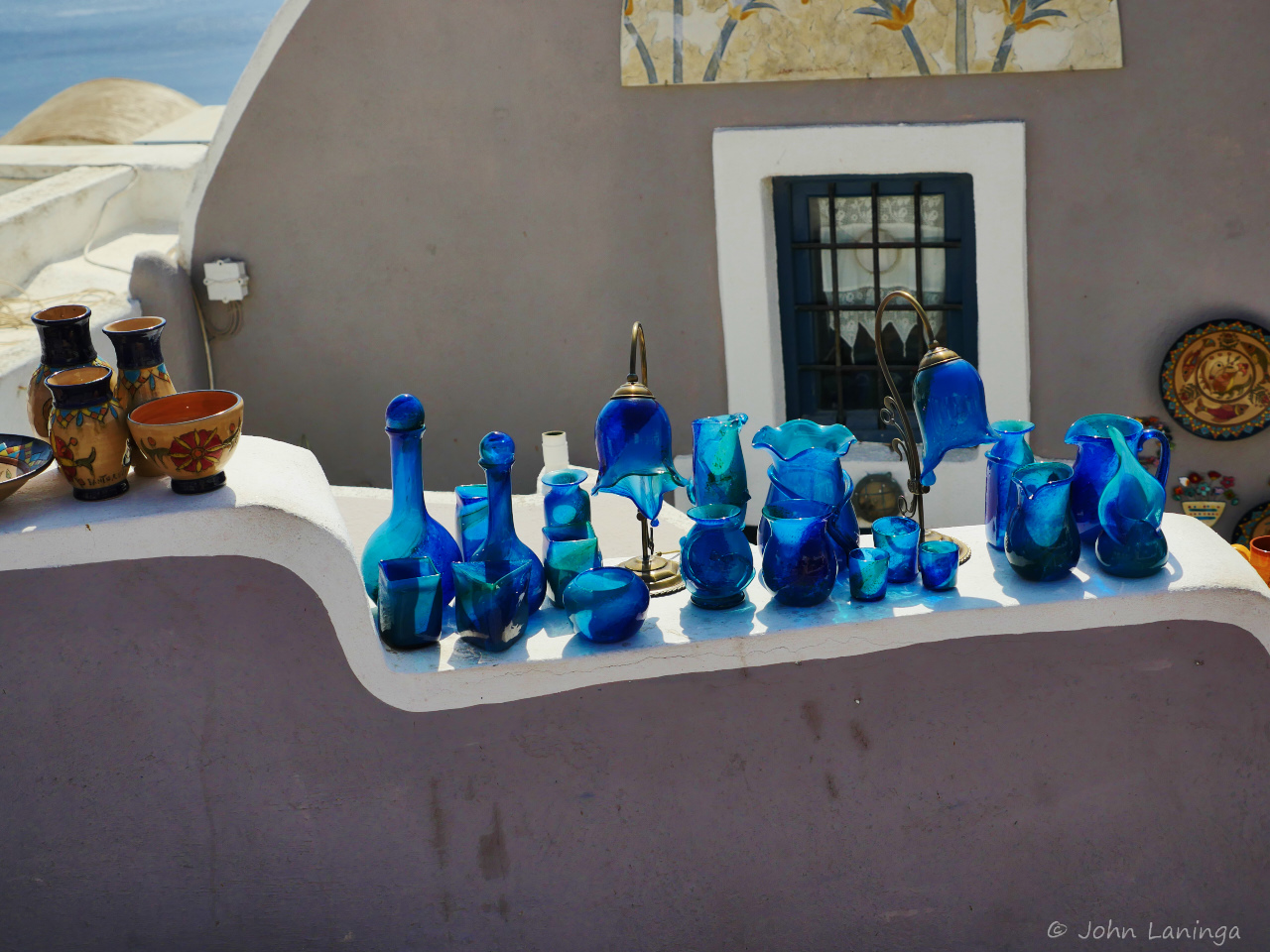
Even local glass work reflects the color s blue and white
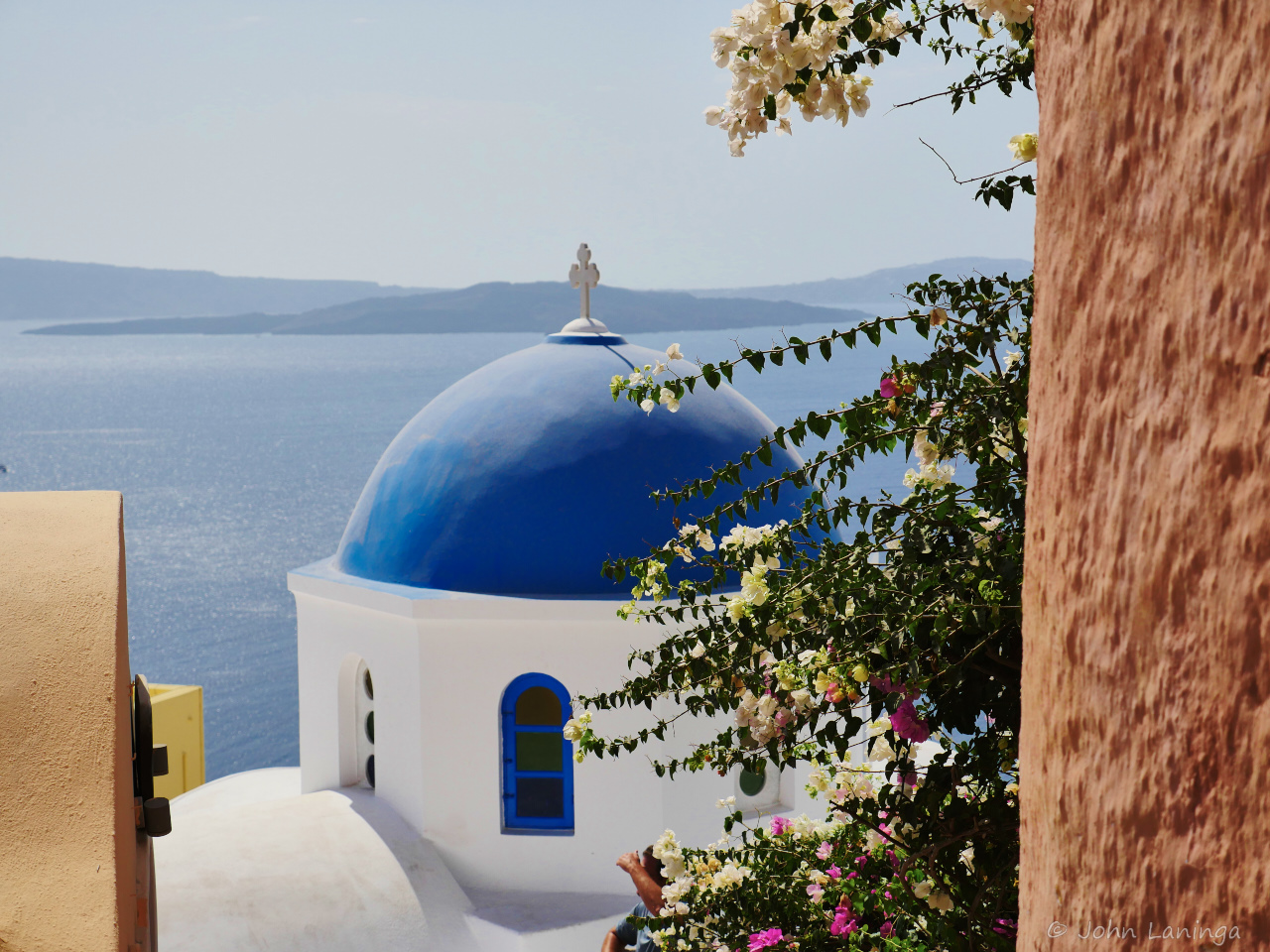
Scenic lbue dome
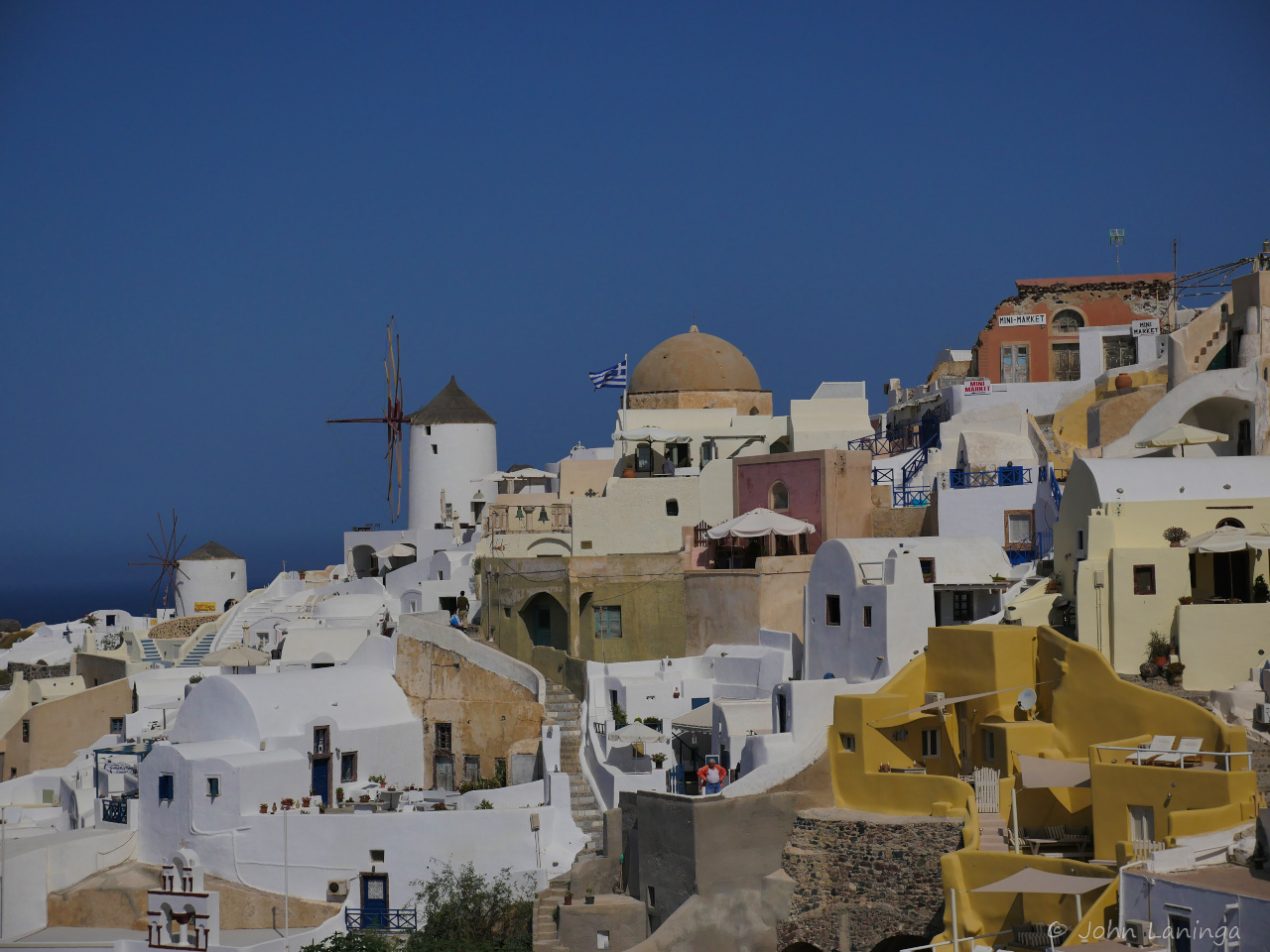
Looking towards Oia
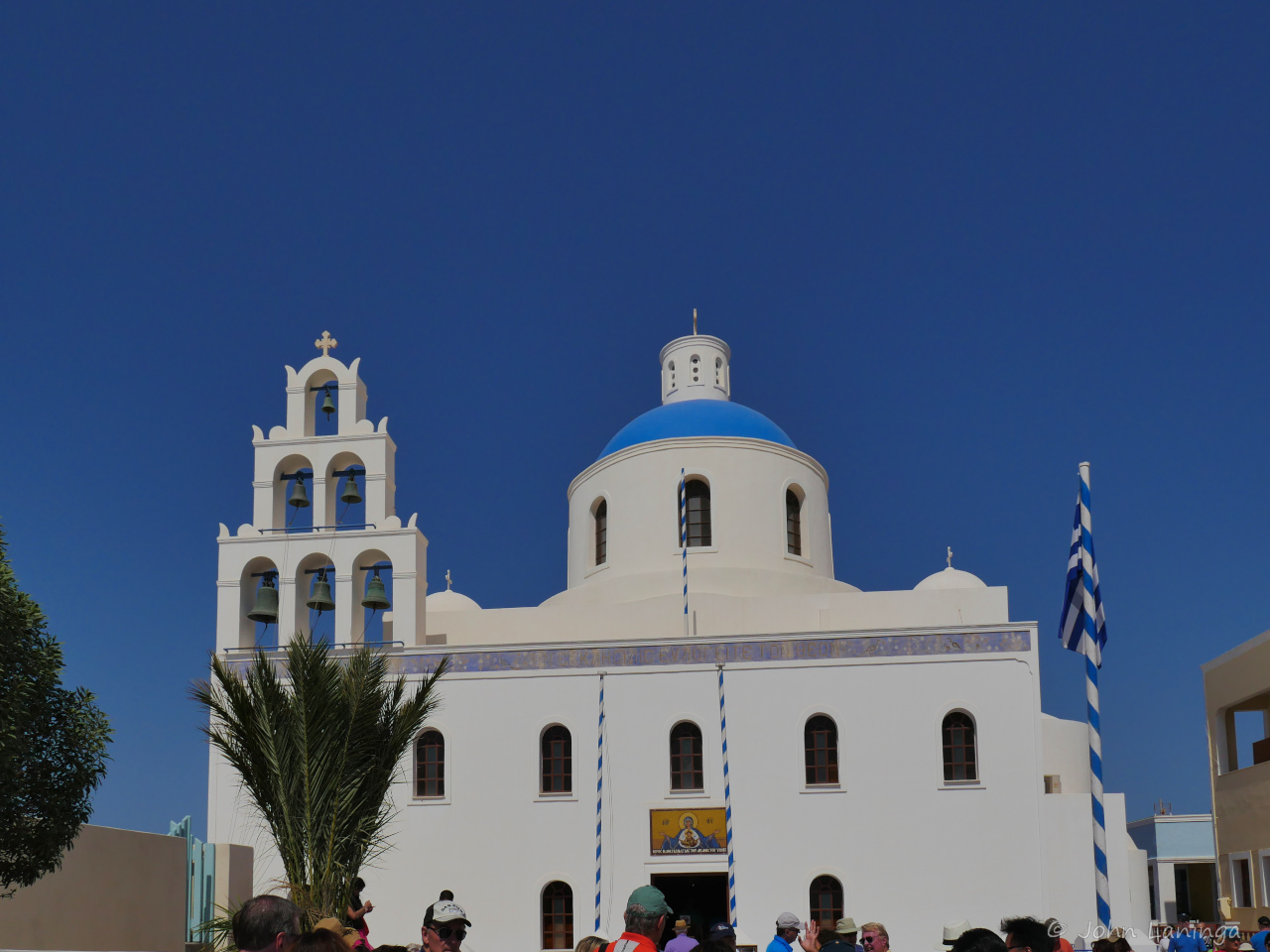
Santorini church
Kotor, Montenegro
Our next stop was in Kotor, Montenegro. This small city is located along a scenic bay, which reminded me of the fjords in Norway (but without snow and waterfalls). It was built between the 12th and 14th century. The Old City is an excellent example of Middle Ages urbanization, consisting of small, narrow streets and squares. And places to get wine and food.
One of the highlights is the 2.8 mile long wall. Much of this is restored, and walkable, up to the old fort. This takes 1,320 steps, and gives a good test of heart and legs. Of our group, Romola and I were the oldest to reach the top. Yeah!
Montenegro itself became a kingdom in 1910, and became part of Yugoslavia in 1918. The 20th century was a difficult one, and in 2006 Montenegro became an independent state and recognized as the 192nd country member of the United Nations.
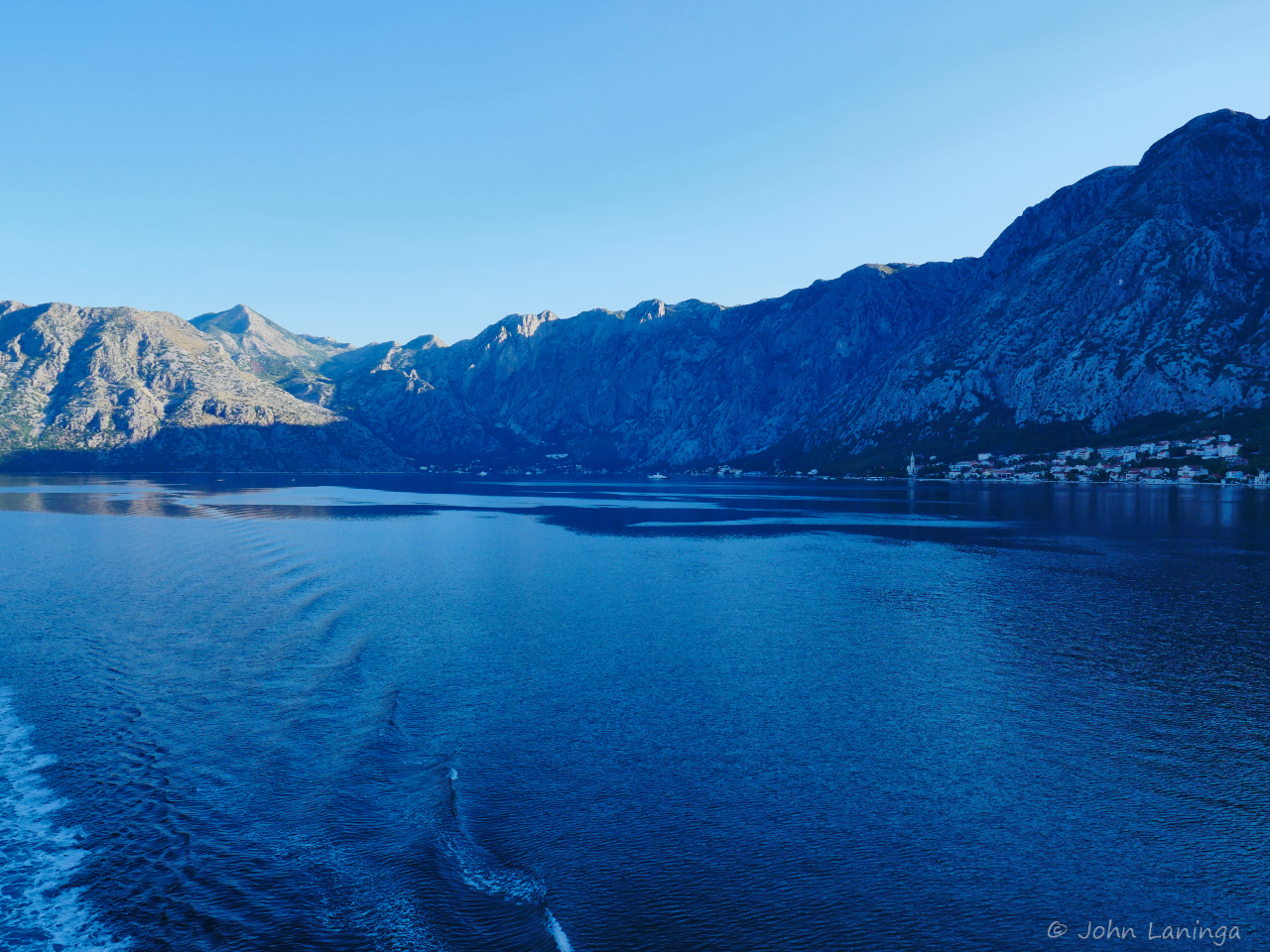
Going towards Montenegro
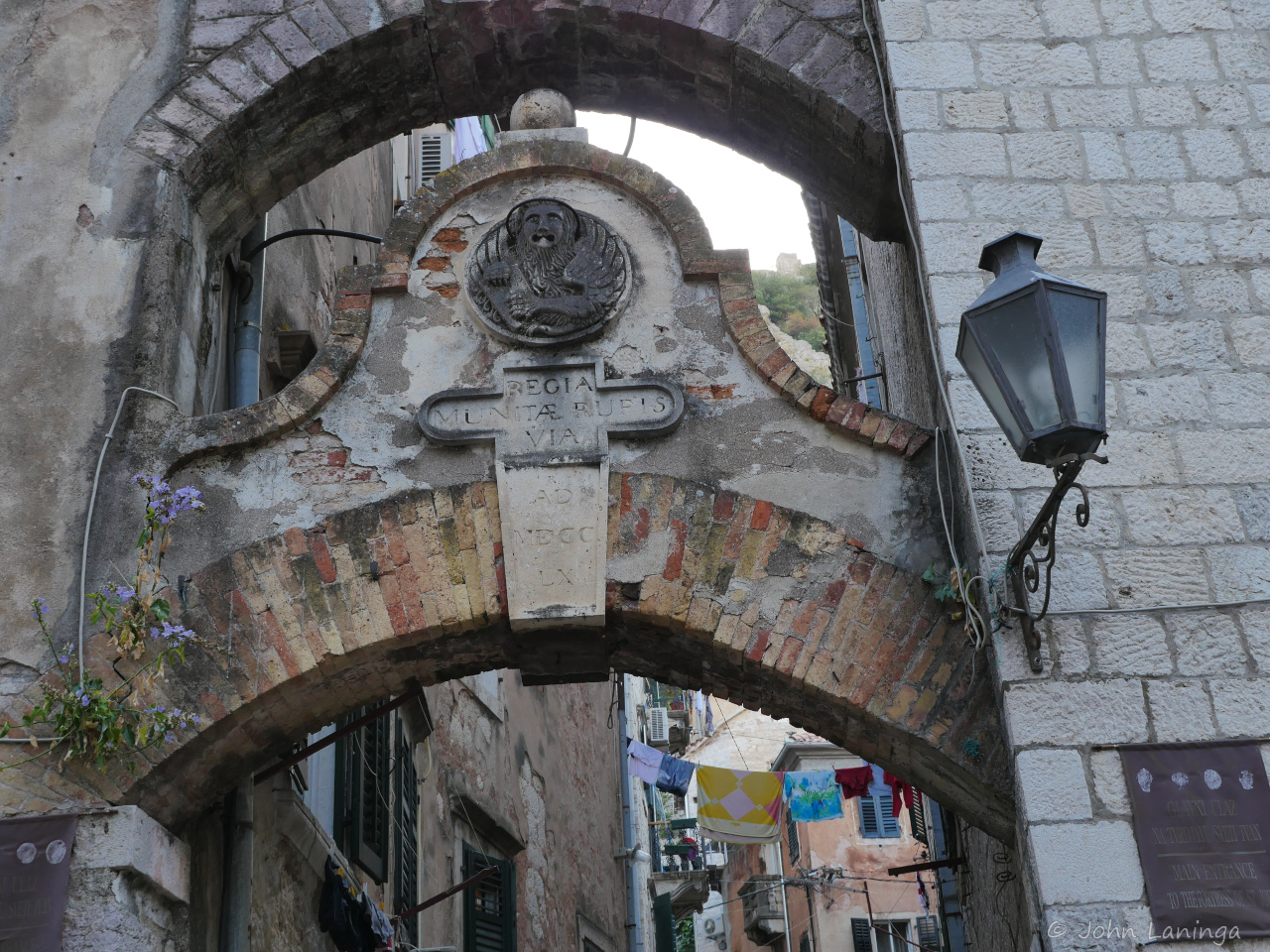
One of the lintels in the city
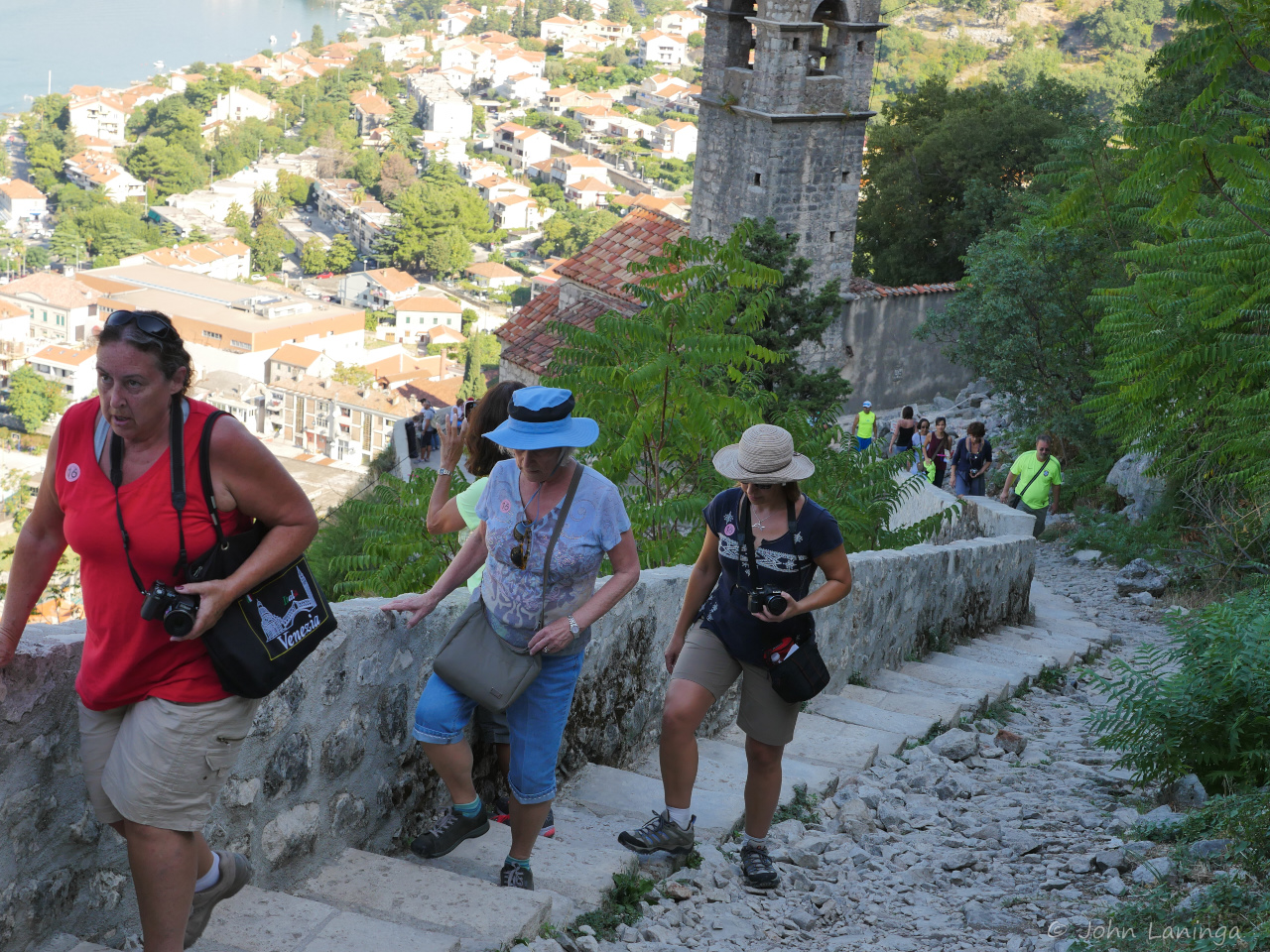
Romola and Tanya, working their way up
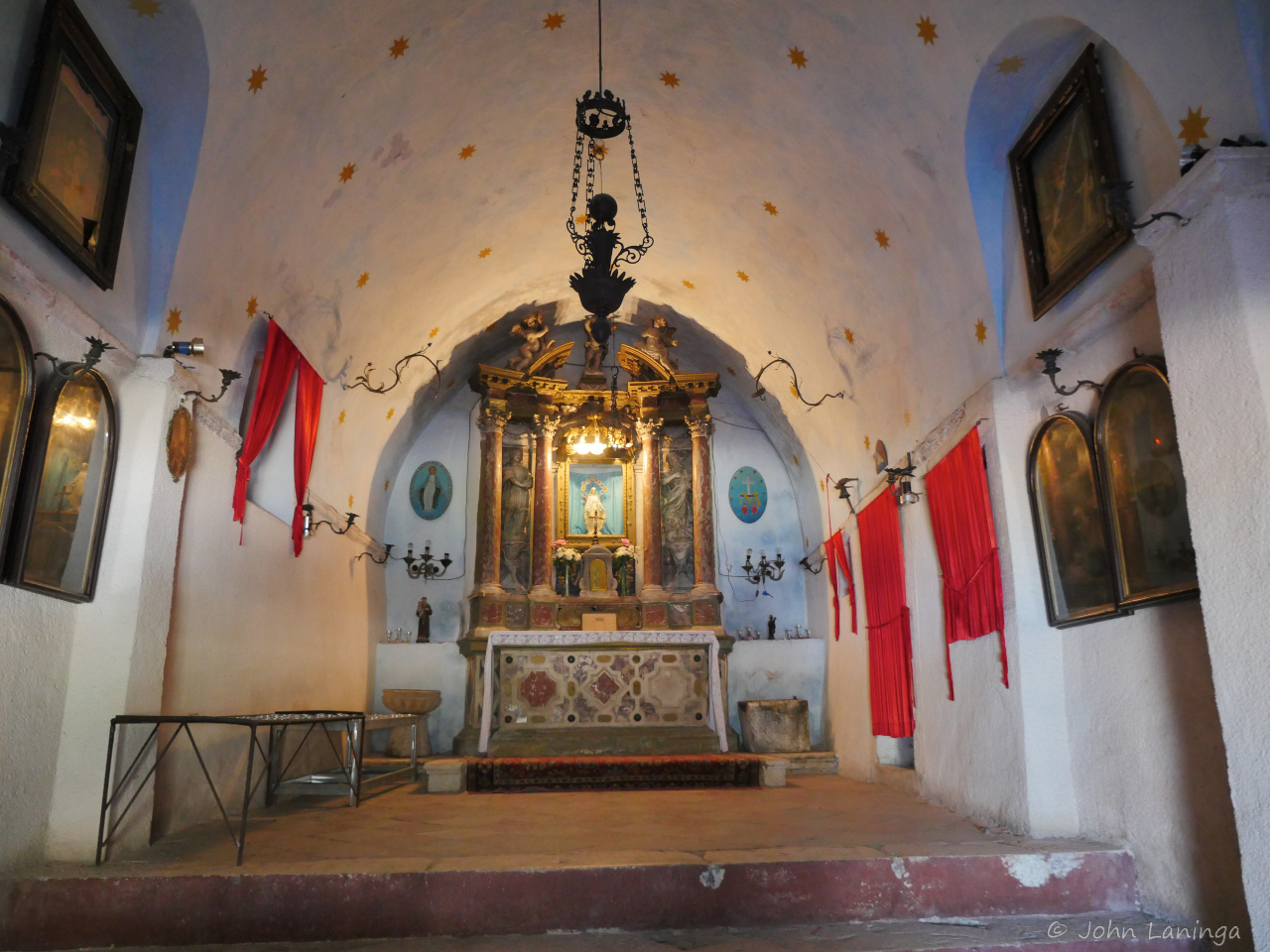
In the chapel, part way up to the fort
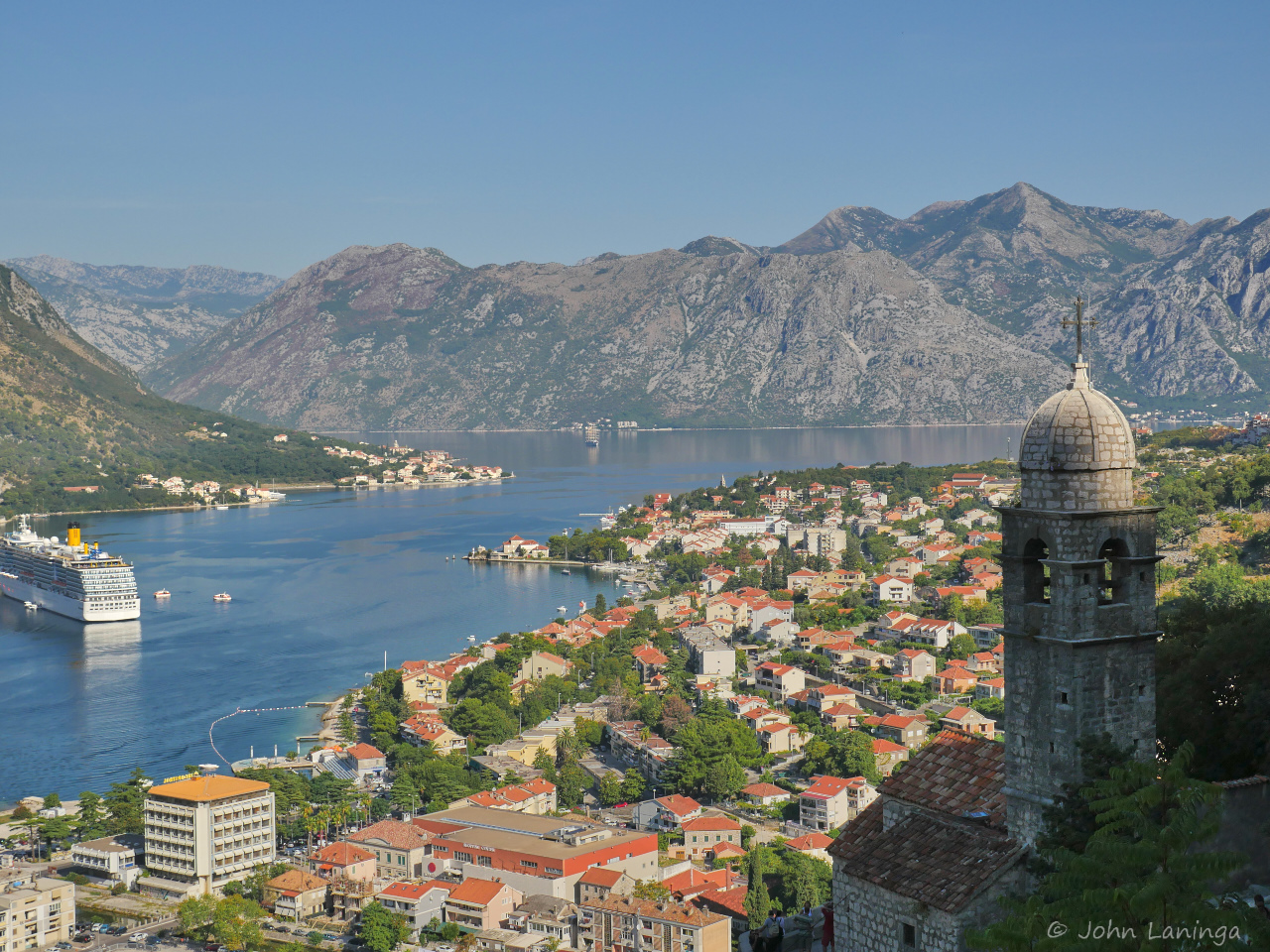
A view back from part way up
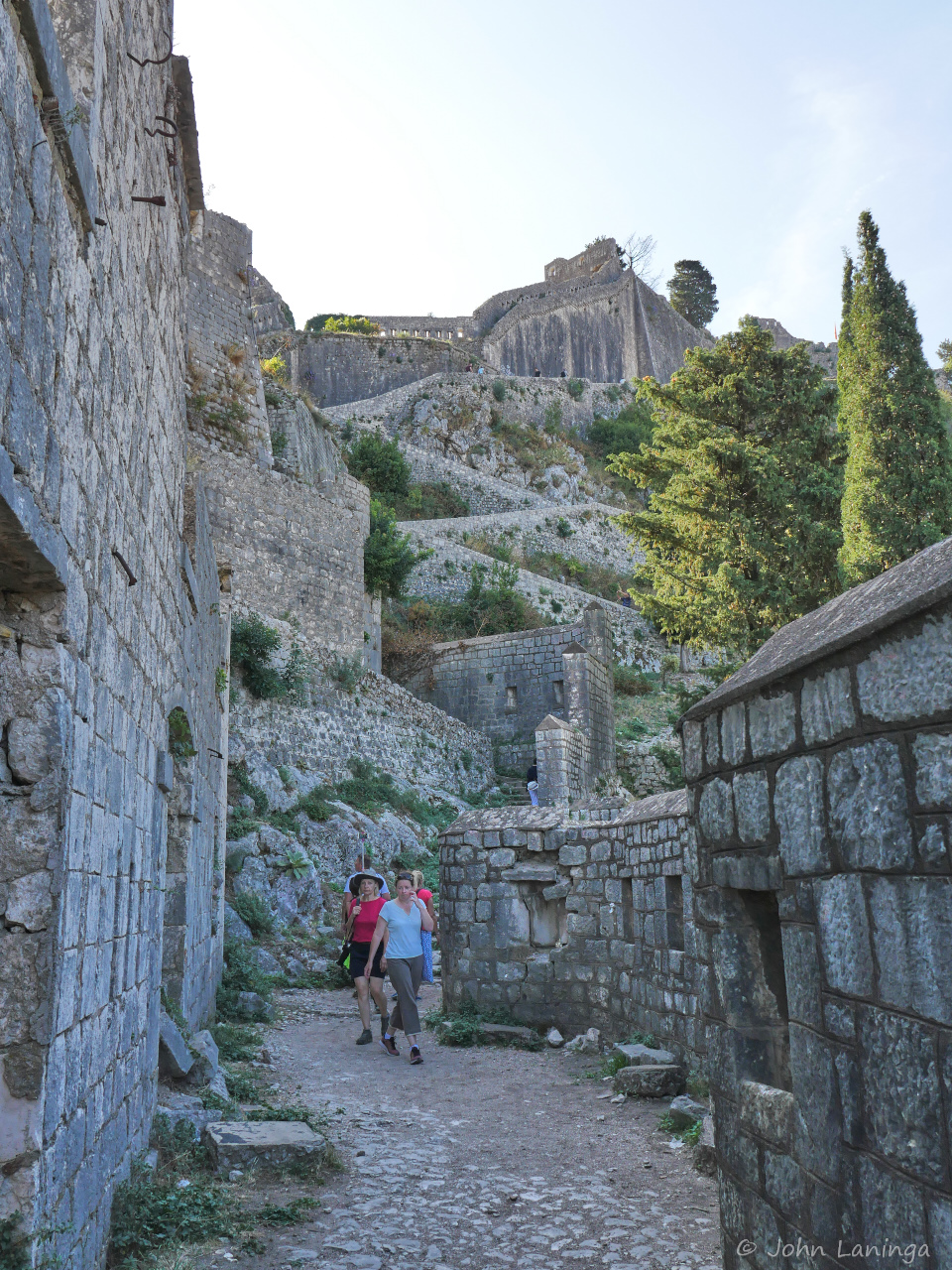
You can see the last third or so of the steps going up
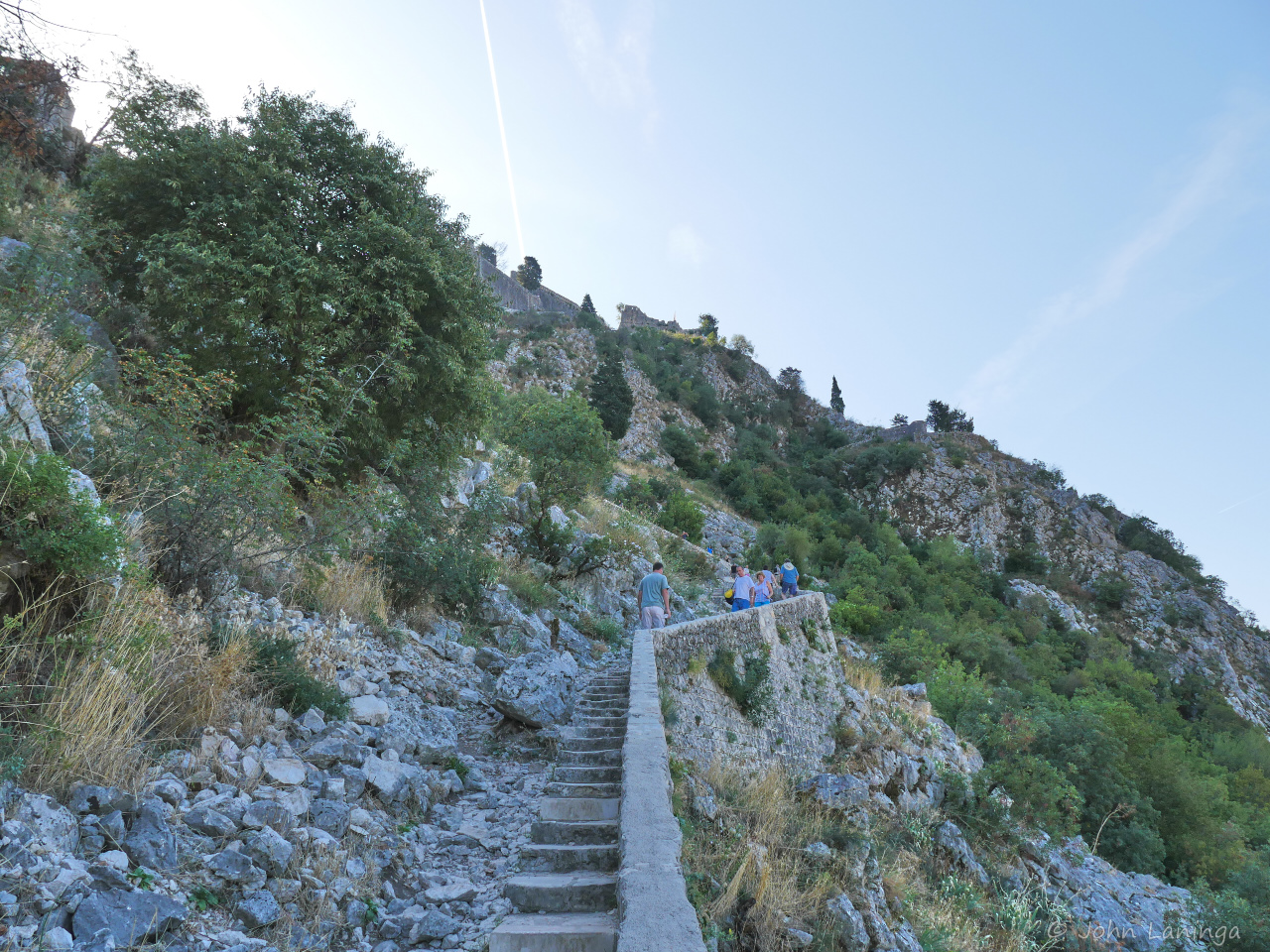
And, a view looking up
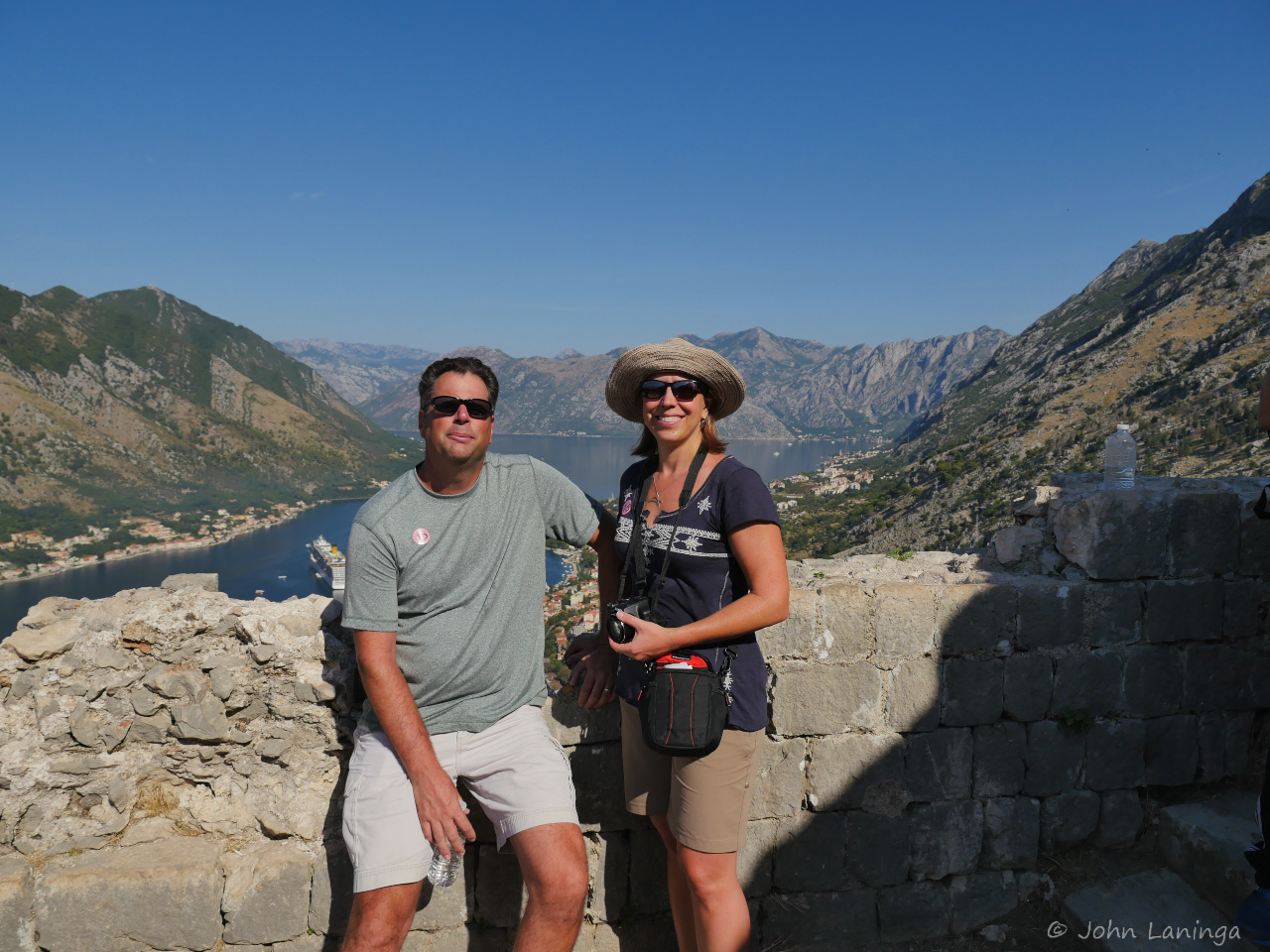
Shane and Tanya, at the top
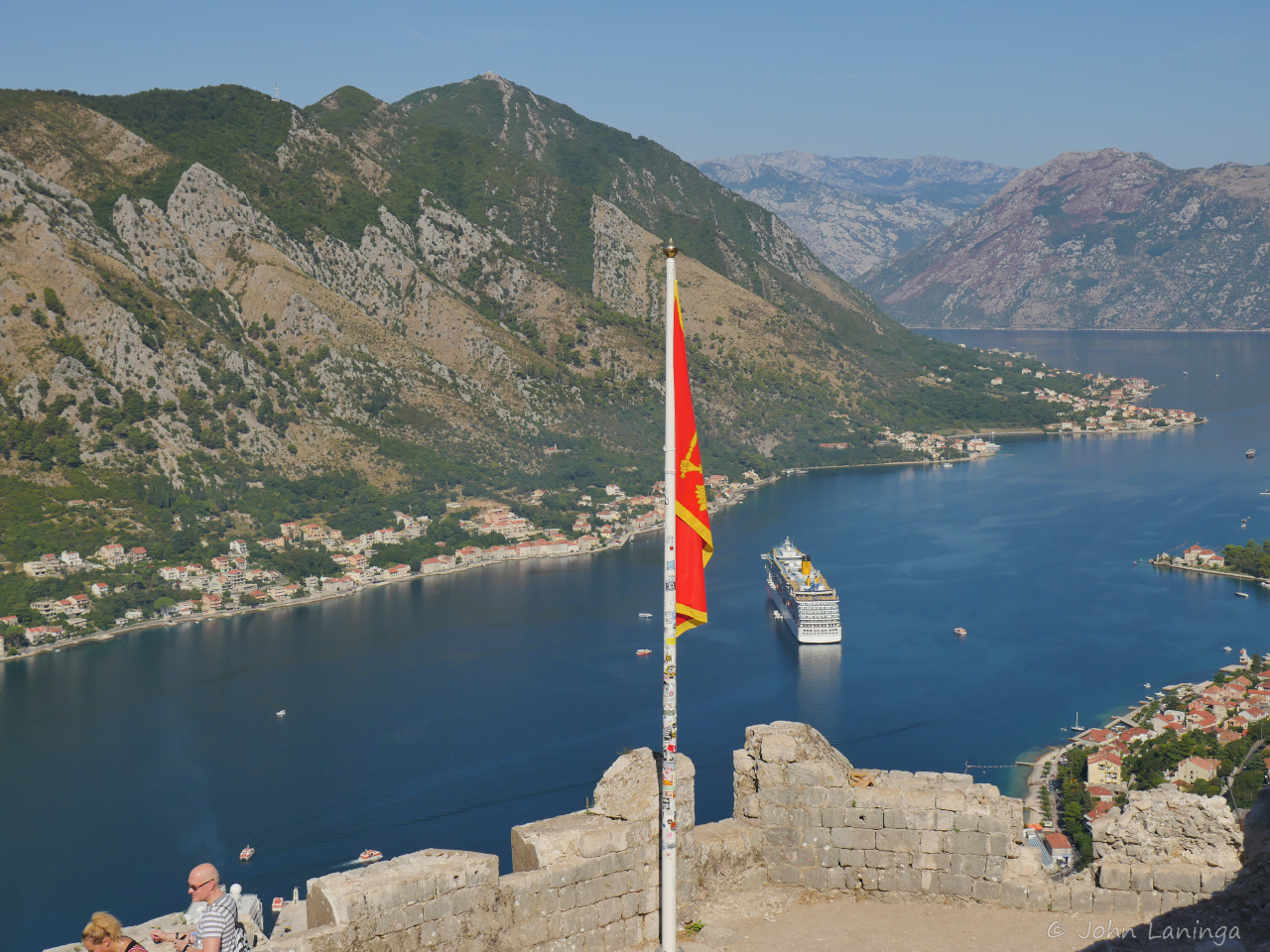
Looking down from the flag on the fort
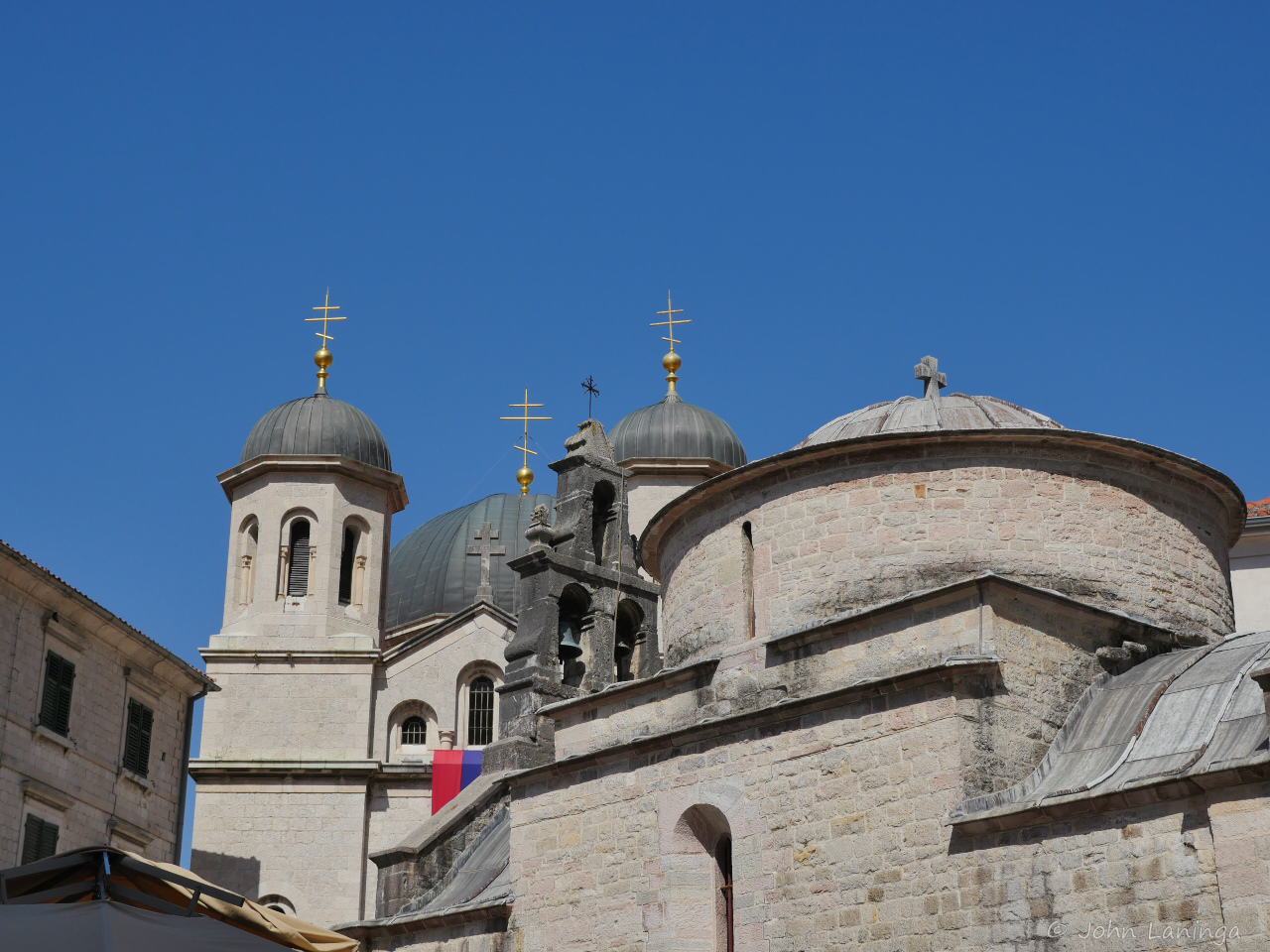
Inside the city of Kotor
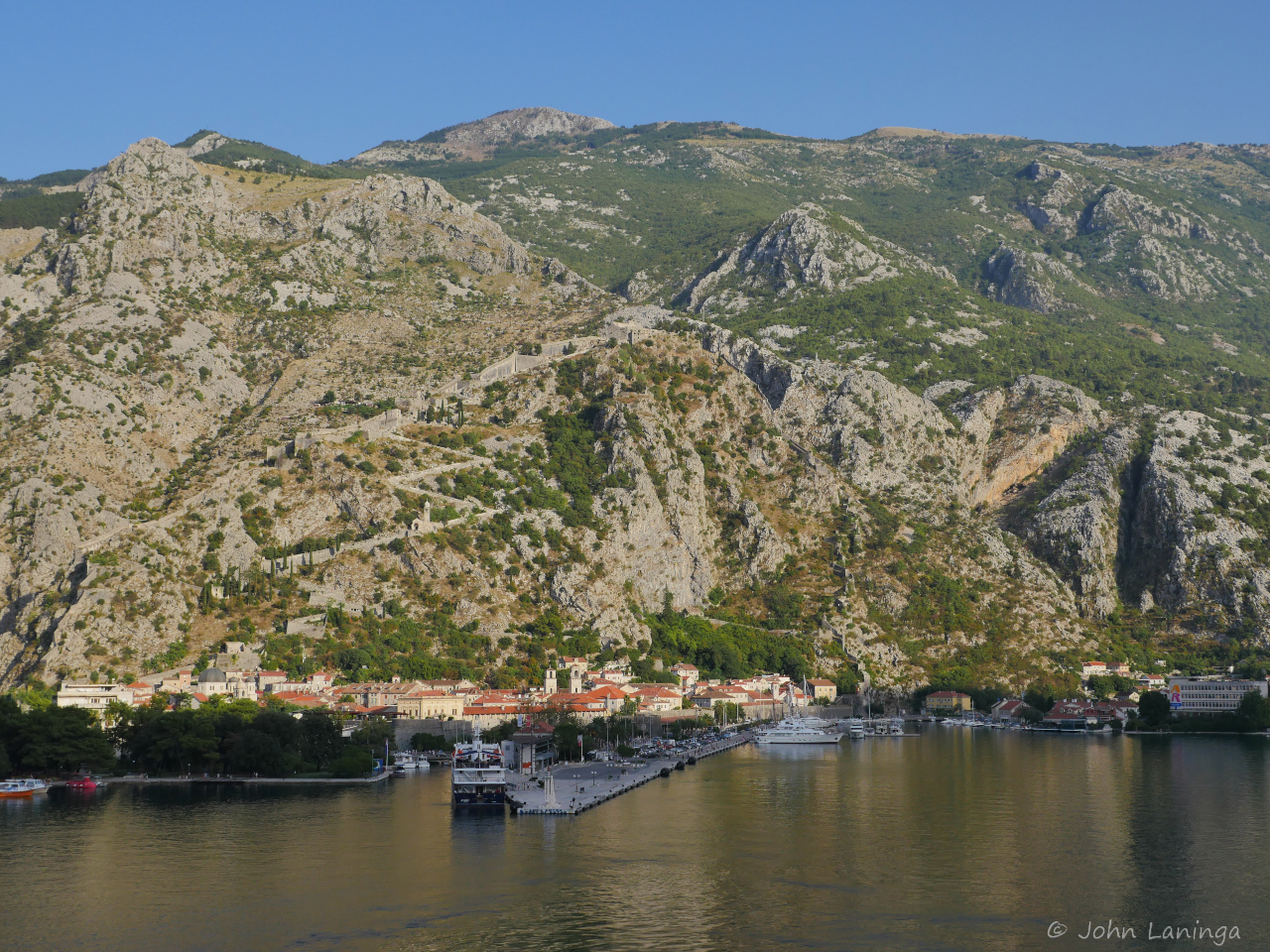
You can see most of the wall here
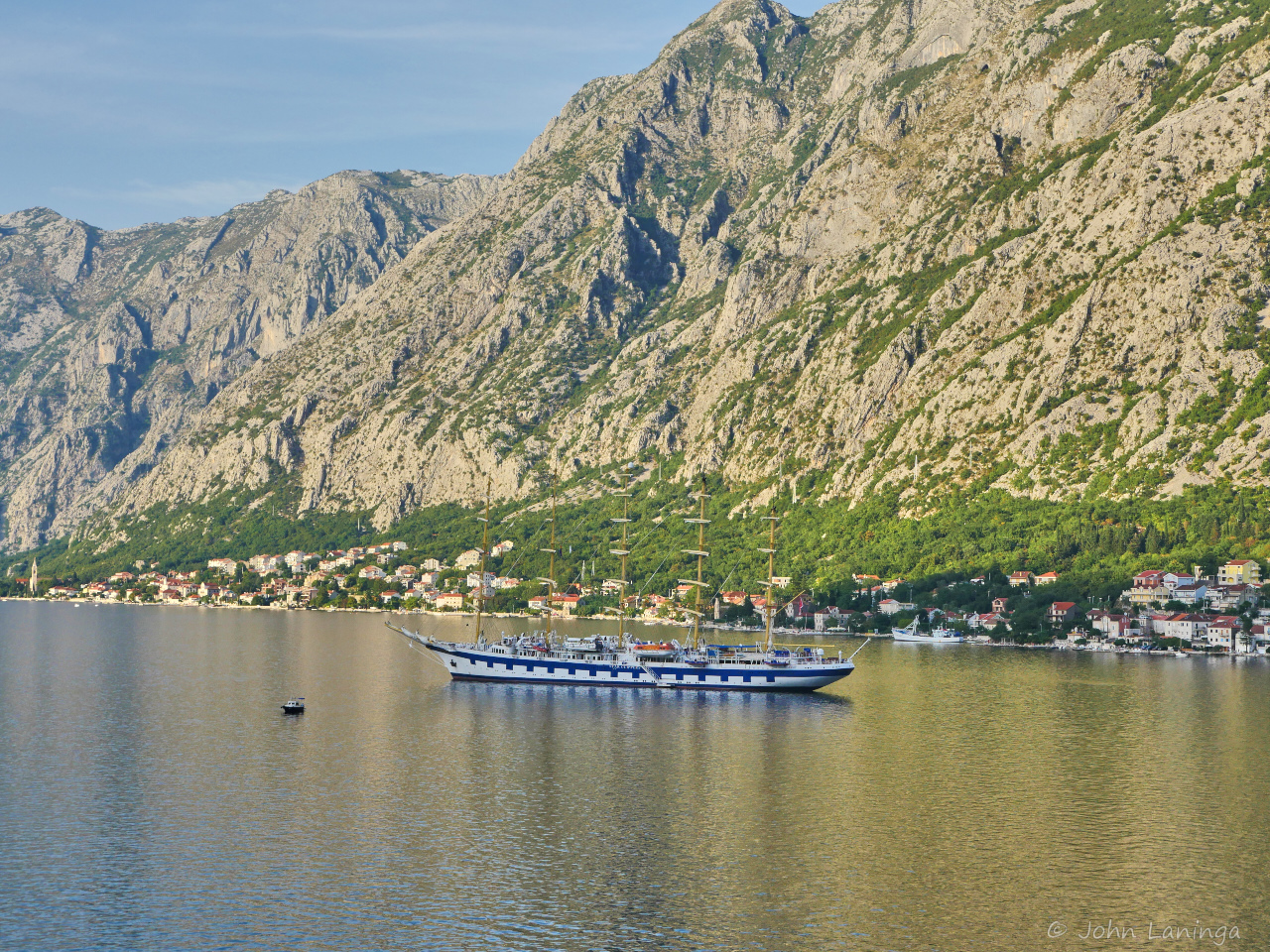
A lovely yacht in the harbor
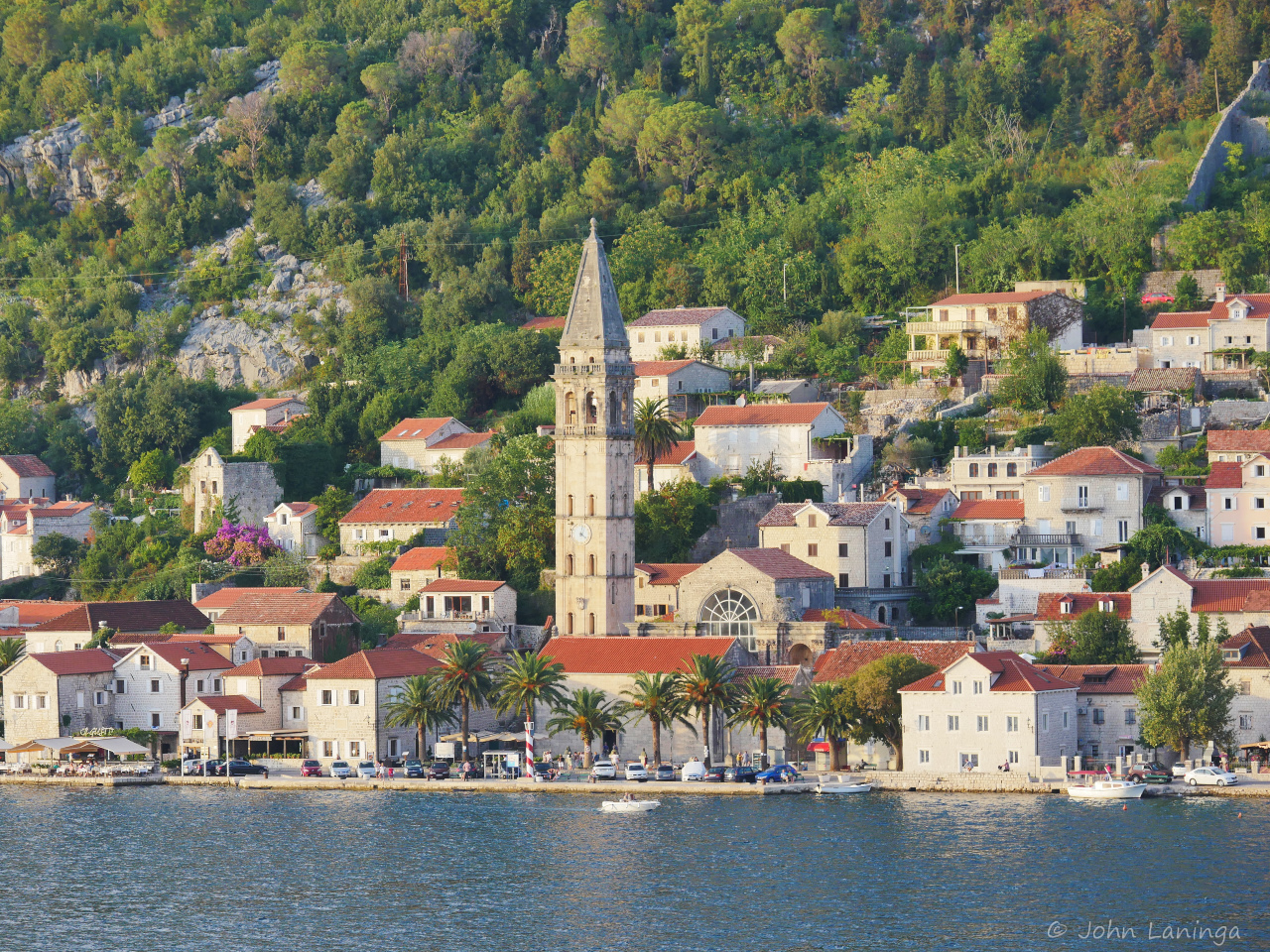
A church in one of the villages along the shore
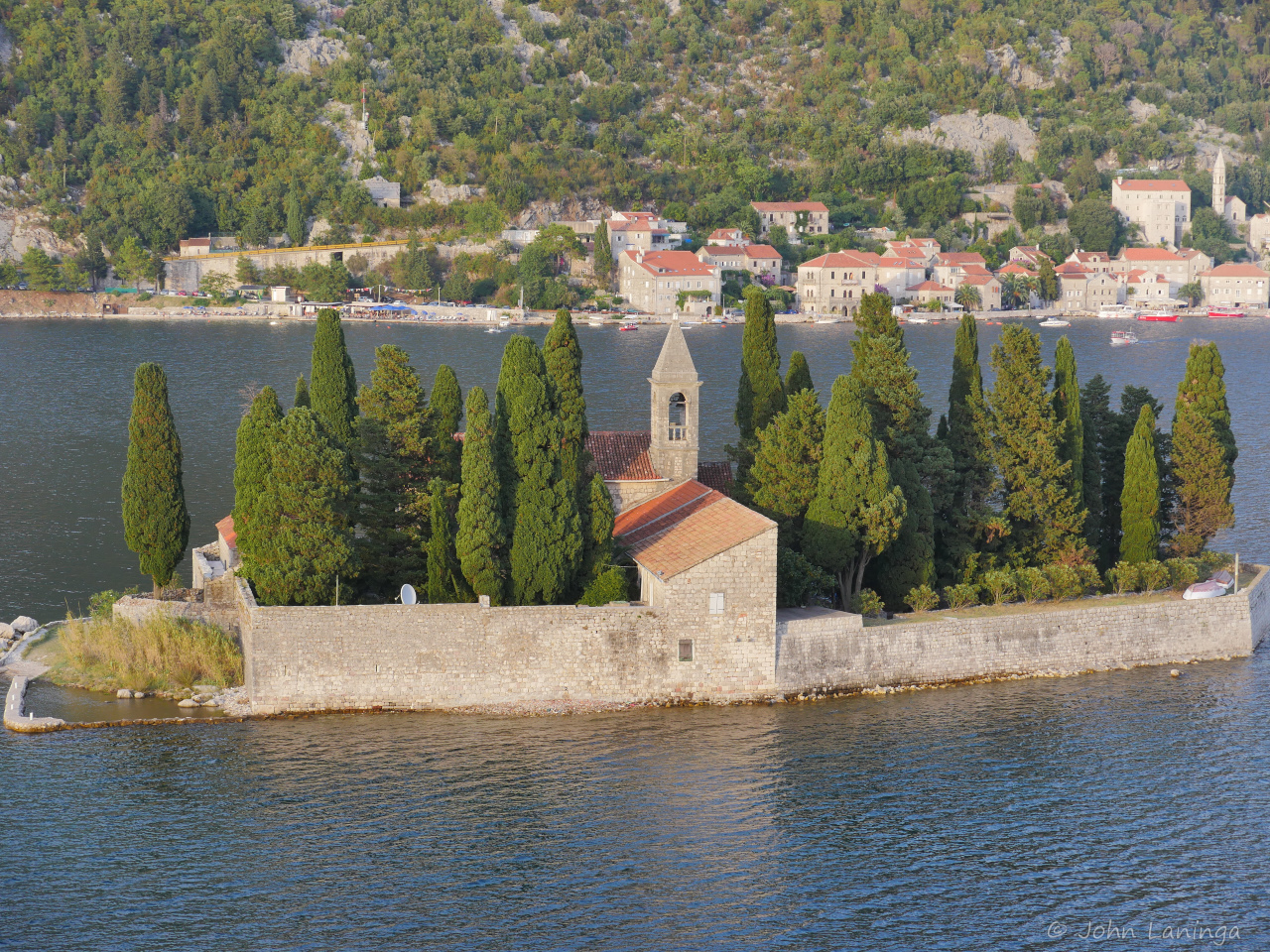
This small island is the home of a chapter of nuns
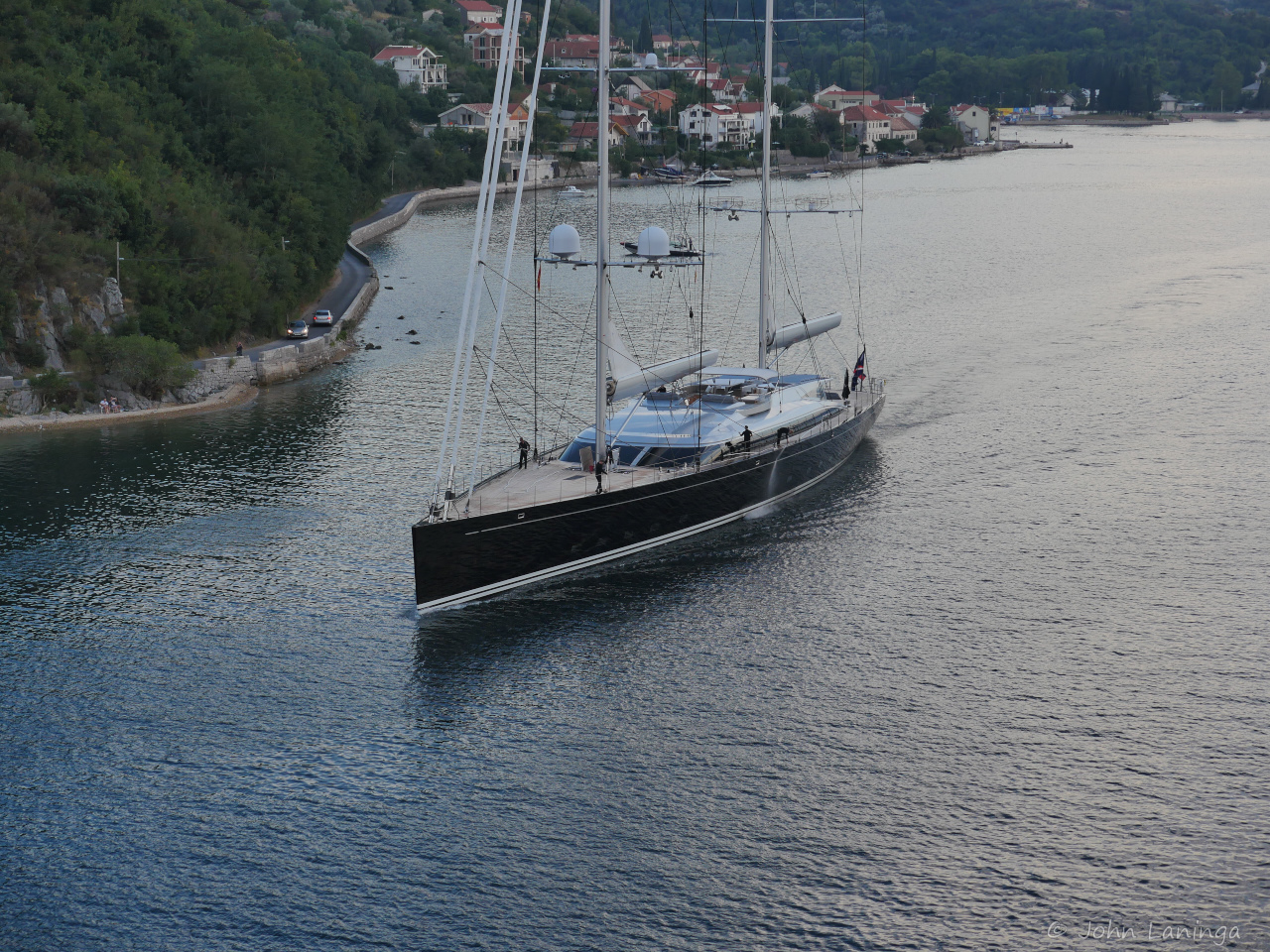
Another magnificent yacht
 Laninga's Travel Blog